

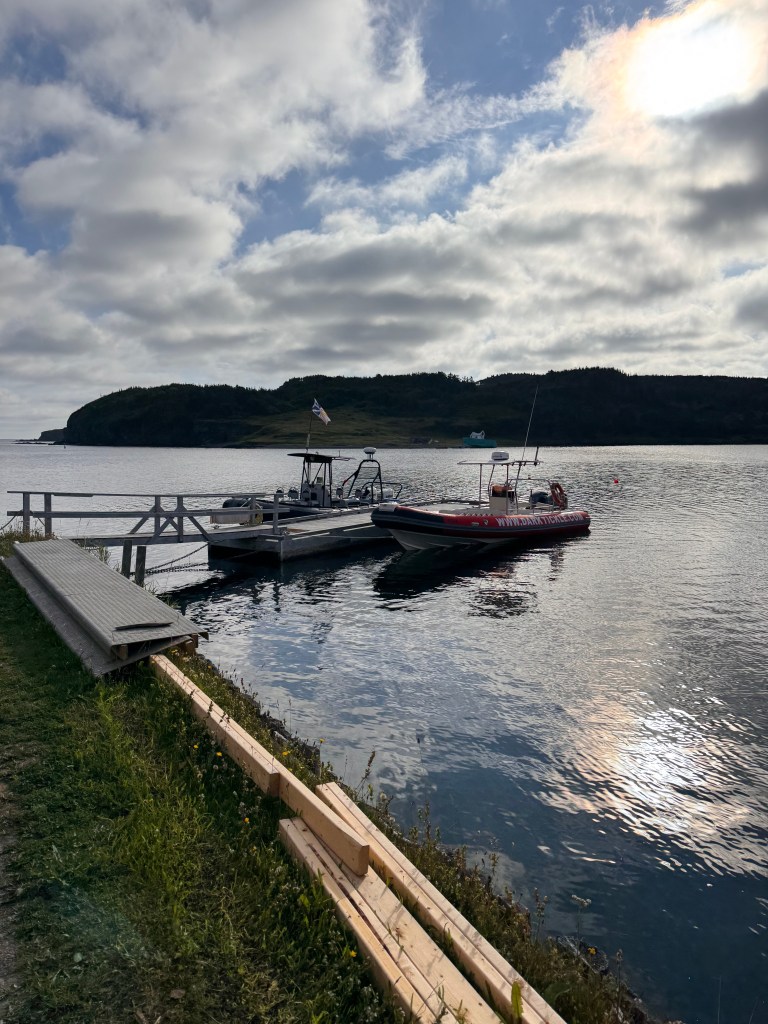
We set off this morning for a zodiac tour of the waters around St. Lunaire-Griquet. For the past couple days we’ve been up in the “finger,” of Newfoundland. L’Anse aux Meadows is at the opening of the Straits of Belle Isle, the northeast side of the finger tip. This morning we were on the southeast side of the finger tip.
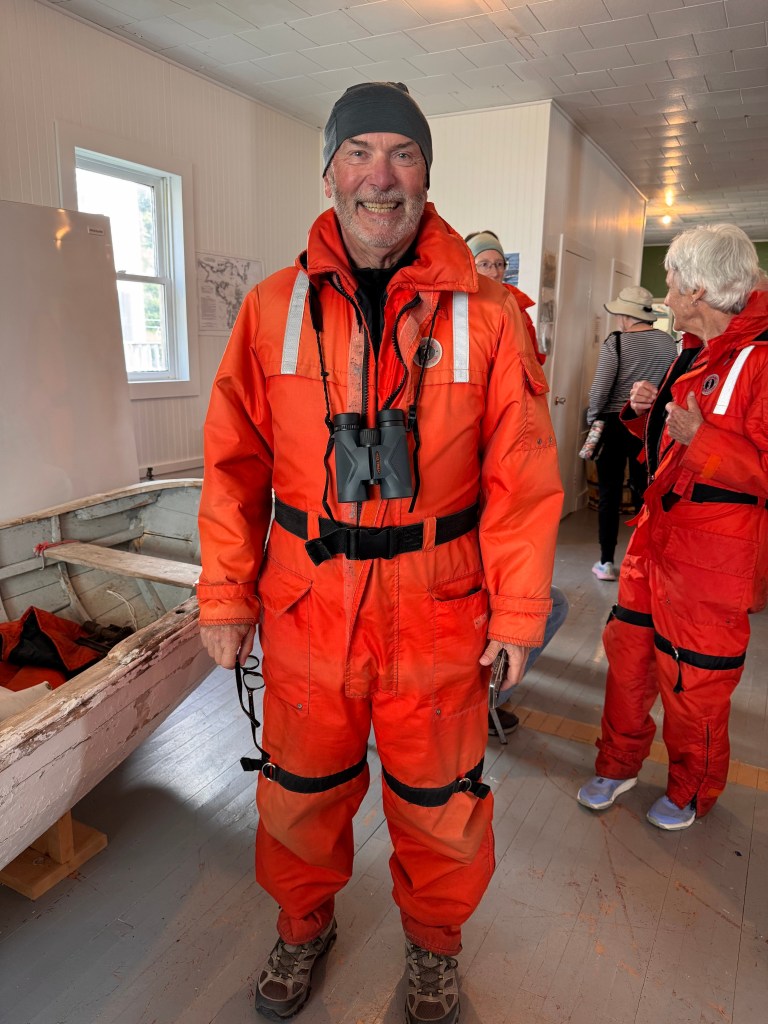
The Labrador Sea is cold, even now at the end of the summer. So, before we boarded, we donned survival suits, which Mark is so cheerfully modeling in the photo. They came in different sizes, but not different lengths. The crotch of mine fell halfway to my knees giving me that “kid in a snowsuit,” feeling when I walked. No one had to walk far though, to board the zodiacs.
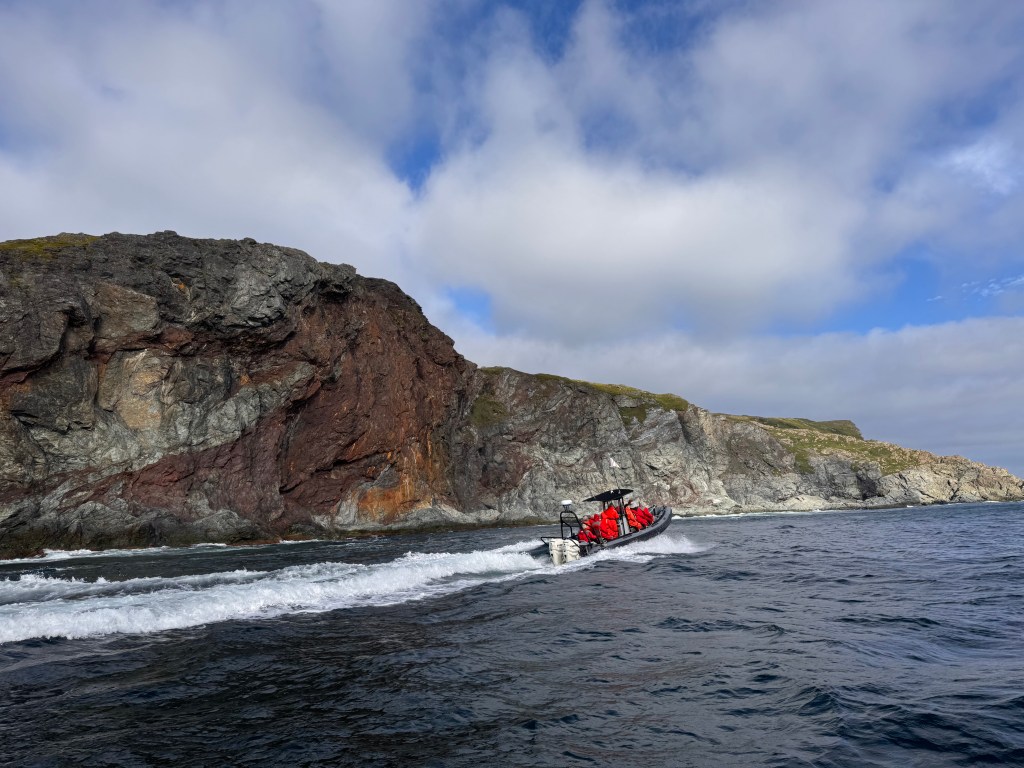
A “tickle,” is a narrow channel. Dark Tickle falls between two high rocky shores, making it dark. The currents can be tricky, hence the “tickle” sailors might have felt when navigating.
The scenery was beautiful. and it was a gorgeous, warm and calm day.
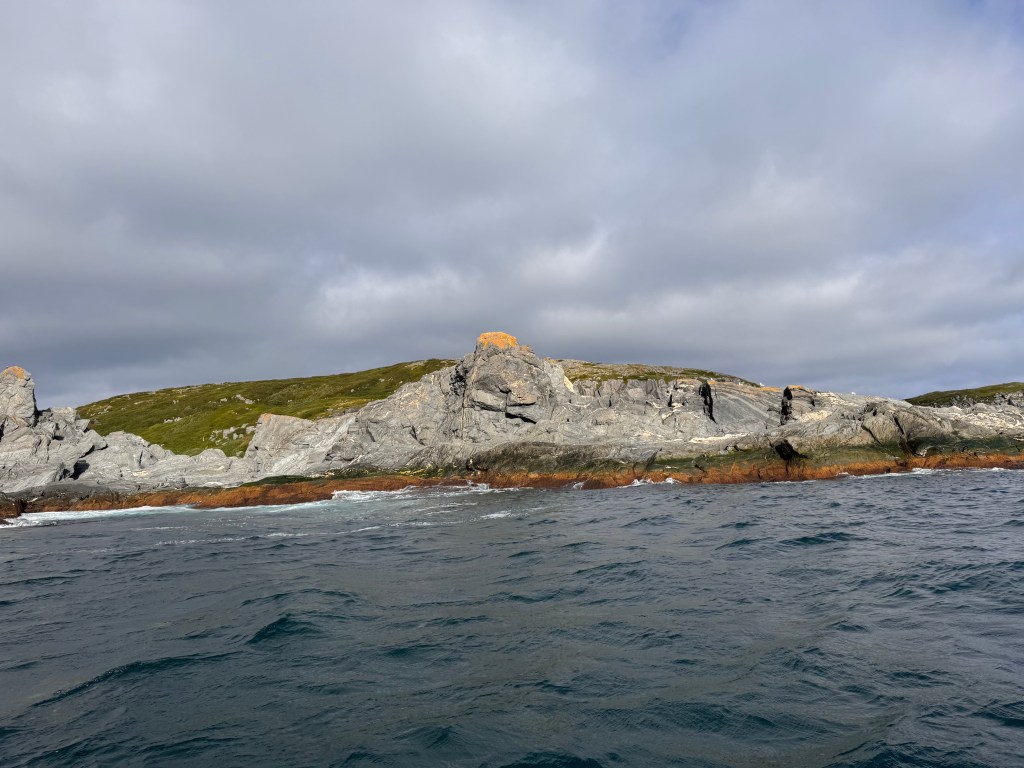
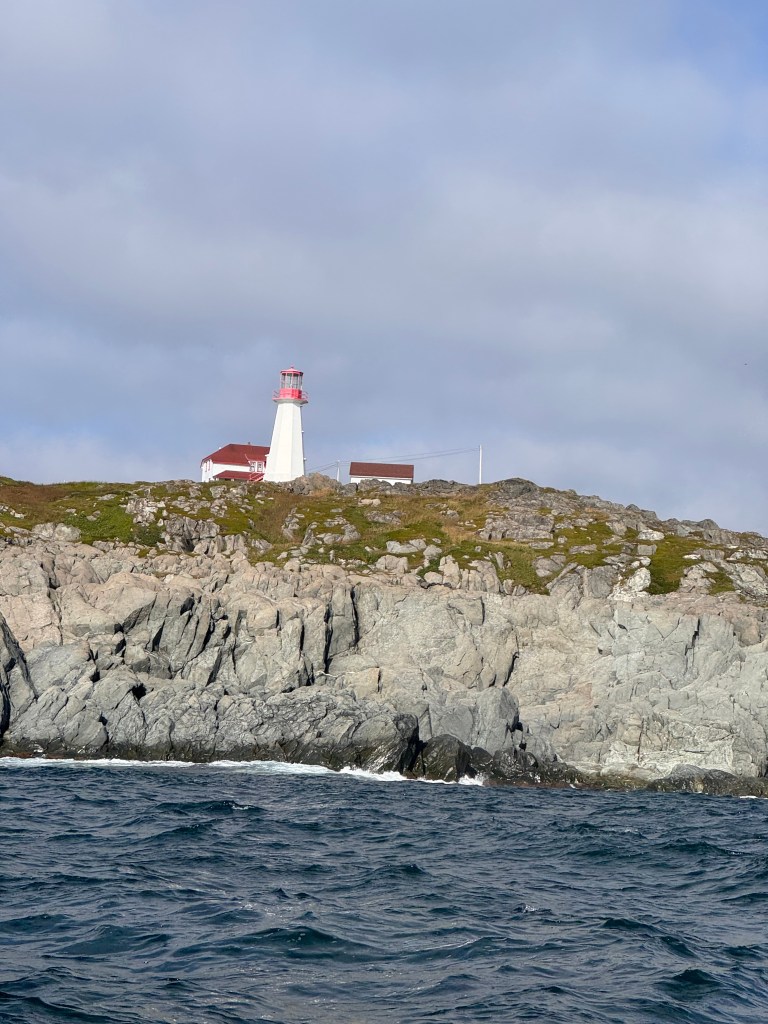
We hoped to see whales. They feed close to the rocky shoreline, with the algae that grows on the rocks cushioning them from being bruised. These are the waters where the whale food lives. Alas, we did not find any whales on the trip. The season is moving along, and so are the whales.
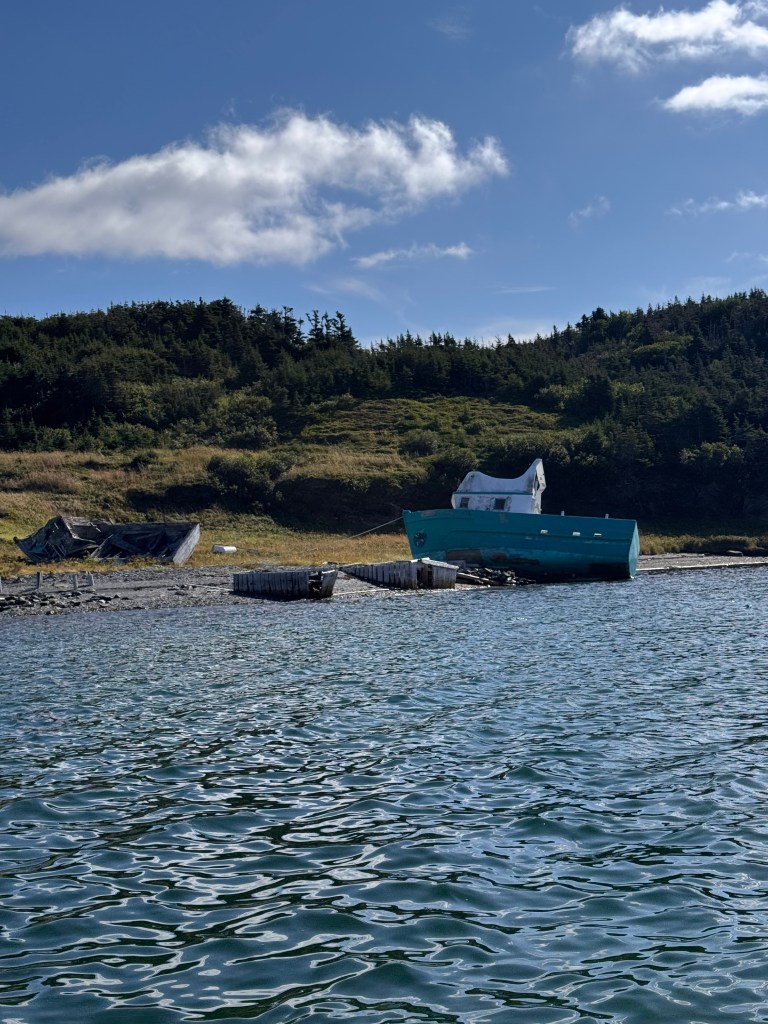
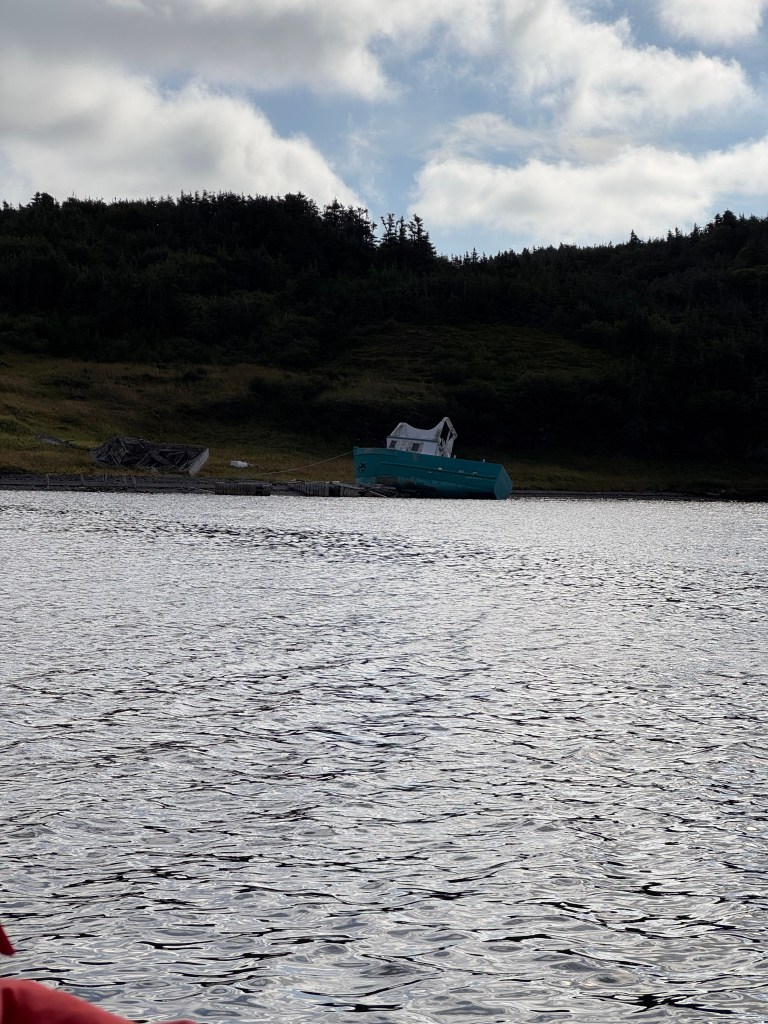
The photo above is of a fishing vessel left behind when the cod fisheries were abruptly closed in 1992. The cod had dropped to less than 1% of historic levels, and 500 years of commercial cod fishing ended, simply halted by government decree.The commercial fishery remained closed until 2024. Then, locals were allowed to catch five cod per person, on three days each week. This year, the quota was extended five fish per person, seven days per week.
The abandoned fishing vessel is sad. Our guide calmly stated that the owner has long since passed, and he never had the chance to return to fishing. While the Canadians were forced to cease fishing, other countries continued to– even off Canadian shores (though that would not have been legal.) While subsidies were provided, there was no replacement for the jobs lost, and there was an immediate 12% unemployment in the province. The fisheries stayed closed for more than a generation, so young people moved away for jobs, and these towns, many that were always small, are now even smaller and with aging populations.
On the other hand, the cod has rebounded– so hopefully future generations will be able to enjoy it without fear of extinction.
This is fortunate because I’ve eaten cod almost every day on this trip– and today it was twice: fish cakes (from dried cod) for lunch and pan fried cod for dinner.
The lunch spot was the cafe at Dark Tickle, which makes berry jams, as well as excellent berry crumbles and berry ice cream.
We boarded the bus after lunch and drove about 200 miles back down to Shallow Bay in Cow Head for the night.
There was curious stop on the trip down. The coast has one of the only known thrombolite sites in the world.
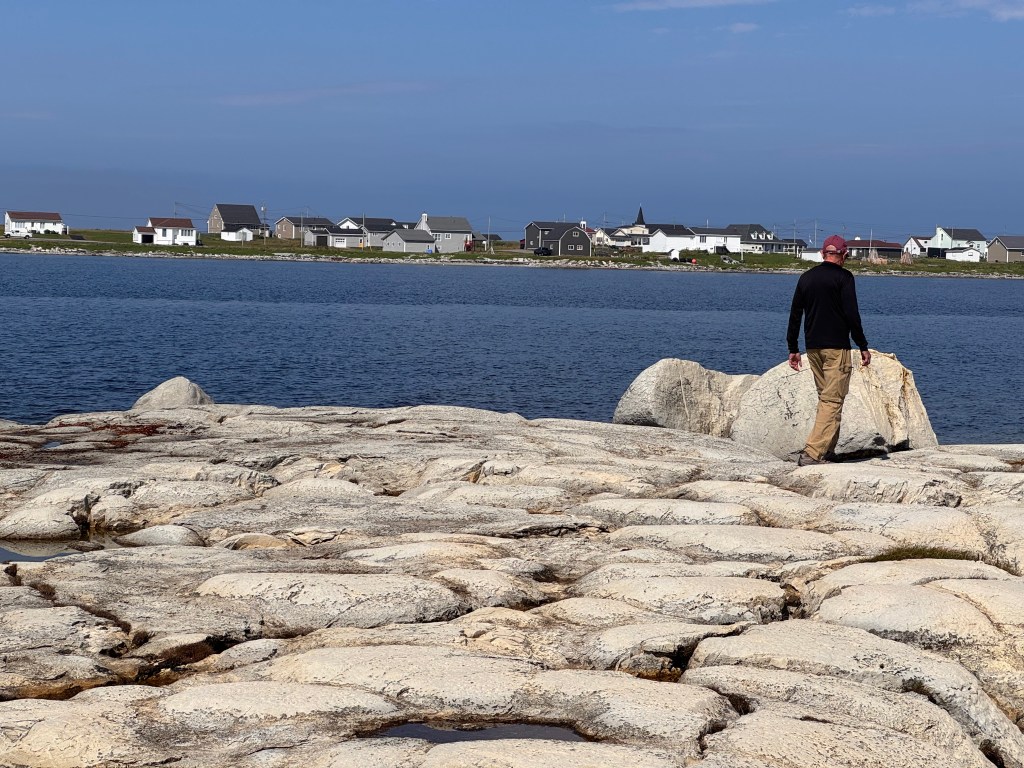
Long, long ago, 650- 1 billion years ago, life did not depend on oxygen, because there was no oxygen in the atmosphere. Eventually, a blue-green algae evolved, with the world changing ability to take CO2 and H2O and use energy from sunlight to rearrange and combine the atoms into carbohydrate and oxygen gas. In other words, blue-green algae were photosynthesizers, and could make their own food. Oxygen was the by-product.
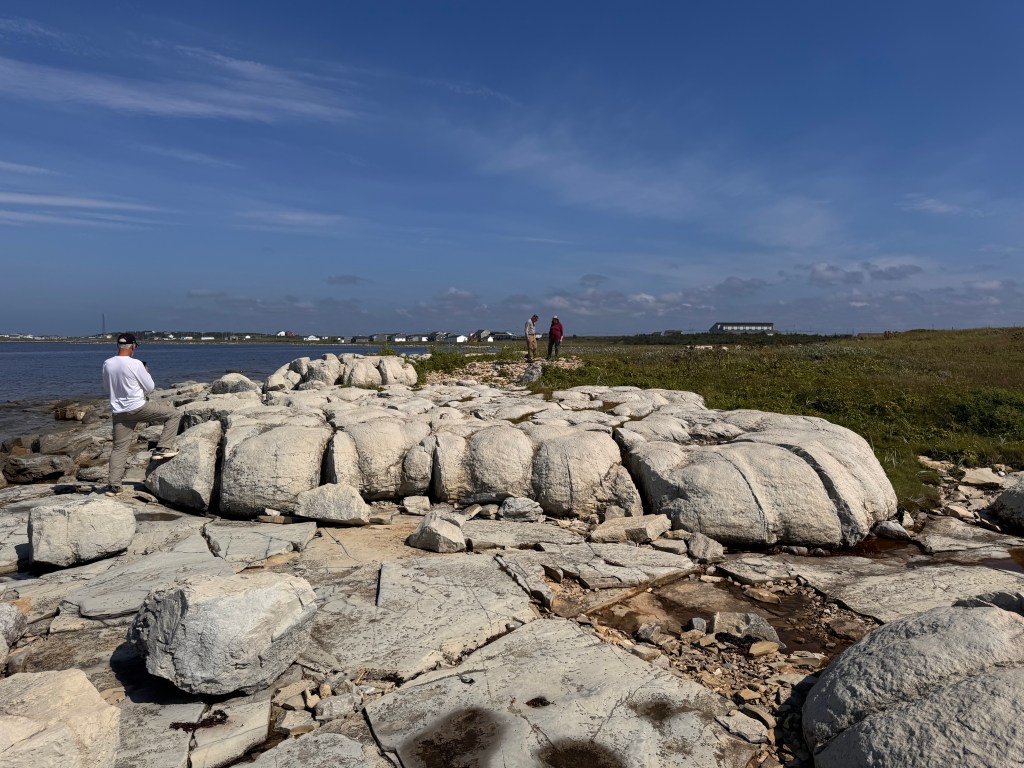
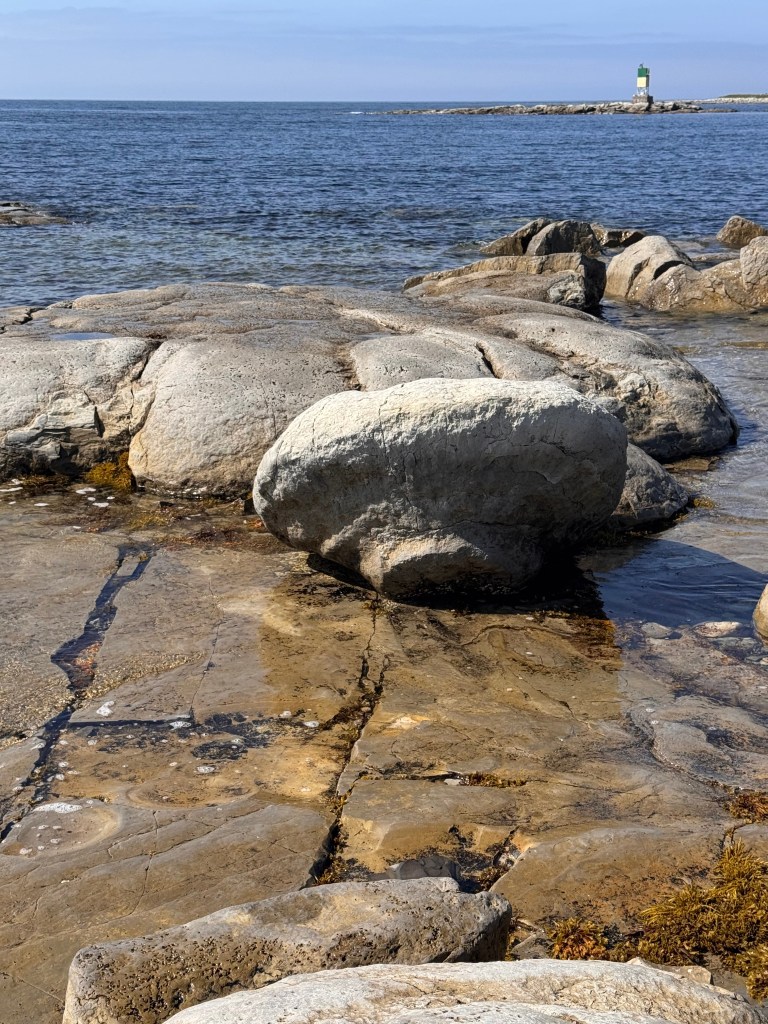
Oxygen reacted with the minerals around the blue green algae and caused calcium carbonate to precipitate (think shell material) around the algae. This accumulated and accumulated. The “shell”-like material would have been destroyed in most cases– this all started so long ago– but in a couple of places in the world, the calcium carbonate remineralized to become rock which retained the shape of the thrombolite colonies. This is what we walked on this afternoon.
They are really cool looking– sort of pincushion shaped.

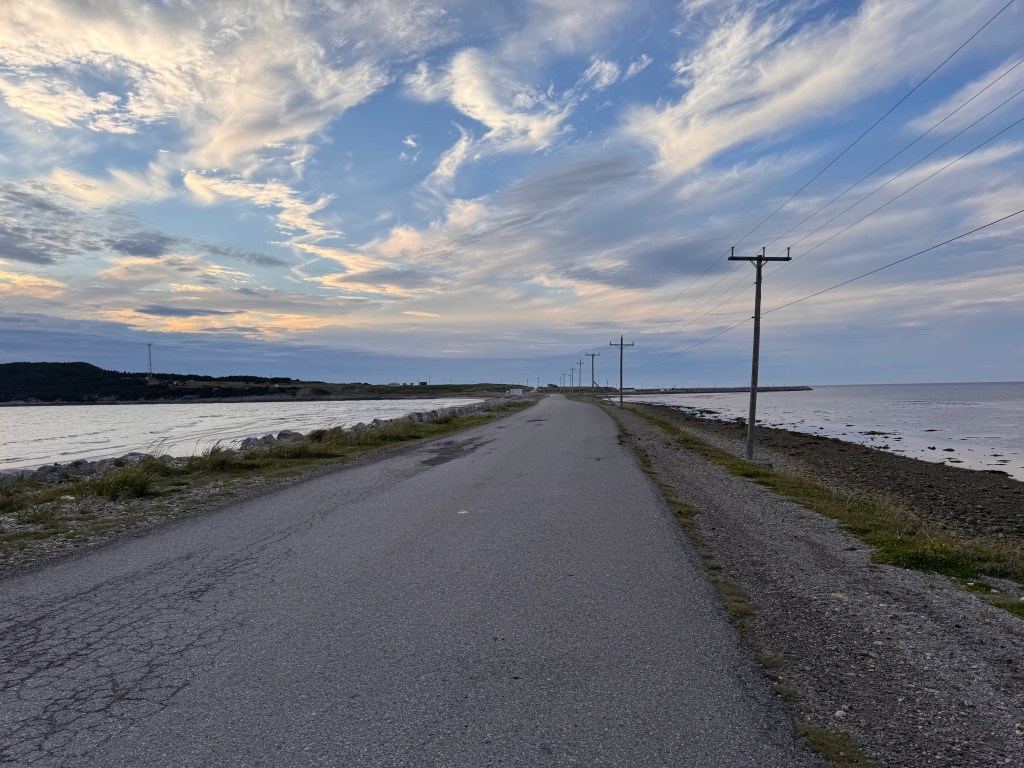
With the longest stretch behind us, we travelled the last miles into Cow Head. After dinner, Mark and I walked along the shore for about an hour in the last light of the day.


Leave a Reply