

If we sliced through Earth pole to pole, we’d see four layers. The atoms that make up our planet settled into these layers more or less according to density, with the more dense atoms, like iron and nickel, moving to the center. The inner and outer cores are under a great amount of pressure, in the very center, packing the atoms close like in a solid, even though it is so hot that ordinarily those atoms would move far apart and act like a liquid. The cores make up about 15% of the earth’s volume.
The least dense atoms, mostly silicas, floated up and are called the crust. We are familiar with the various ways the crust looks: sand on a beach, solid like a mountain cliff, gravelly where forces have broken the rock. It’s not a particularly thick layer and a lot of it is under the ocean, but the parts on the continent are the areas we know and call home. The crust makes up only 1% of the earth’s volume.
If you’ve done the math, you are waiting to read what the remaining 84% is. It’s called the mantle. It is also under pressure, though not so solid as the core. In school we used to mix cornstarch and water to a thick paste. When you tap this mixture, it felt like a solid, but if you were gentler, if flowed like a liquid. The matter in the mantle is a little like the cornstarch and water mixture. It is always on the move, occasionally coming to the surface, in a volcanic eruption, for example. Everything we know– land and water, that tiny 1% of the volume of the earth, is floating on this mantle, which is always surging 3-44 miles below us. That surging drives the phenomenon known as plate tectonics– pieces of the crust, called plates, are floating around on the mantle and sometimes bumping into each other.
The densities of the atoms keep the mantle below the crust as a rule. But on the whole planet there are a very few places where very small (relative to the size of Earth) amounts of the mantel are on top of the crust. Here in Newfoundland, about 400 million years ago, two plates collided, and some mantle got snagged above crust. It’s a rare chance to walk on a part of the earth that is very important to geologic processes, but almost always invisible.
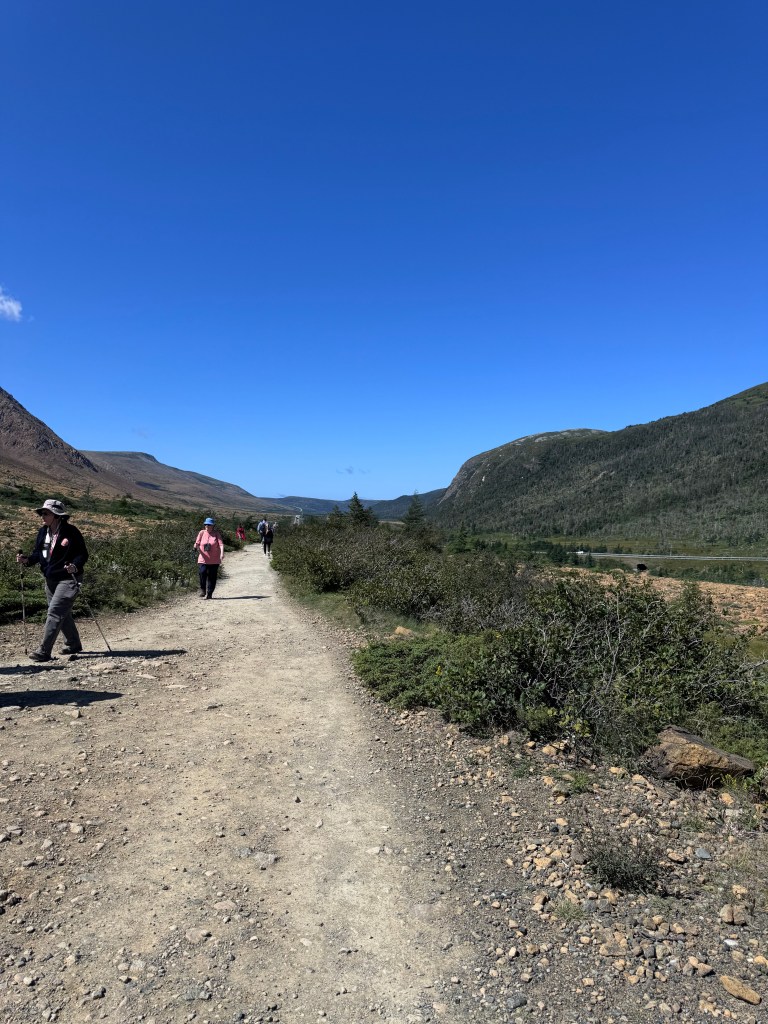
Canada protects this area in Gros Morne National Park, which we visited in the morning and early afternoon. I learned a lot of what I am relating from the naturalist in the visitors center who then also took us out to see the Tablelands area of the park.


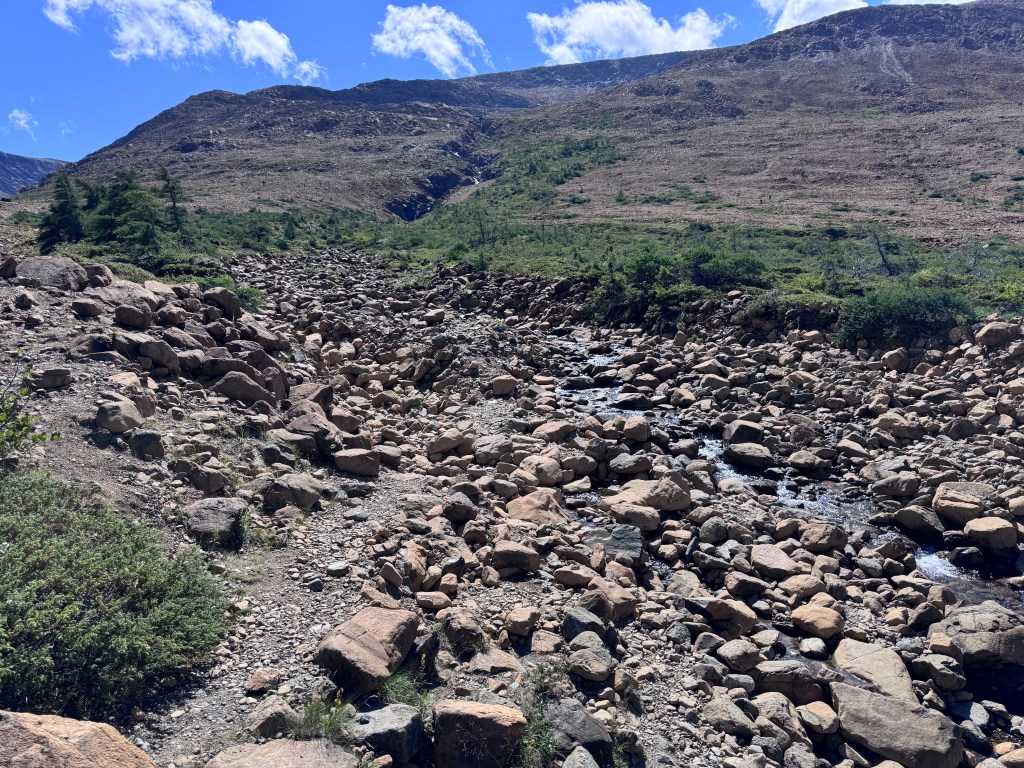
The metal ores that make up the mantel– irons, nickel, magnesium and others, are toxic to plants, so this part of the park, called Tablelands, is not very vegetated. It has the barren look of an area that has mine tailings, and the rocky look of a mountain talus slope.
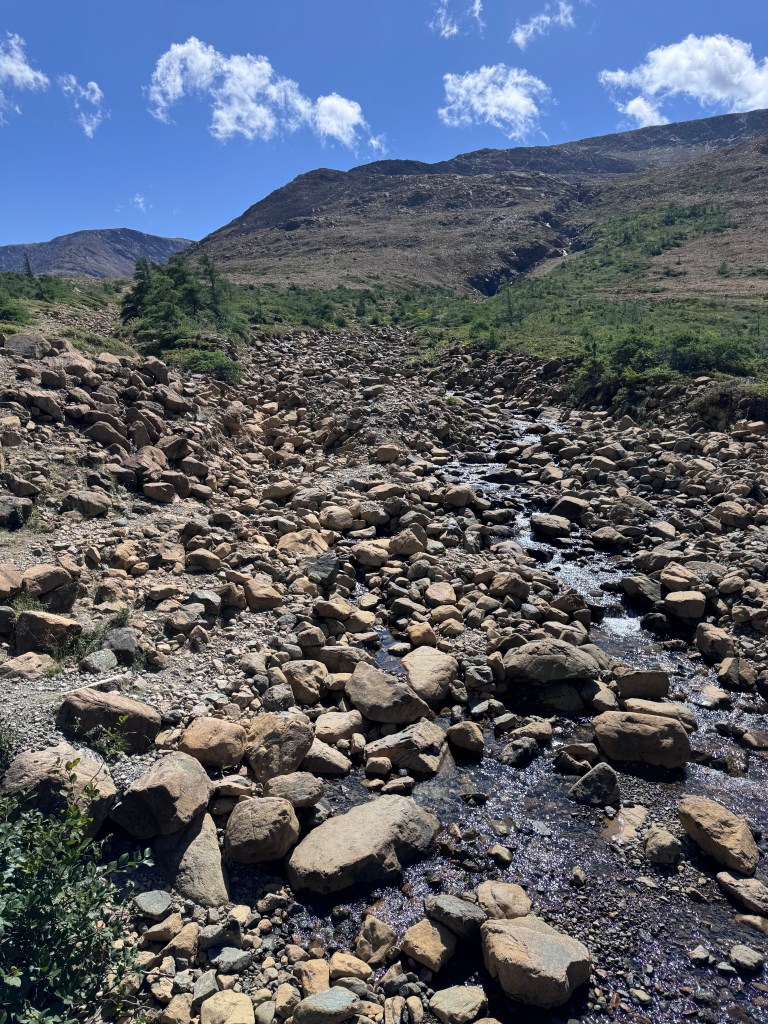
When the mantle layer was first left behind, the rock would have been very dark, not surprising considering the amount of iron in it. When we lifted pieces they were heavy for their size– a sure sign of freshness in produce and density in rocks! As the rock sits on the surface, it oxides and turns tan. Without too much imagination, you might think you were on another planet, like Mars perhaps, and this site is a Mars analog location for the Canadian and American space programs.
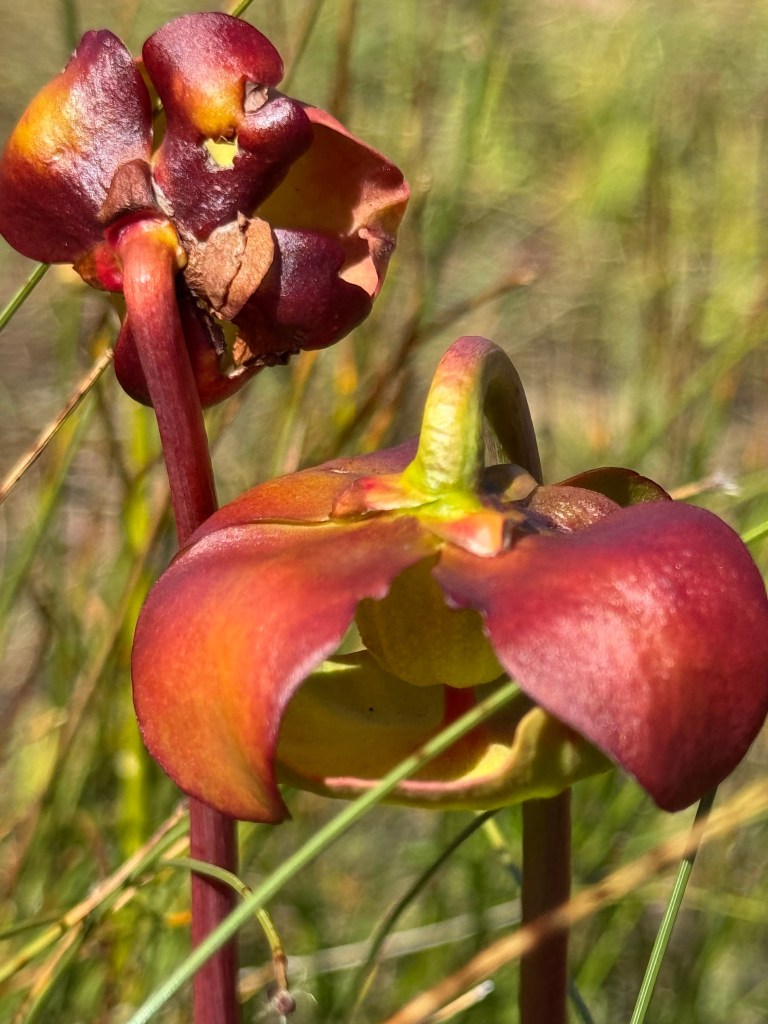
In contrast to their high amounts of iron, magnesium, etc., the mantel rocks are low in two important plant nutrients, nitrogen and phosphorous. So, even though overall the area is rather dry, where there’s a little water you can find several species of carnivorous plants that I’ve always associated with bogs. Two of them are the butterwort ((Pinguicula vulgaris) and pitcher plant (Sarracenia purpurea). The pitcher plant is especially showy and is the provincial plant of Newfoundland and Labrador. It has a fascinating relationship with a non-blood sucking mosquito that lays its eggs in the water of the “pitcher.” When the larvae hatch, they gobble up any hapless insects that may have wandered in and drowned. The larvae excrement is like compost, and that provides the nutrients, in particular nitrogen, that pitcher plants need.
Another plant that is known to be successful in these harsh soils is Potentilla or cinquefoil, a yellow flowered rose shrub. It’s pretty common in the USA, and the yellow almost seems fluorescent in bright sun.
Other plants that can grow here are dwarfed alpine species that manage with soil that blows in and filled crevices. In the very first photo at the top of the post, you can see a stream running from the top of the mountain. The very shallow creek bed formed when the glaciers receded 10,000 years ago. The shallowness reflects just how dense this mantle rock is, barely eroding in all that time.
After we finished at Tablelands, we drove to Woody Point on Bonne Bay, to catch a ferry to Norris Point. These were pretty sea coast towns, and the photos in my previous post about our travel saga getting to Newfoundland were taken along that journey.
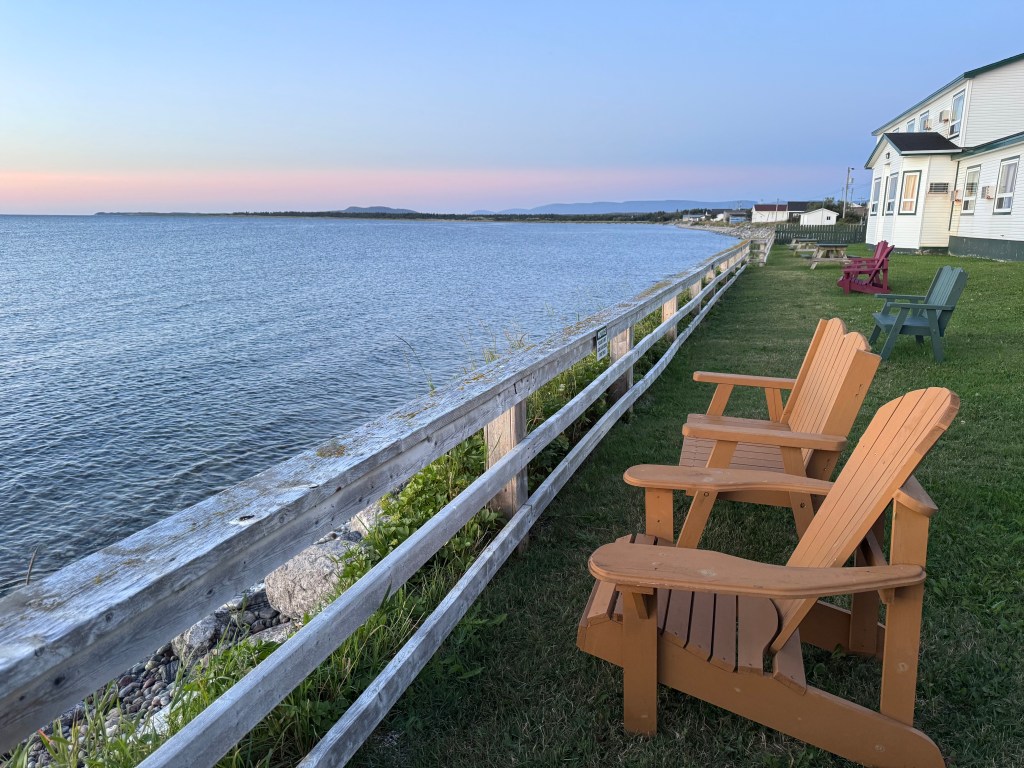
We are spending two nights in Shallow Bay as we learn about this area.
My last thoughts about today though, go back to the “inside out” mantle rock. It cannot support plants, so it cannot support life. When I taught middle school science, I always tried to get my students to understand that the area of earth that we know and depend upon for our lives is an almost vanishingly narrow layer of the planet, called the pedoshere. It is fragile, and it took eons to develop into something any form of life could evolve in, let alone human life. If the pedosphere gets too damaged, life on earth won’t vanish all together, but human life? It’s just too demanding and complex to exist without the pedosphere.


Leave a Reply