

We checked out of Shallow Bay and drove to the French Rooms Cultural Center in Port au Choix. The European heritage of this community is Basque, hence the “French” in the museum’s name.

Members of the community lived on both sides of a channel of water. Those further out to sea were very isolated. Starting in 1954, the Canadian government had a resettlement program in the recent (1949) addition of sparsely populated Newfoundland and Labrador. The idea was to move people into more concentrated population areas, called growth centers, and make it possible for them to have services like schools, water and electricity. This would be more practical and less expensive then trying to extend services to the many small “outposts,” which often were populated by just a few families.
Resettlement was a fairly attractive proposition to families. The government offered a cash payment based on family size, once the relocation was complete. A certain percentage of a community had to agree to move in order to receive the government help. The main hitch, though, was housing. Families could only resettle if they had a physical place to live in the new town. Building a new house would have been out of reach for most people– their old house would not be salable, of course. Rentals were very rare– if someone had a house, they were using it for their own family– no AirBnB investors in those days. The best alternative for most people was to pick up their house in the old town, and move it to the new one.
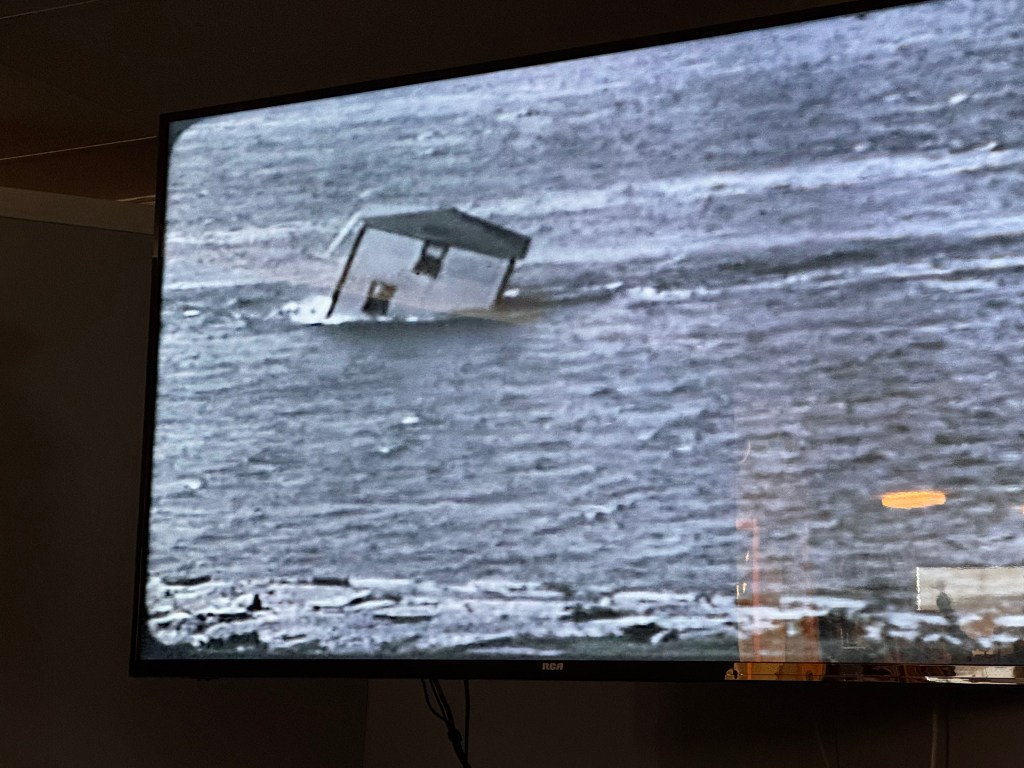
This worked for most in the Port au Choix community, but not the Rumbolt family. They’d recently experienced a fire- or burnout. They had a two story house now, and the government told them it was too tall to be moved across land. Compassionate neighbors decided to help them move the house– by towing it across the water with long line fishing boats!
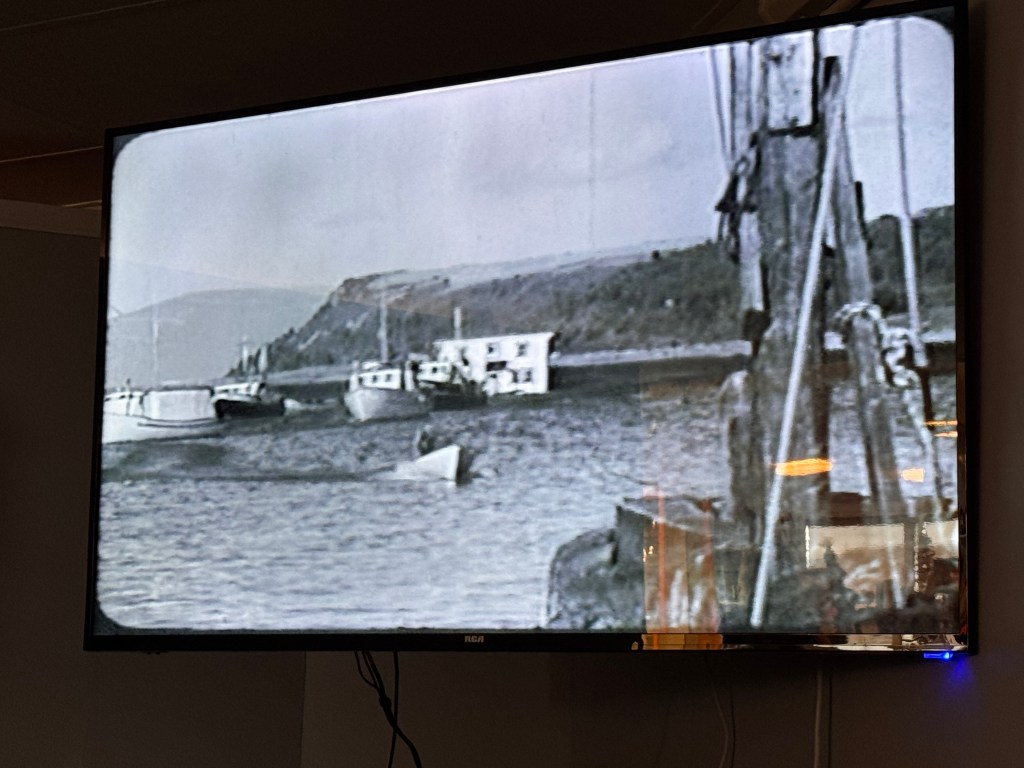
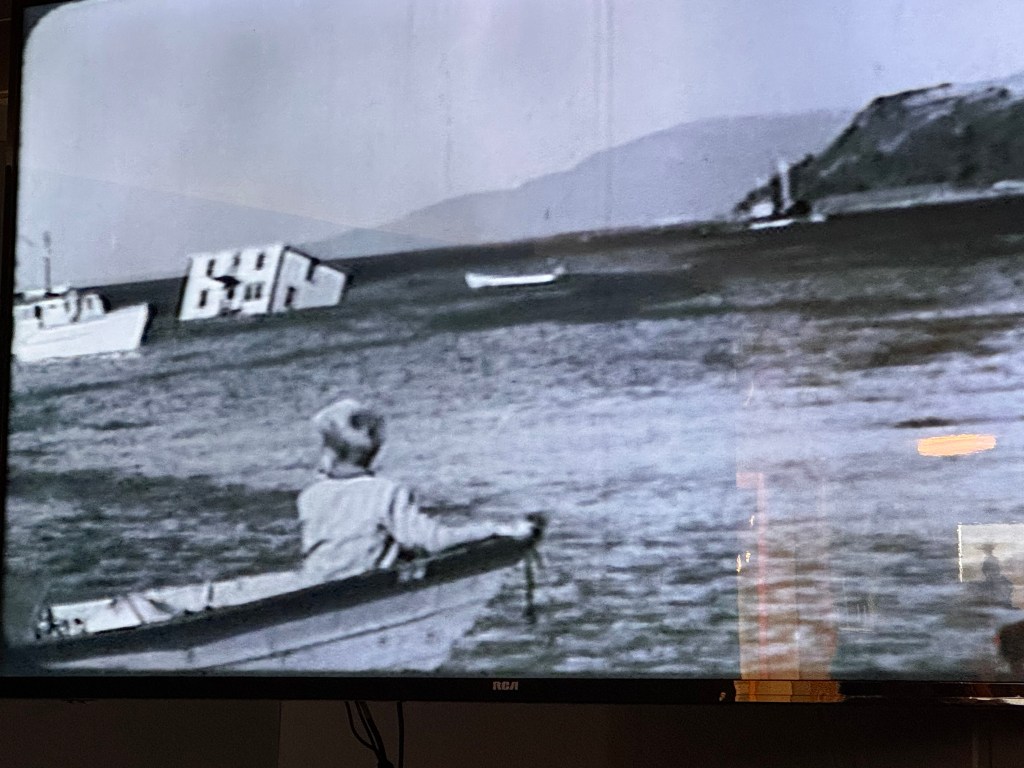
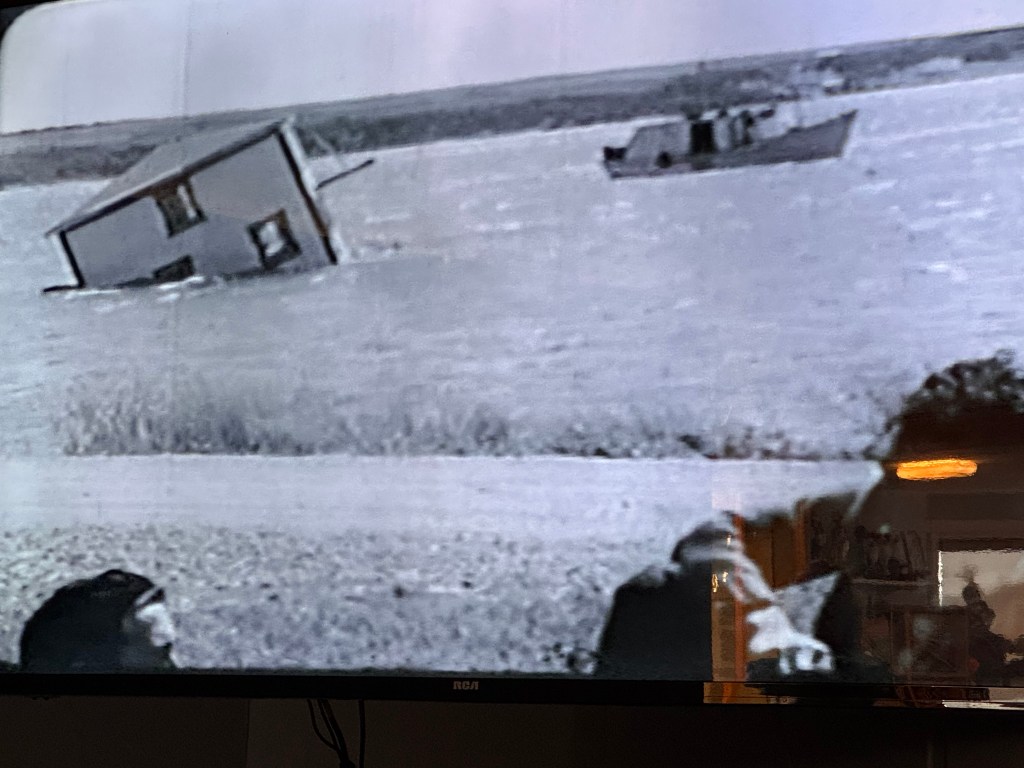
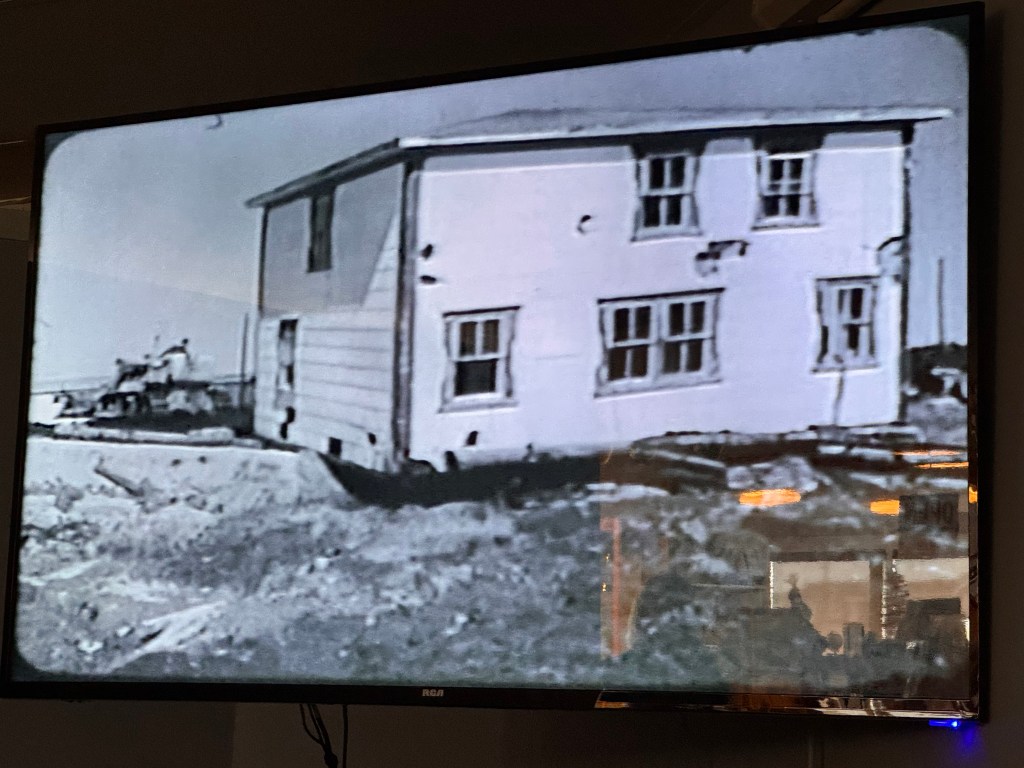
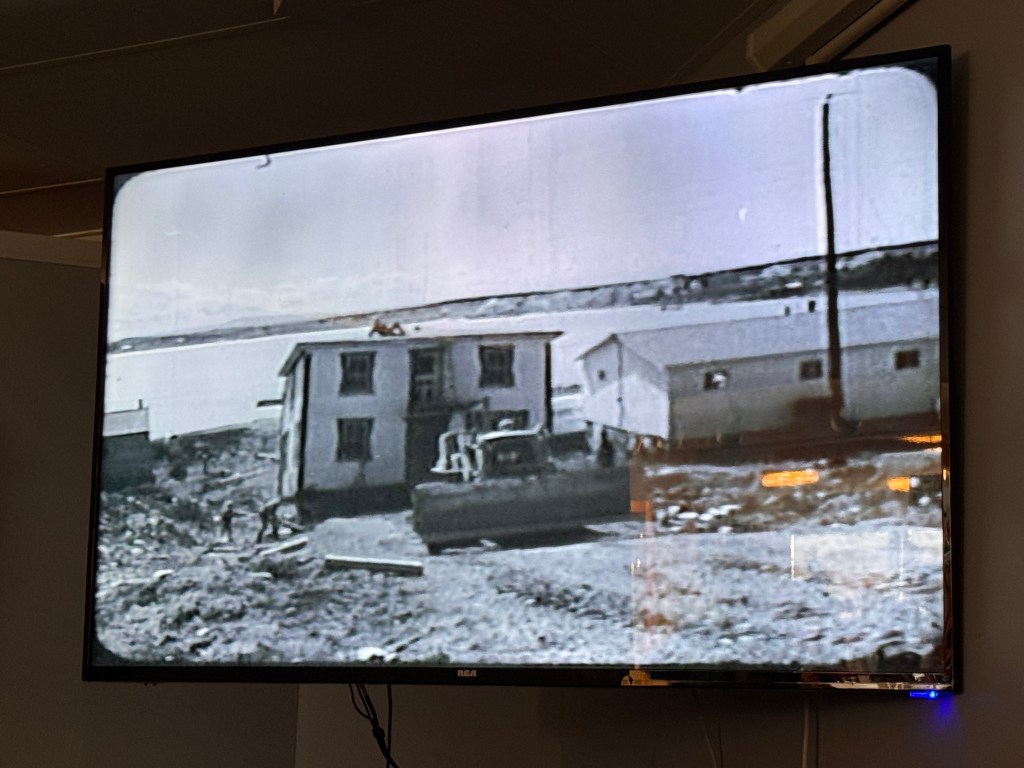
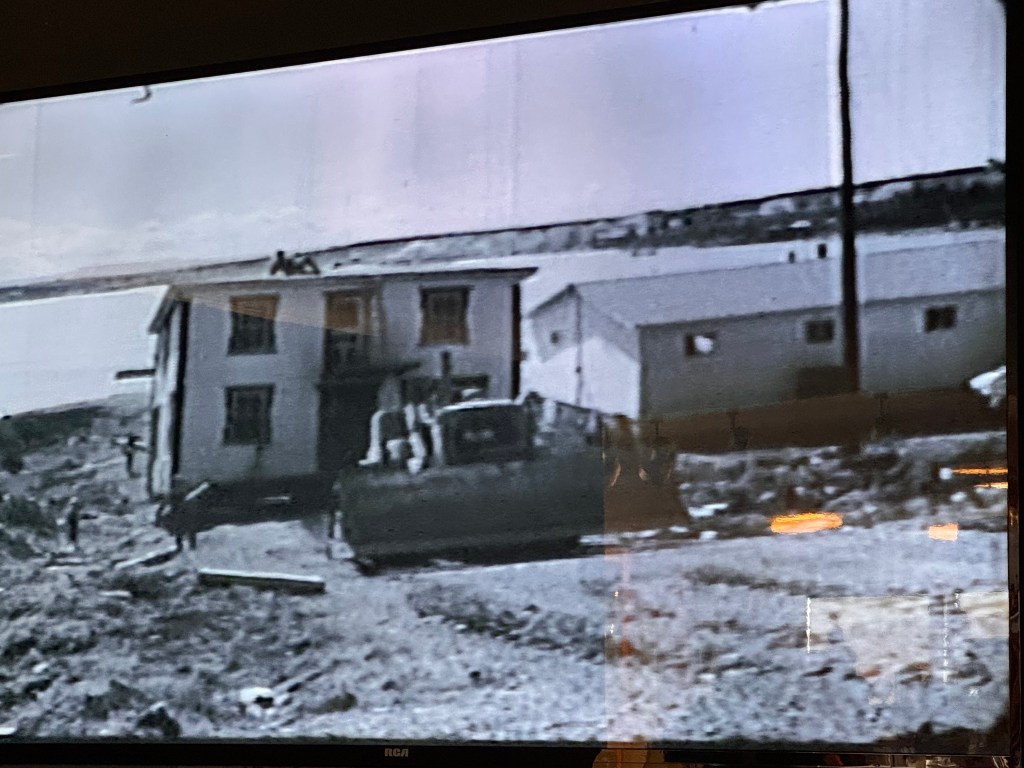
I captured the images above from a movie that was made by a crew from Memorial University of Newfoundland. It’s a really well done thirty minute documentary, made practically on the spur of the moment, in 1968 when the Rumbolts moved. I loved that the filmmakers often focused on the fascination of the children, all around the beach, watching the events unfold. I would have been one of littlest kids in the group had I lived here then. I tried to find the documentary online, and was not successful, but here is another video about resettlement in general. It remains a controversial topic today.
The reason the university was on the beach was because a burial site had been discovered nearby, and was being excavated. Due to the terrain and soil, this area has preserved burial sites, and is a source of much information about the indigenous people– four distinct groups- who lived and fished here for 6000 years before the Europeans arrived. Our second stop was to the Port au Choix National Historic site.
On the way we had some big excitement: Caribou on the side of the road! “Stop the car!,” said our energetic tour leader to our bus driver. Out we flew, cameras and phones in hand.
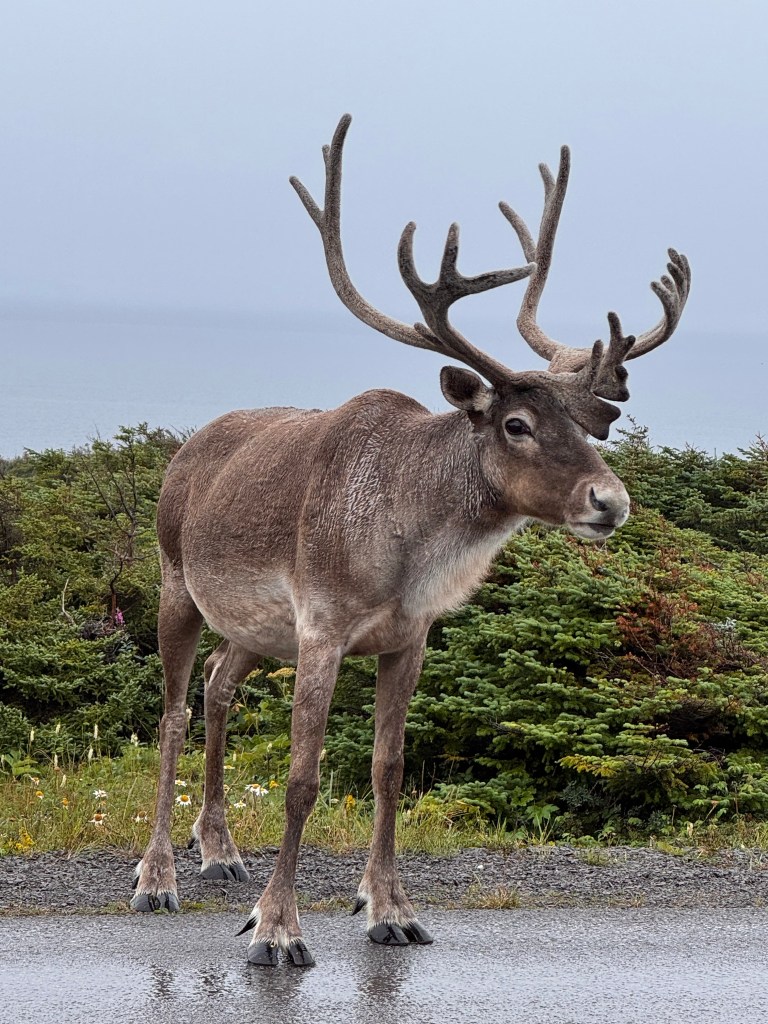
Every national park will tell you to stay away from wildlife and especially not to touch it. Every once in a while, a joker will say, “But what if it touches me?”

Turns out, this is no joke with Newfoundland caribou. We stood on the side of the road and took photos, but after a few minutes, the young ones started to move towards us. I moved back– these animals are huge– but one actually gently nibbled a participant’s jacket while she was standing quite still.
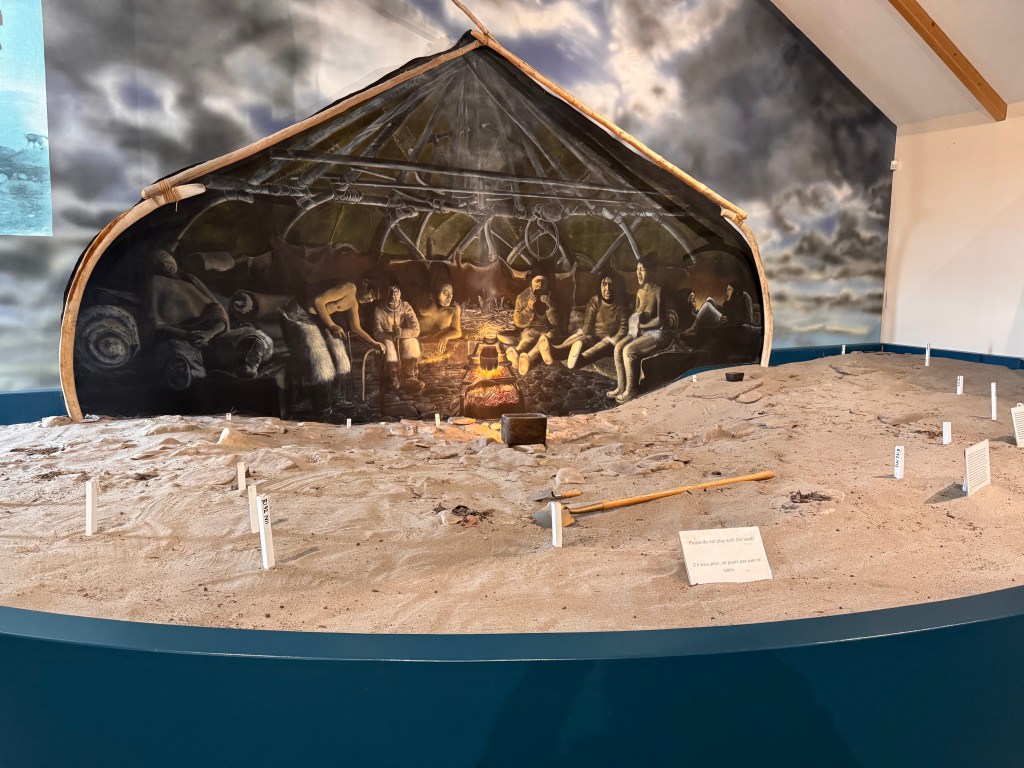
At the interpretive center, we heard an interesting program about seal hunting. Americans don’t hunt seal and in fact, have a strong aversion to the idea. Seal hunting is not legal in the US. Cultures are different though, and seal has a long history of use here. Hunting only happens for a few weeks each year, when the seals migrate by and there is still ice over the water. In ancient times, hunters used harpoons, and pretty much every single bit of the seal had a purpose, including for clothing and building shelters. Seal hunting licenses for Canadians today require a course and fees, but even after that, so few are given out that hunting is very limited. The fishermen believe that the rising population of seal is part of the reason the cod fish numbers are so dangerously low.
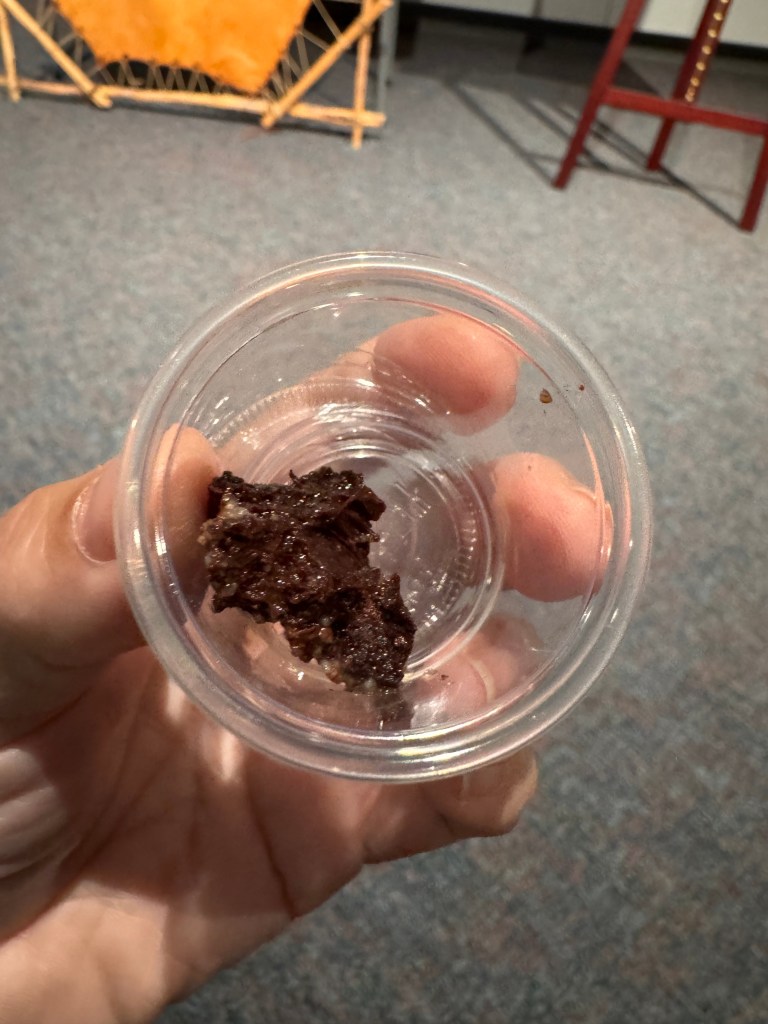
At the end of the presentation, we were offered a morsel of prepared seal meat. It is salted and placed in canning jars and then boiled for a couple of hours. It will then keep as canned meat for a while. And what does it taste like? The interpreter was very apt by saying “like a cross between beef and tuna.” And did I try it? Yes! His description was correct and the flavor was appealing. With its salty, meaty, rich (ie. fatty) content, I completely understand why people living in a cold climate, and doing a lot of physical work, would want this meat as part of their diet.
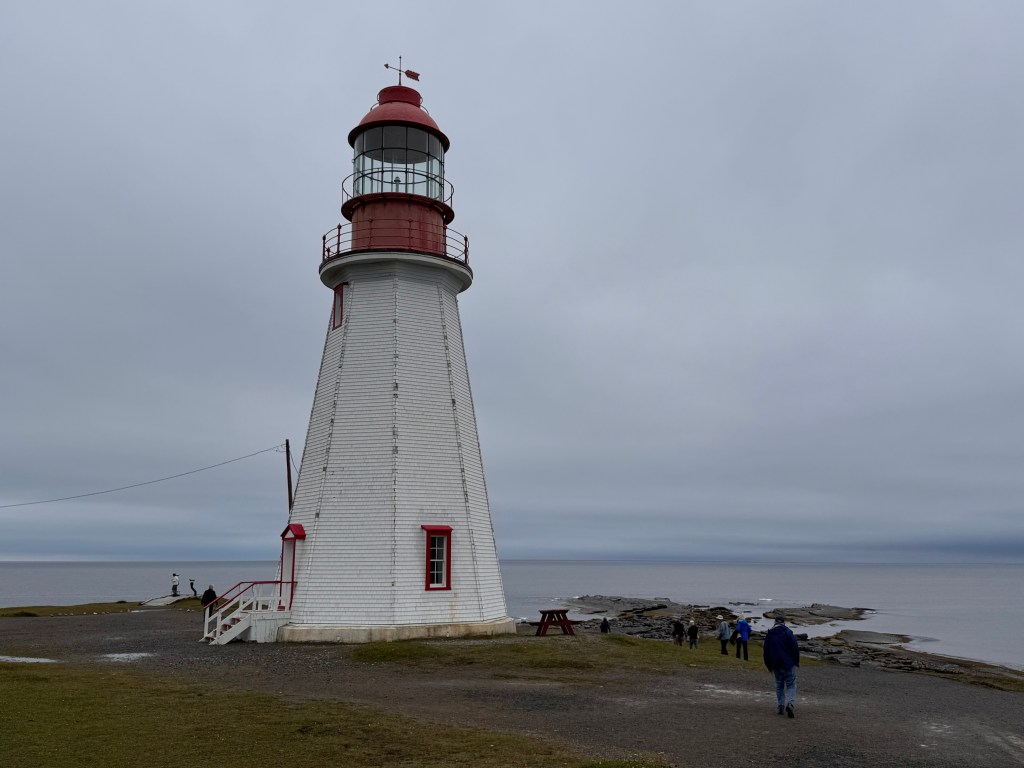
We drove to the Port Richie lighthouse to have a half hour leg stretch along the coast. Today was a cloudy, rainy and misty day, so the shore looks a bit bleak and harsh.
The wi-fi is so slow that I can’t load any more photos tonight, and besides, we have an early start in the morning. This marks the first post that’s related same day activities– I’ve been a day behind all trip, so feel satisfied to be caught up.


Leave a Reply