


In each of our post-Covid trips to the Caribbean, we’ve found excursions with guides that have answered questions with candor and analysis. It’s been my favorite way to try to understand each location,and their shared and unique histories. Today we set off from our resort to see the inland area of Higuey, the town and the province whose inhabitants have found so many jobs in the hotels of Punta Cana.

Punta Cana is one of the most visited destinations in Latin America, with 11 million people arriving in 2024. It is, by far, the busiest Caribbean location we’ve ever visited, a far cry from St. Lucia, Guadalupe, and especially Dominica. The area was a windy point of land full of mangroves, and originally known as Punta Borrachon, Drunken Point. Perhaps not the most public relations friendly name, and the land has surely seen a higher density of drinking since it filled with resorts than it would have before 1969! A few developers were inspired by the beaches to create what has become a very popular tourist destination.
Apparently the Colgate company improved the road so that Higuey, the nearest town, could be reached in about 30 minutes rather than five hours. I don’t know the whole connection between Colgate and the Dominican Republic, but our hotel did have a a small tube of toothpaste in the bathroom, and the shower gel, if you ask me, was the color of Palmolive dish soap.

Our excursion was meant to get away from the beaches and see “the real Dominican Republic.” While I suspect there is a lot of “real” that we did not see, our guide was exceptionally candid and knowledgeable.
His own story was fascinating. His father was a sharecropper peanut farmer in the mountains, and lost his land after falling ill. The family moved into town, and for the first time in his eleven years, our guide saw the ocean. Then, as now, there is no social security system in the DR. Families send members to work and they provide for each other. Through his work in tourist, he supports his family of six and also his elderly mother.
Nowadays, while farming is still important, much of the agricultural labor is done by undocumented Haitian immigrants. Work in the tourist sector is common. Resorts employ two workers for every visitor (and I bet this is an underestimate.) There are around 4,500 hotel rooms in Punta Cana, and most of those will hold more than a single guest, so the number of hotel workers is very high.

As Punta Cana became more and more popular, thanks in part of DR and international celebrities Oscar De la Renta and Julio Iglesias, the city of Higuey became more important. Resorts have staff dormitories, but workers might have to stay eight to a room. Renting a room in Higuey affords a little more privacy. The resorts send school buses to town to pick people up. Owning a car is really expensive, but lots of people own motorscooters. Hard not to be judgemental here: Helmets are required but I literally never saw a soul wearing one. I did see people with really young kids perched on the seat in front of them. And I also saw young kids riding the scooters. Other traffic rules were also disregarded– the scooters wove in and out of lanes of traffic and also along the sides of the road like bikes. I love visiting the Caribbean but the thought of driving there is the stuff of nightmares.
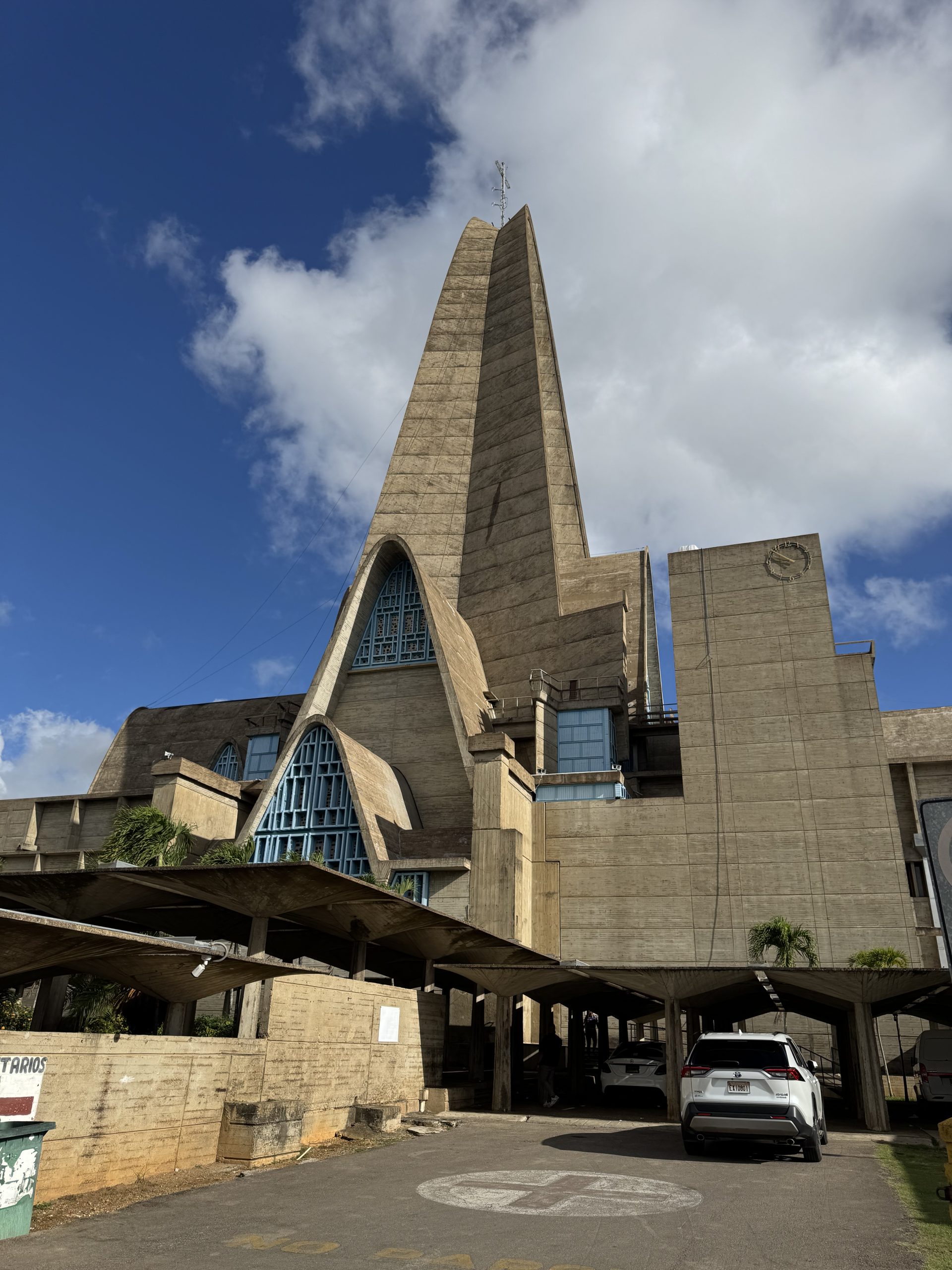
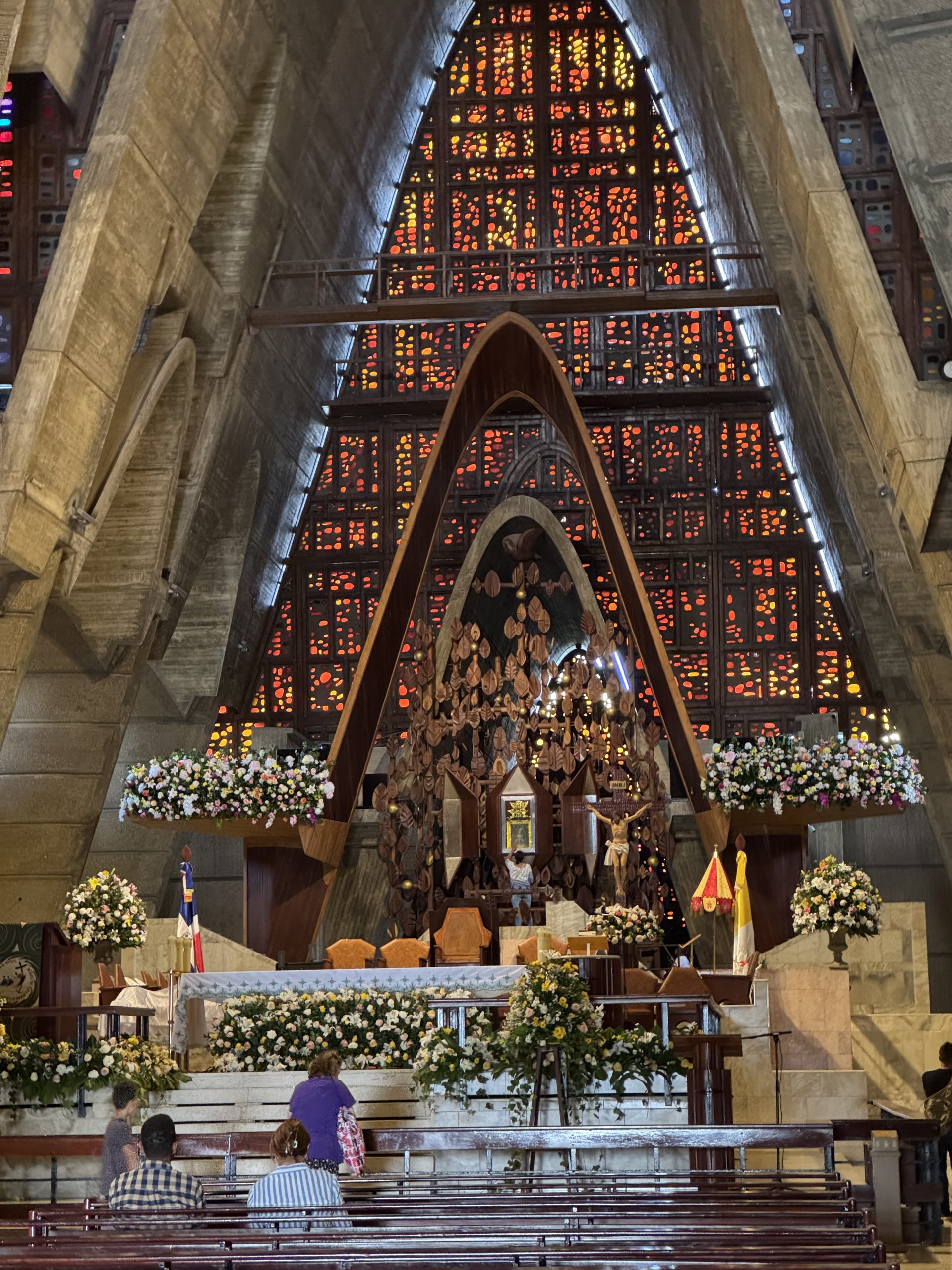
We saw the market from the bus window, but did make a full stop at the Basilica-Cathedral of Our Lady of Altagracia. It is minor basilica, as of 1970, which is a major point of pride for the city and the country as there are only a few cathedral-baslicas in the whole Caribbean. The focus is around a very old (around the turn of the fourteenth century) painting of Mary with a baby Jesus. We ascended the staircase to sort of take a look at it. She is the patroness of the DR and her feast day is January 21 which is a public holiday in the country. The date though, has nothing to do with Mary– it celebrates a Dominican-Spanish victory over the French in 1691.
Next we were off to the countryside for a demonstration of coffee and cocoa production. We’ve seen these before and always enjoy the sampling. Chocolate is such an interesting plant! The fruits are born directly off the trunks of their tree and the cocoa beans have a mucilage around them that can be eaten and tastes like melon. It’s a tribute to both humanity and cocoa itself that the fermenting, roasting, drying and grinding work all got put together to give us the array of product we enjoy so much. Chocolate addicts have been part of the human condition for a long time!
My favorite question to ask a guide in the Caribbean is about school, and especially where in a country’s history the chronology of the lessons start. In St. Lucia, Dominica and Guadalupe every guide said history was taught beginning with colonialism, but that it should be taught beginning with the Taino people. Our DR guide was an exception. History is taught beginning with Columbus, and he believes this is correct because Hispaniola is the oldest colonized land area in the new world, and the Taino people have vanished from it. He said that genetic studies show that most citizens are a mix of African and European genes and little to no Taino– so their history then, really does start with colonization. It was an interesting point of view and I struggle with it since it leaves out some hard history.
Everyone here is working very hard to command their piece of what tourism had wrought. The disparity between the haves and have nots is huge. Our guide told us that homelessness and starvation are rare- you can grow food and some stores allow produce as payment in a barter system.
But. the tap water is not drinkable-or even permitted for teeth brushing. We exceeded our annual consumption of plastic bottles in our two weeks– we are really trying to avoid them entirely on our other travels and certainly at home.
Electricity is spotty. Some people have it and and billed. Neighbors tap into the lines and don’t pay. The utility company comes around and removes the unauthorized lines, but of course that is temporary. Our guide pointed out the police station in one town– they had an illegal electric line!
There are not enough teachers or schools, and school is not compulsory. This was a hard fact to learn, and really affected me the day we rode horses to the waterfall. Schools have split sessions, morning and afternoon, to accommodate as many children as possible. Many children do not continue past fifth grade. They don’t learn much English in primary school, so careers with the lucrative areas of the tourism sector would not be easy to obtain.

From the bus we passed shops with yard areas full of toilets and sinks, hundreds of them. When a hotel remodels or otherwise replaces fixtures, they are sold. The buyer refurbishes them and sells them to Dominican residents. Similarly, tired that do not pass inspection in the US are sent here, where a Dominican car may get many more, undoubtedly dangerous, miles from them.
Our visit fell during a a hard time to be reading US news. The harsh divide between the tourists and the average life of a Dominican in the countryside, especially, is difficult to face. Wealth does not trickle. I would be prouder of my country if it were working to improve disparities rather than dismantling the programs that have been trying to alleviate them.



Leave a Reply