

In a day, we made our way through three airports to relocate from the South Island’s east coast to the North Island’s east coast. We are visiting Paihia. It’s a small beach town with coastal activities. Our focus today, though, was history. We visited the Waitangi Treaty site.

The day was sparkling and spectacular. Blue sky with a few clouds, temperatures in the low 70s and little humidity. We walked from our rental to the treaty site along a paved path that runs beside the shore. This area is called Bay of Islands.
I’ve had a goal to try to understand how New Zealand’s relationship with the Māori is different or the same as the United States’ relationship with native Americans. The similarities seems clear: Great Britain was the colonial power in both cases, treaties were drawn up in both cases, and today, the legacy of the relationship has been much harder on the original population than on the colonial one.

Mostly, though, the similarities are not very strong. Importantly, the Treaty of Waitangi was signed in 1840, years after the 13 colonies, the provences of Canada, Australia, etc., had been formed. The Māori greatly outnumbered the British at the time of the signing, and it was the Māori who asked Queen Victoria for an agreement. New Zealand was filling up with US whalers, and the French were circling. Meanwhile, the British, who were already in the country, were a rather lawless bunch. Māori risked having their lands taken by force if they did not get protection from the crown.

The various tribes were not of one mind, but many chiefs did sign the treaty. The English version was translated into Māori and most chiefs who did sign signed the Māori version. I’ve heard there is some belief that any Māori signatures on the English version might be forged. Here is the second huge difference between the New Zealand history and that of the United States: The Treaty of Waintangi is a living document that is referred to now. That said, it’s not a clear point of reference because the English and Māori versions are not the same. There are many discussions about what the Māori who signed thought they were agreeing to, and whether or not there was subterfuge involved on the part of the British translator. Everyone was under pressure to get an agreement reached.
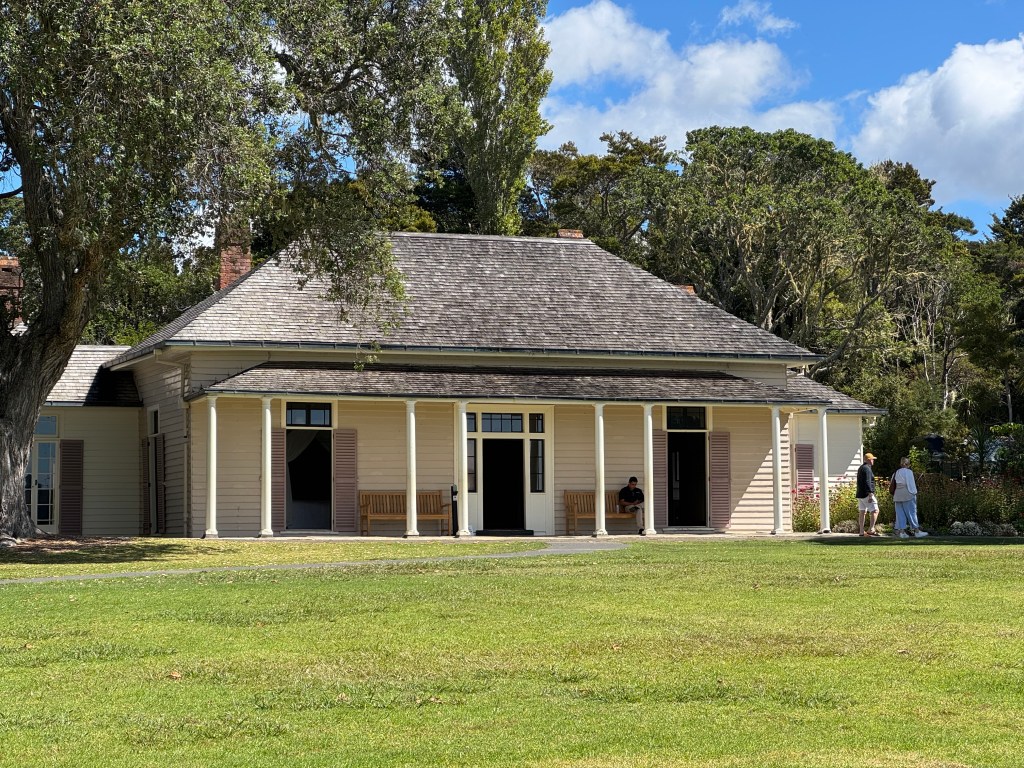
As a historic site, the interpretation in the museum and on the tour tries to tell the story in an objective way. Overall, the site presents the treaty in the context of Māori history, a bit more. There are two wakas– very impressive to see, on the property. These were made in recently history, and used for commemorative purposes. They reflect how the original Polynesians would have arrived in New Zealand.


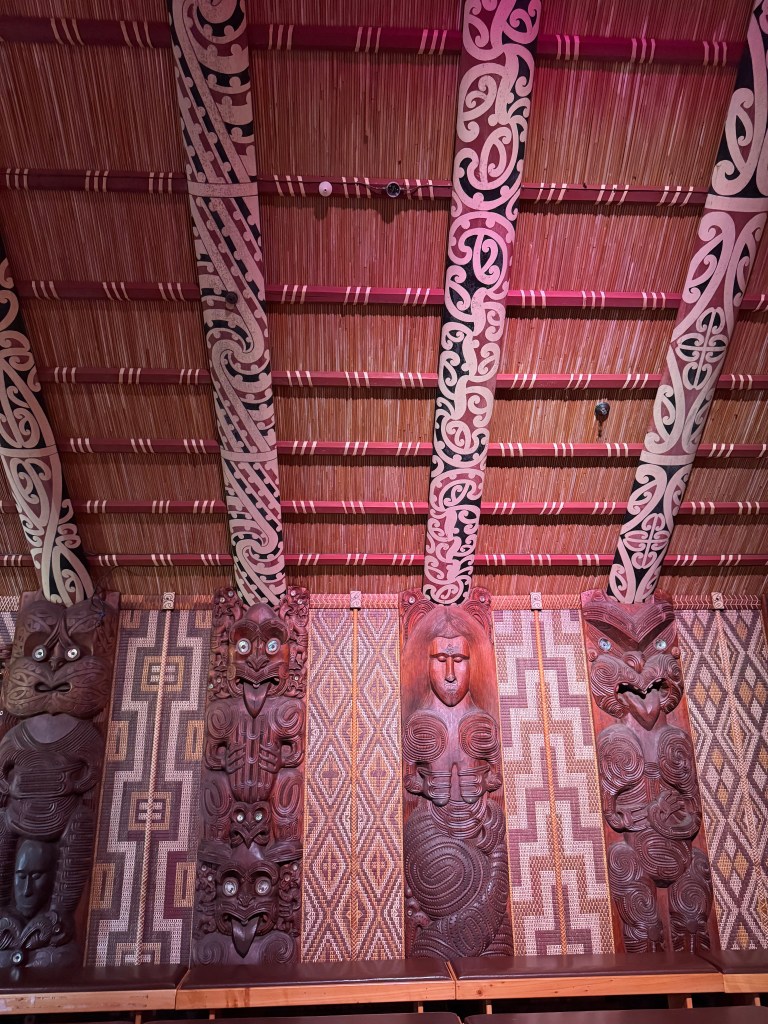
Our admission also included a Māori cultural performance, similar to one we saw in Rotorua. This did not have anything to do with the treaty, it was simply a way to show Māori song and dance.

There are two museums on the site. One recounts the history of the treaty. The second is called “The Price of Citizenship,” and tells the stories of Maori involvement in war. The treaty did not prevent bloodshed, and for the remainder of the nineteenth century, the New Zealand Wars were a series of engagements between Maori and the British. During the Great War, and again in WWII, Māori fought with Britain. Those troops were not integrated, and at least in the Great War, there were some British authorities who thought Māori should not serve since it was a “white man’s war.” So, not a pretty history.
Today, some believe the treaty should be renegotiated. Given that it hasn’t always been upheld, this makes sense, and there are people of European descent who, believe it or not, think the treaty gives too much to the Māori. The legacy of colonization though, is that Māori have lower income, poorer health outcomes, and shorter life expectancy than those with a more European heritage. With those facts, it’s hard to see the how the Māori have an upper hand.

Above all, the legacy of the treaty is that it was the only time the British made a contract with an indigenous people in any of its colonies. It certainly is the only treaty that is clearly a point of reference today. One legacy is that Māori culture is very clearly present, even to tourists. Through place names and art, certainly, but also on all signs. They are written in both English and Māori. Saying hello in New Zealand is likely to be a “kia oroa!” and the name of the country in Māori, Aotearoa, is seen pretty often too.

I’ll be thinking about the treaty and its legacy for the rest of my life, I believe. I try to imagine a USA where the native population could have had a future side by side with all the immigrants who came. It is hard to imagine, and the circumstances of colonization were different. Nevertheless, at least the spirit of equality was planted in the Treaty of Waitangi, and I see that as a point of hopefulness about how New Zealand moves into its future.


Leave a Reply