


We were last in Pompeii ten days ago! The tour today had almost no repeats– only of the Forum. Everything else was a new area that we had not seen before. The site opens and closes different areas each month, so that worked in our favor. The substance of the richness, though, is that the city of Pompeii was big! The site would take days to see completely. The photo above is of the gathering area outside the theater.


We visited the gladiator barracks. In one room, skeletons of a man and a woman were found. He was clearly a gladiator, while she was a wealthy woman. Maybe they were trying to escape together? I am not sure how the archaeologists know that she was wealthy?


There were many takeout restaurants in ancient Pompeii. Poor people would not have had access to ample kitchens, and anyway, having the cooking happen outside of your small living quarters would keep them cooler in the summer. These counter service places are frequent– we could see a couple on each block. The volcanic stone kept the pots warm, and I guess as long as the temperature was high enough, each pot of stew could keep for days.


The wealthy lived quite well. The homes had pretty large footprints, and opened to a courtyard that enabled rainwater to collect in a cistern. This was a show-off area of a house since even people on the street might glimpse inside to assess the prosperity of a family. Winter meals were eaten in an inside dining room, but well off homes had a courtyard garden for dining and use as a summer living room. These were elaborate and colorful and highly decorated.


Public baths were a huge feature of life. Women and men either had separate facilities or went to the baths at different times. It was a thorough process. After undressing in a locker room, usually people spent time in the medium hot area and exfoliated with special scrapers. Next, a cool bath was taken in the frigidarium, and finally a hot bath. The fires were stoked around the clock to keep the temperature up. In the baths shown above, it is possible to understand how the hot air moved under the flooring to heat the stone, because this bathhouse was under renovation at the time of the eruption. The cooler pool was furthest from the furnace (and not really frigid.) In the middle ages the quasi public nudity was considered improper and public baths were closed. In Pompeii’s day, though, they were inexpensive and built as a public service by politicians.


The Forum is a square. Three sides had temples: to Zeus, Apollo, and the Emperors Augustus & Vespasian. The city hall was on the fourth side. It is a vast space and marble would have been underfoot. The marble was reclaimed after the eruption as other towns, less harmed by the volcano, needed to repair.
After leaving Pompeii, we travelled back to Sorrento for lunch at a sumptuous restaurant called O’ Parrucchiano La Favorita. The vastness of the dining room was impressive. The food was ok, with the lemon cake dessert the stand out. I chose Chicken Cacciatore for my entree because it was such a standard of my mother’s kitchen.


We were sung to for most of the meal; two elderly gentlemen on guitar and mandolin serenaded us with Neapolitan songs like Funiculi Funicula (written to celebrate the funicular heading up Vesuvius in 1880), That’s Amore, and Caruso. (The opera singer spent his last weeks in the fanciest hotel in Sorrento and the city loves him for it.)

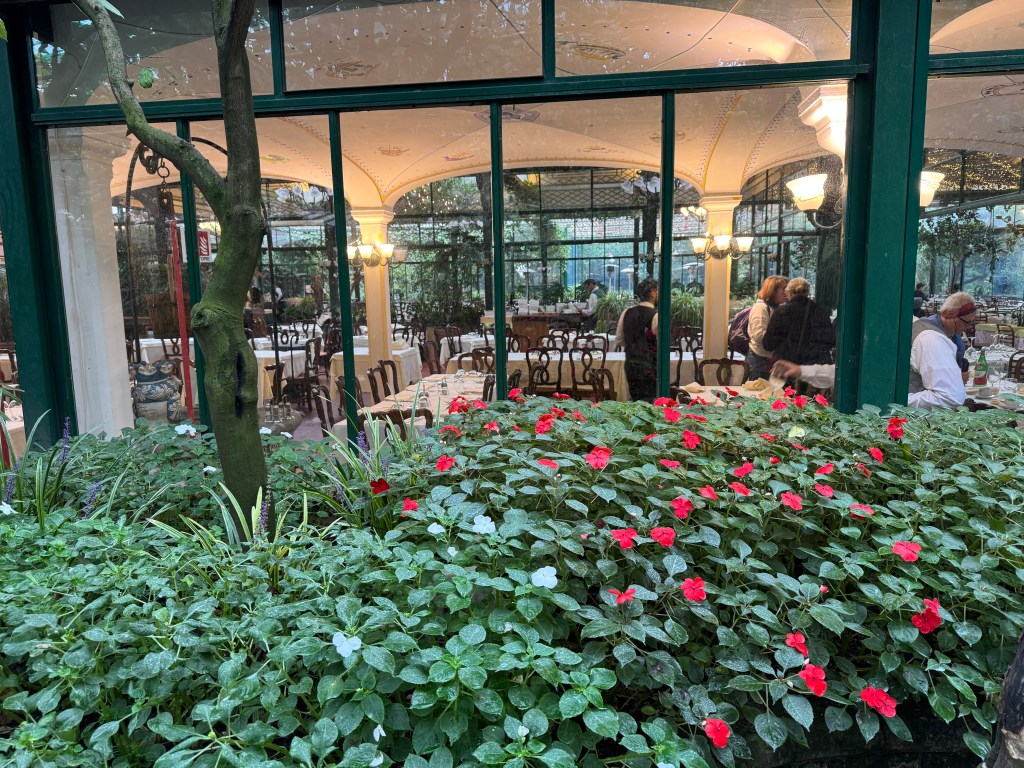


The restaurant has extensive gardens– it’s really impressive that they have so much space right in the heart of Sorrento.
It might have been a toursity combination of food, song, setting, but Sorrento is, after all, a tourist destination and these tropes actually did originate in the Naples area.


Leave a Reply