

We are in the Italian state of Campania, of which Naples is the capital, and the Amalfi Coast a chief storied location. We haven’t been far from the coast for days now. Today we did drive inland to visit Padula, where we toured a monastery with the largest cloister in the world. Inland from the coast, the people of the area say they are living in Cilento, a mountainous region with a lot of agriculture, a vast national park, and many small villages. The area we drove through was a wide, flat valley, with tall mountains on either side. It was clear why the area grows such good food.


The Charterhouse of Padula was founded in 1306 as a Carthusian Monastery. The patron saint of this charterhouse is St. Lawrence, who was burned to death on a grill. A grill motif is frequently found in the decorations. The building is enormous. We were almost the only people visiting today, which made it feel even bigger and more deserted. The Carthusians were founded by St. Bruno in 1084– so if wasn’t too long after that the Charterhouse of Padula was founded. The monks lived a life apart from the world, and mostly from each other. Much of the work and connection to the community was carried out by lay brothers. The order began in France, and they are the order monks responsible for making the liqueur Chartreuse (in France, not in Italy.)
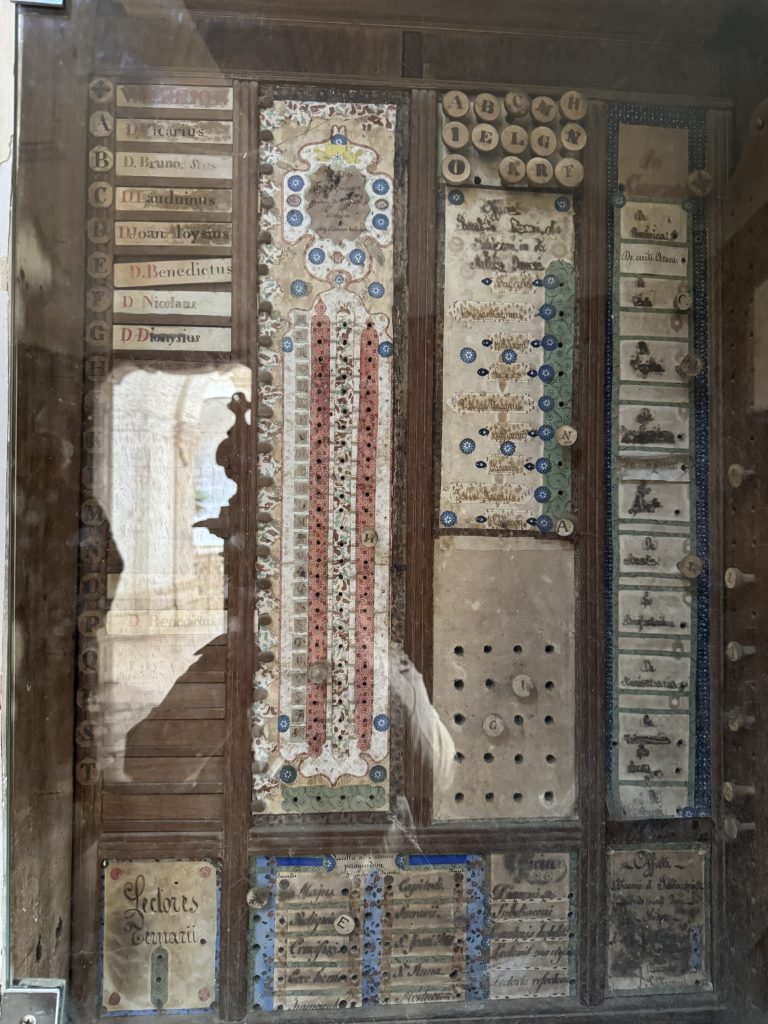


The special decoration in the sanctuary is called scagliola. It’s made from grinding up marble and other stones, then building designs with the colors. Outside the refectory was a sort of job chart, seen in the left photo above. It still has the names of the last monks, and is coded for the area of work they were given for their last assignments.


The contemplative monks would have been second or even later sons of nobles and landed gentry. Since the family land could not be divided and given to them, they were sent to take vows and remain cloistered away. They had pretty good living situations, for monks. Each had a suite of rooms and a private garden. They would have had work to do each day– in the garden or with manuscripts. Of course, there was also prayer and attending three services a day. They saw family once a year and had one time a week to speak with the other brothers.
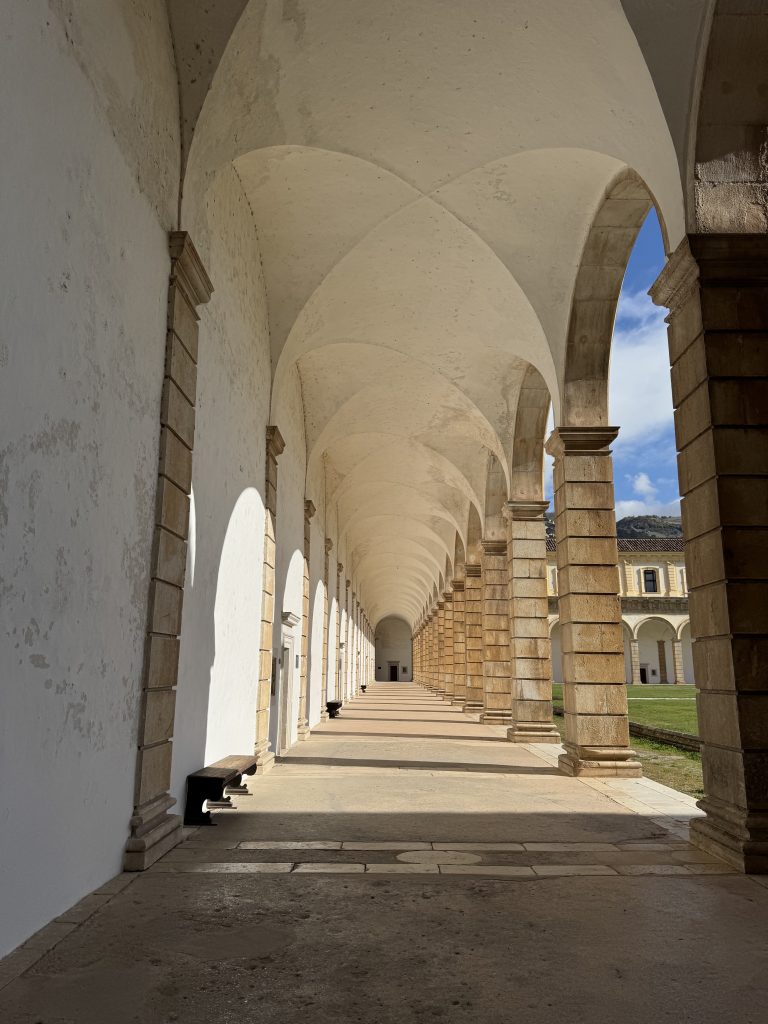


The cloister is the largest in the world– nearly three acres! As you can see above, it is quite graceful and beautiful. I would have been happy to walk the perimeter but we did not have the time.


The cloister has an upper gallery for walking as well, and this is reached by the “Magnificent Staircase,” which looks fit for a palace. Equally impressive is a spiral staircase that is in a corner, and is self supporting.
The Charterhouse served a strong purpose for the entire community, as an employer and a source of trade. The Carthusians were good at agriculture, and the marshy land of this wide valley needed some expertise. The apothecary helped heal the illnesses of the town folk.

The very large kitchen had a scullery corner with fountains for water to come in , and later run accross the slightly inclined floor to drain out. The large table, above, is also slightly inclined, with a rim and one water guide, to make cleanliness possible.
The Napoleonic Wars brought an end to the Charterhouse. Napoleon suppressed the contemplative orders, and had his armies removed the paintings and many other decorations of the Chadterhouse. Fortunately, some of the art remains. The building was used for other purposes after 1866, declared a national monument in 1882, and a UNESCO world heritage site in 1998. It has been restored over the past years, but it is huge and will need continued work.


We had lunch at a farmhouse with a very cheerful proprietor. The plate above shows only the antipasti; there was pasta and gelato to follow.
We had a short break back at the hotel and then were off to our farewell dinner at the estate of a baroness from the Baratta family. She watched as we were tutored by a large staff in cooking our own dinner: pizza, ravioli, some antipasti, and Easter pie for dessert.

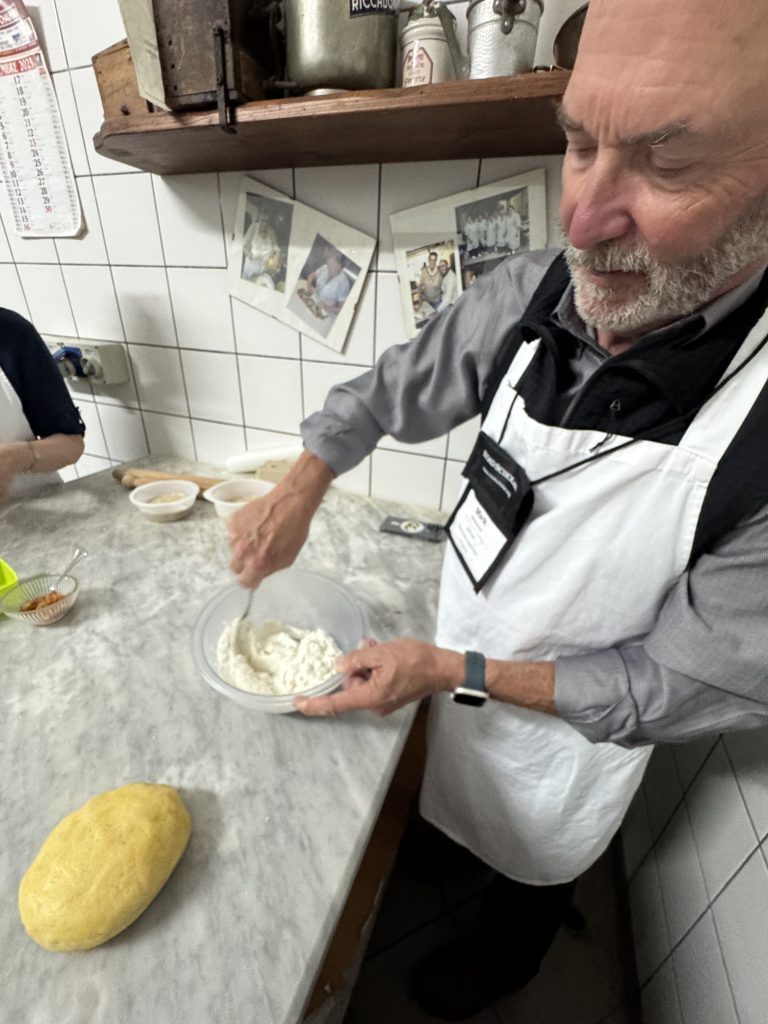


It was fun! The kitchen was large and they had a huge marble table for us to work on. All the ingredients were measured out, and someone came by regularly to take away the dirty bowls and scrap the counter. It’s really not that hard to make ravioli, and this kitchen had a motorized pasta maker to spread the sheets after we’d made the dough. The mozzarella and ricotta were bufalo. I am going to miss the buffalo fresh ricotta! When we’ve been served it, it is always just hours old. It really doesn’t taste like any other cheese. It is mild and creamy, and at lunch was served with a dollop of orange marmalade.
We say good bye to Campagnia in the morning.


