

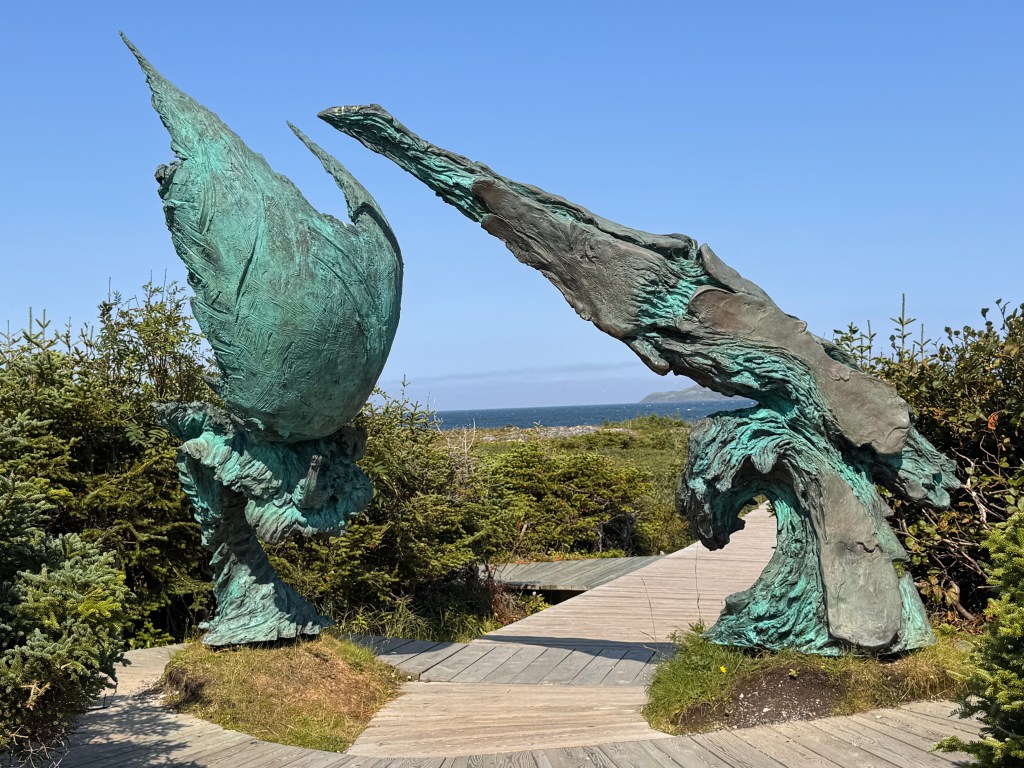
The beautiful sculpture, above, represents an historic moment, though no one realized it at the time. As was explained by our Parks Canada interpreter, the fantastic Kayla, humans evolved in Africa, and began to migrate north, then east and west. Spheres being what they are meant that eventually, descendants of the two groups met, and that meeting was between the Norse explorers from Greenland (via Iceland) and the ancestors of the Beothuk people of what is now Labrador and Newfoundland. In the sculpture, the Norse are represented on the left, and the indigenous New World peoples on the right. While much is made of Columbus’s expedition, archaeology of the L’Anse aux Meadows site has confirmed that Europeans visited, though did not remain, in North America, much earlier. The L’Anse aux Meadows site was in use for about 10 years, with one wooden artifact dated to 1021.
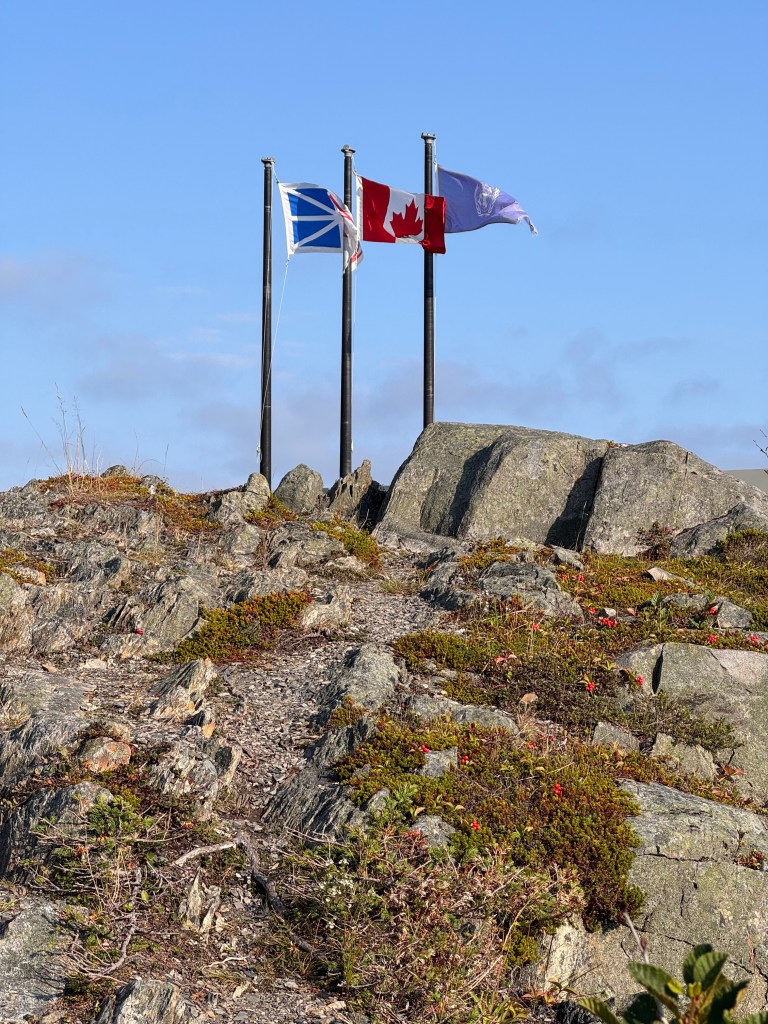
We had a most beautiful day to visit. As rather bad luck would have it, there was a cruise ship in port, and as this has become a very popular site, we shared our visit with thousands of other people. You won’t see them in the photos very much because I tried to be strategic, but really, they were more or less in my way at every turn. To improve my karma, from time to time I helped some of them with group photos. One woman, reading my name tag, breathlessly congratulated me on being a “Rhodes Scholar.” “Thanks to my checkbook and the homonyms of our English language,” I thought, as I wished her a nice trip.
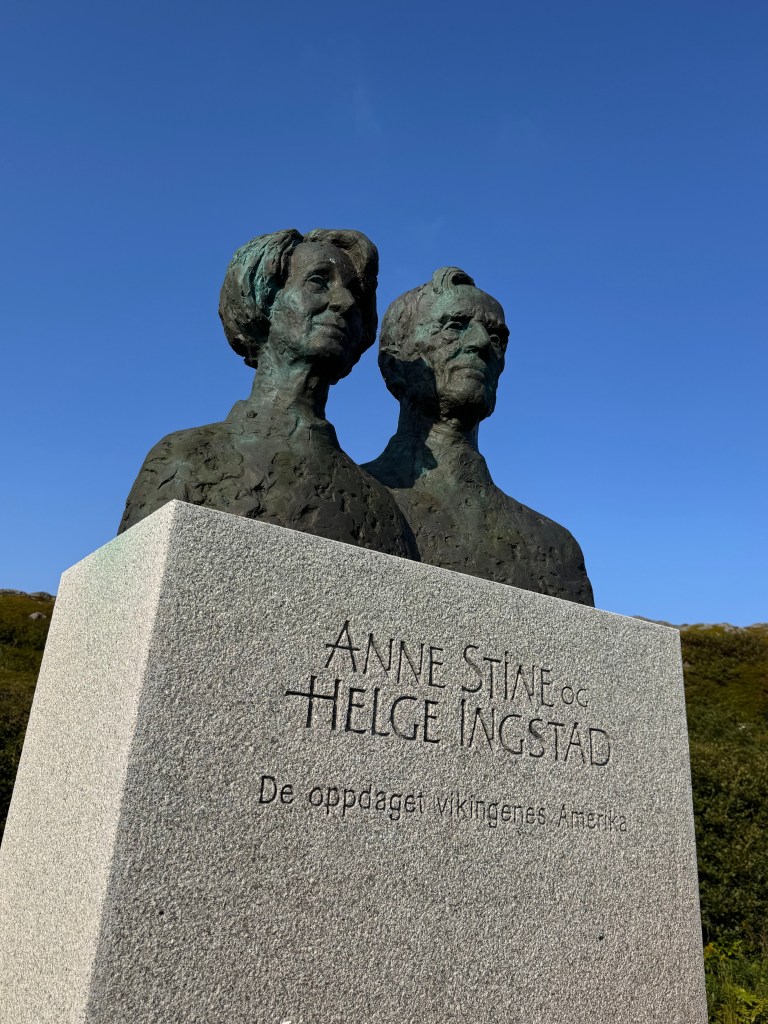
The story of the Norse site’s discovery began in 1960 when Helge Ingstad persisted in believing that the area called “Vineland” in the Norse sagas was likely further north than others thought. He came to this rural community and began asking people if there were any oddly shaped mounds. A farmer said, “why yes, right on my land,” and Ingstad hurried back to Europe to fetch his archaeologist wife Anne Stine, who began an excavation. [This is example #1 of the day’s 20th century men who married well.] The ancient community was in a fairly tight configuration, and eventually a piece of a Norse spinning tool was found. Ingstad and Stine had confirmed the Norse presence in North America!
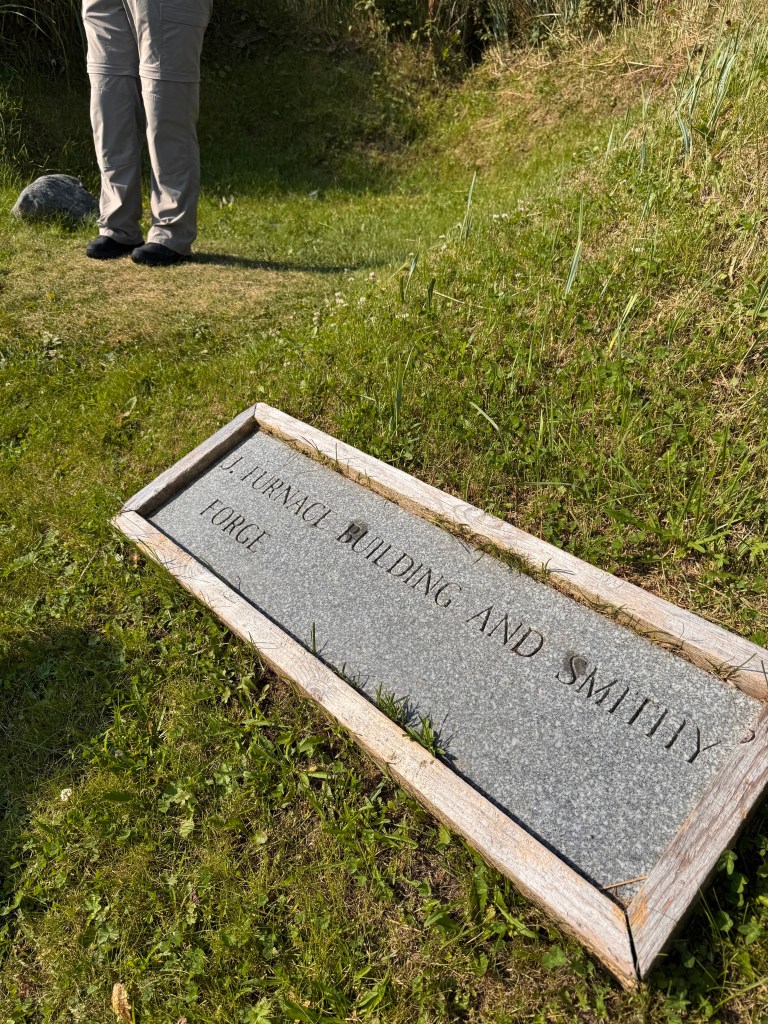
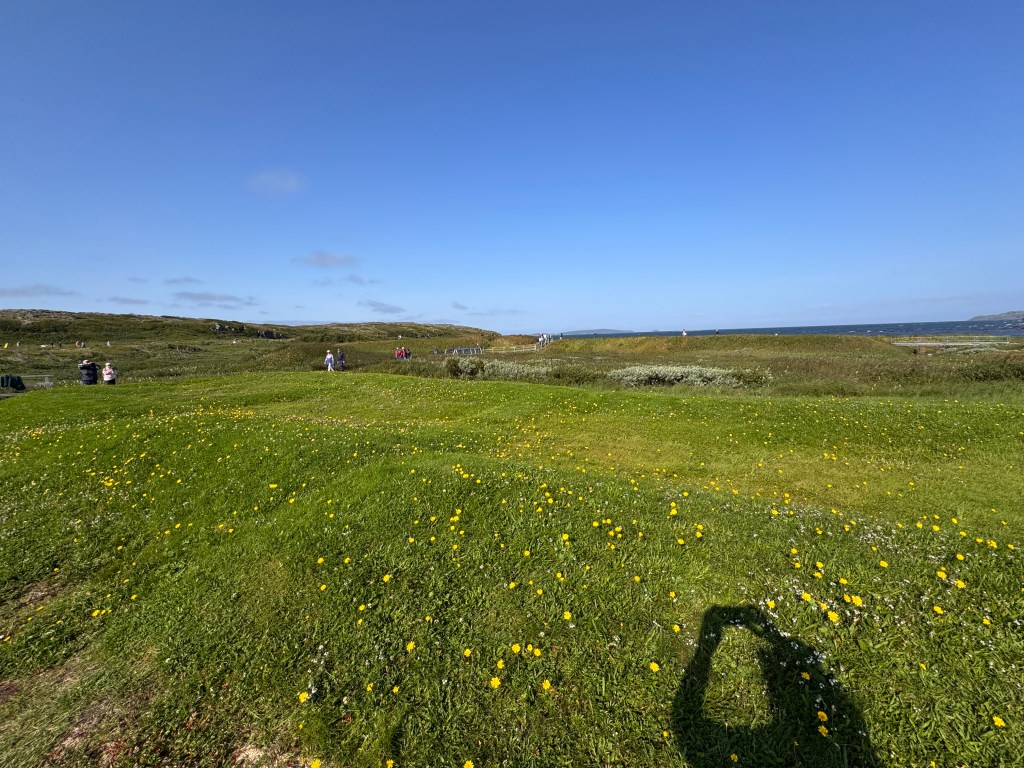
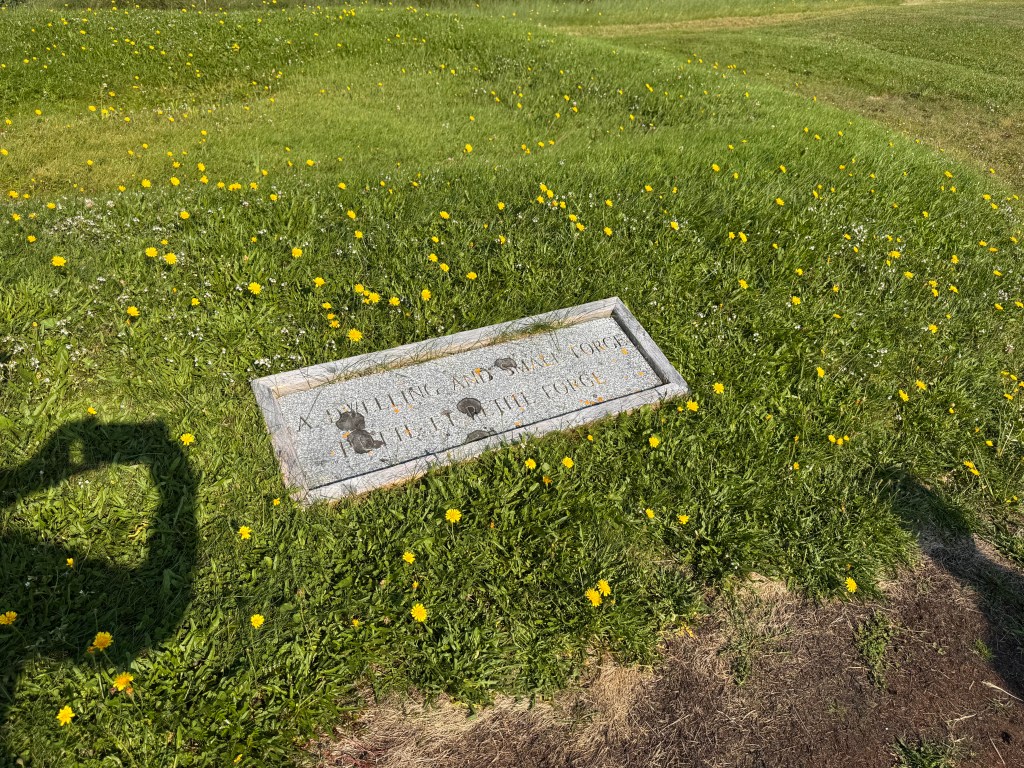
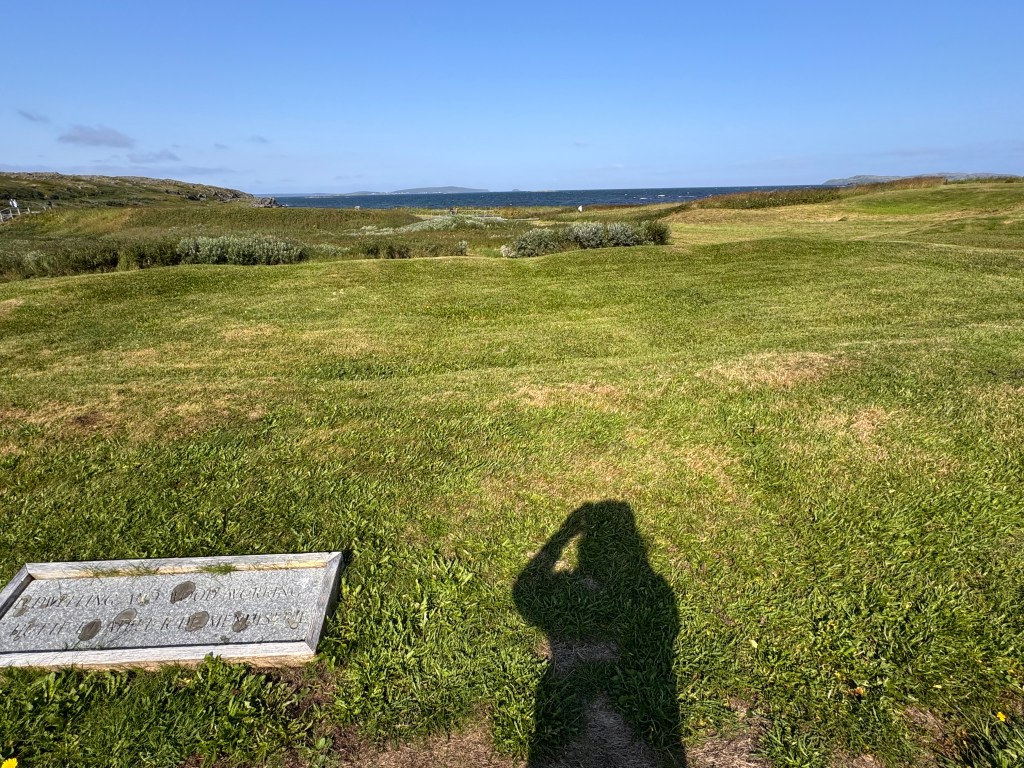
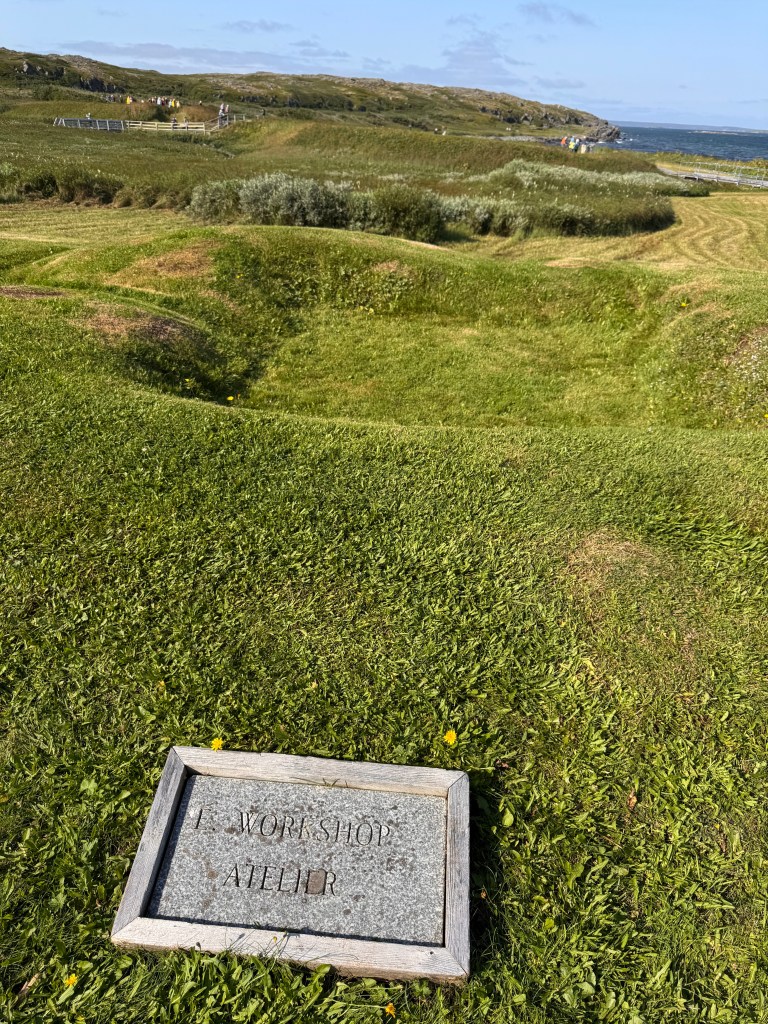
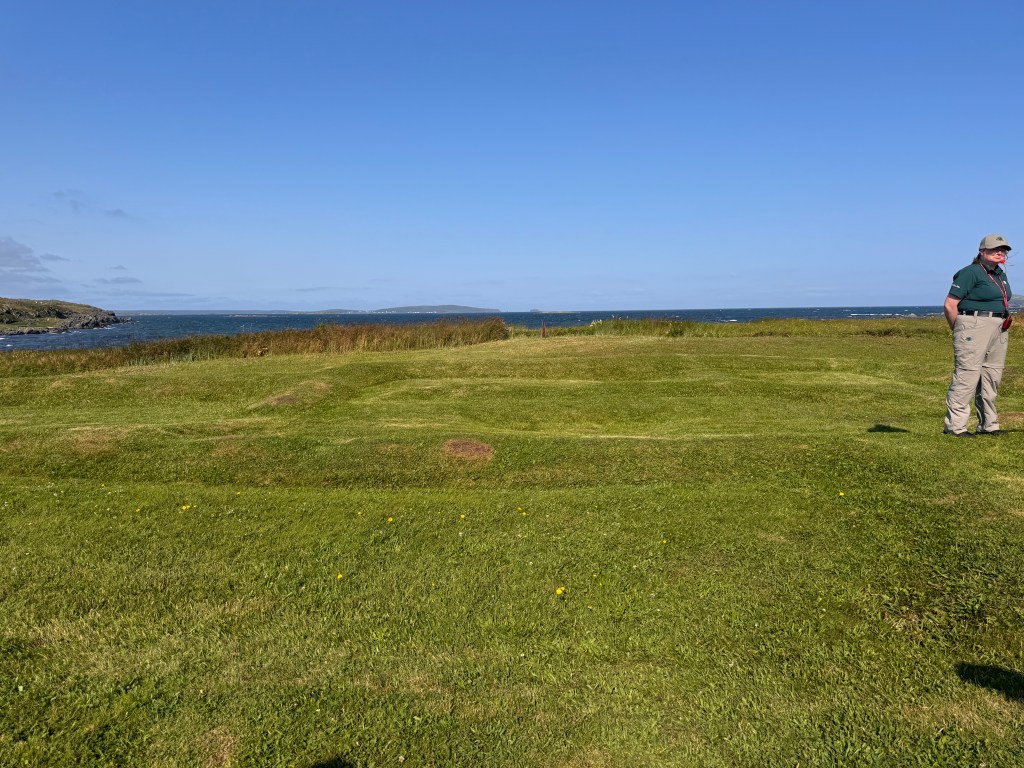
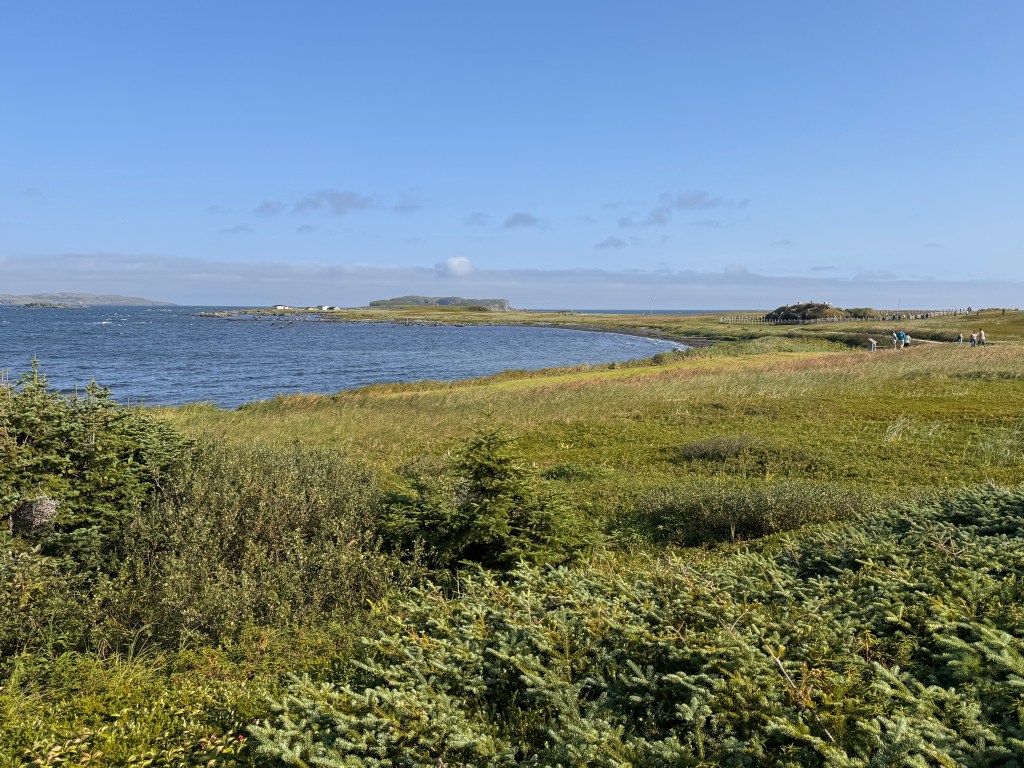
The shoreline has moved further out from what would have been a cluster of buildings on a beach. Now the sites are depressions in short grass. L’Anse aux Meadows was a way station and base camp, a place to land and recuperate after the voyage from Greenland, to overwinter, and to set out on further expeditions. They explored further north (“Markland”) and further south to “Vineland,” a land with “hardwood, self-sown wheat, and wild grapes.” After about 10 years of occupation, the Norse decided to abandon L’Anse aux Meadows forever. We know this because they left very little behind, and they burned the buildings when the left. This shows that they weren’t in a panic to leave, and they didn’t plan on coming back. The reasons the Norse abandoned L’Anse aux Meadows rather than staying an trying to colonize are lost to history. Archaeologists and historians speculate that hostile interactions with indigenous peoples may have become more frequent, and/or that that it wasn’t possible for the Greenland colony of fewer than 1000 Norse to continue support of expeditions to the west. I find these explanations rather unsatisfying because the Greenland colony was rather unsuccessful and the North American location had so much more to offer. Had the Greenland site been administered better, perhaps North America would have been a better venture and life as we know it, could have been very different. My imagination doesn’t really matter though, because the reality is, the Norse left, and their presence was all but forgotten except for the sagas recalling it.
One of the main jobs at L’Anse aux Meadows was boat repair, and for that the Norse needed iron boat nails. Archaeologists uncovered remains of a kiln for smelting iron from bog ore, and a smithy for fashioning nails. The iron was not the best quality, as can be inferred from the single nail that has been recovered. Nevertheless, this remains the first time iron was smelted in the New World.
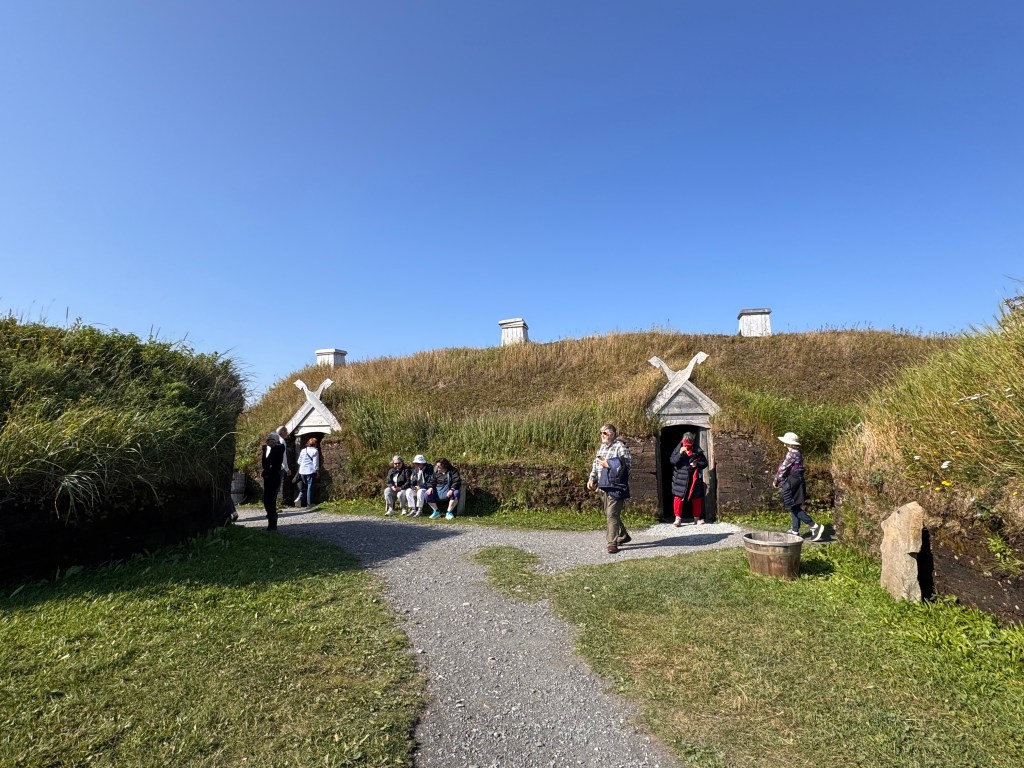
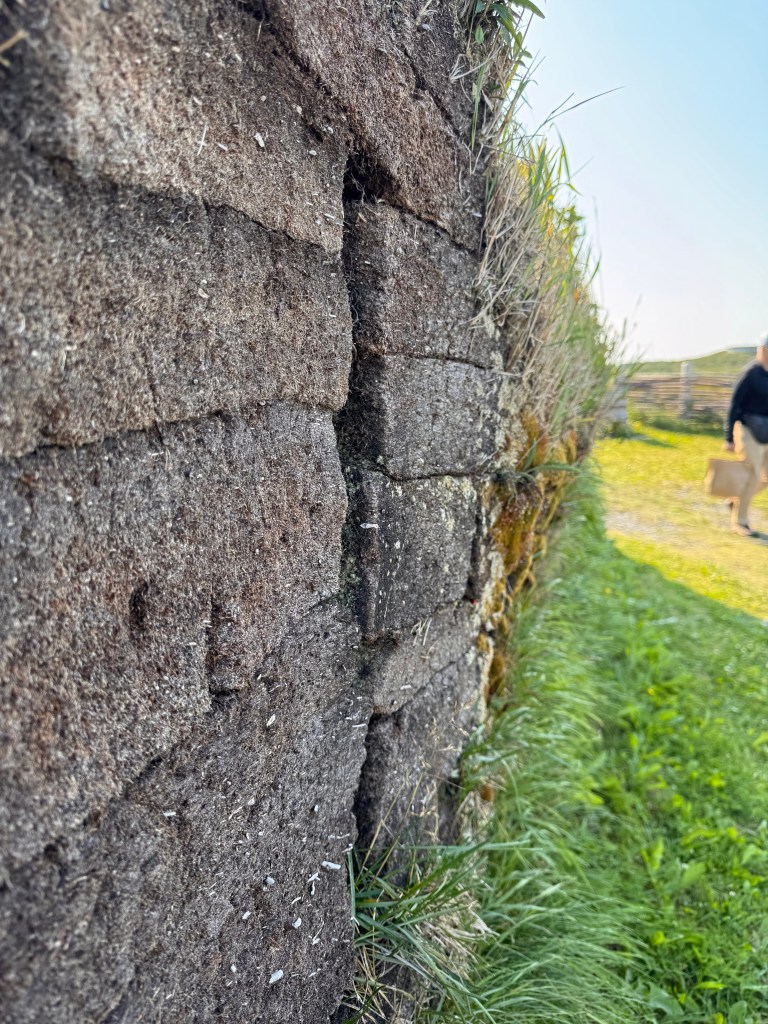
Parks Canada has recreated what the long house and some workshops might have looked like. Excavations of the original longhouse show that it was very large– maybe 1600 sq. feet, with a primary bedroom, a kitchen with many sleeping benches, and a fiber workroom. It may well have been the home and headquarters of the famed Leif Erikson, who was the leader.
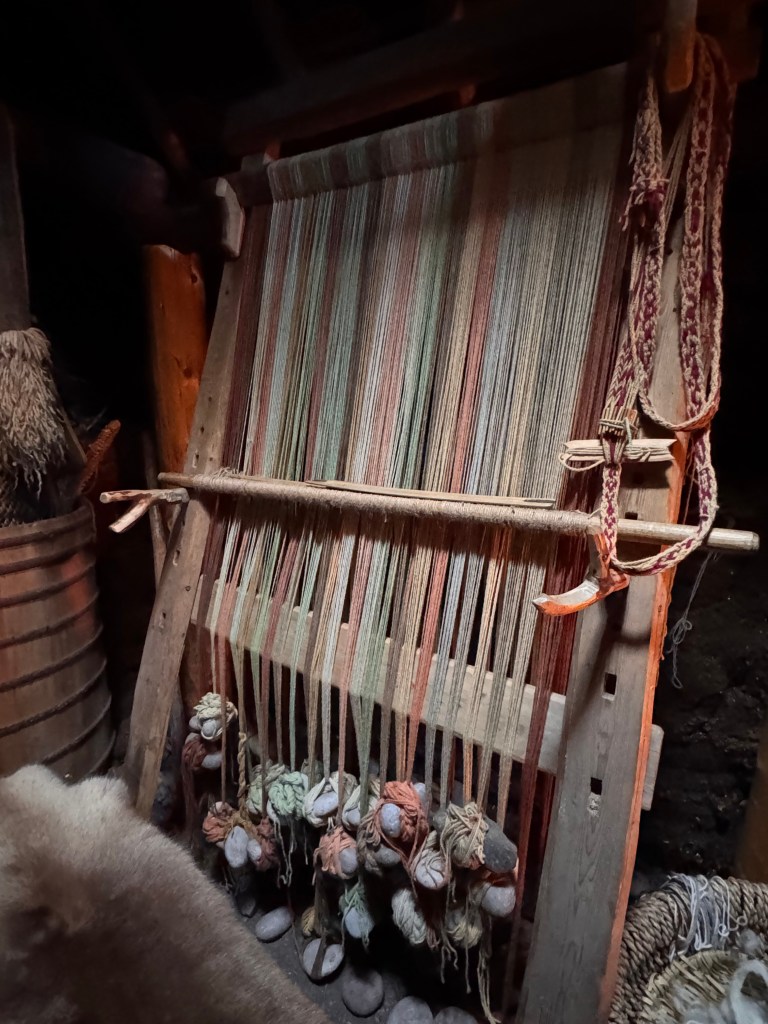
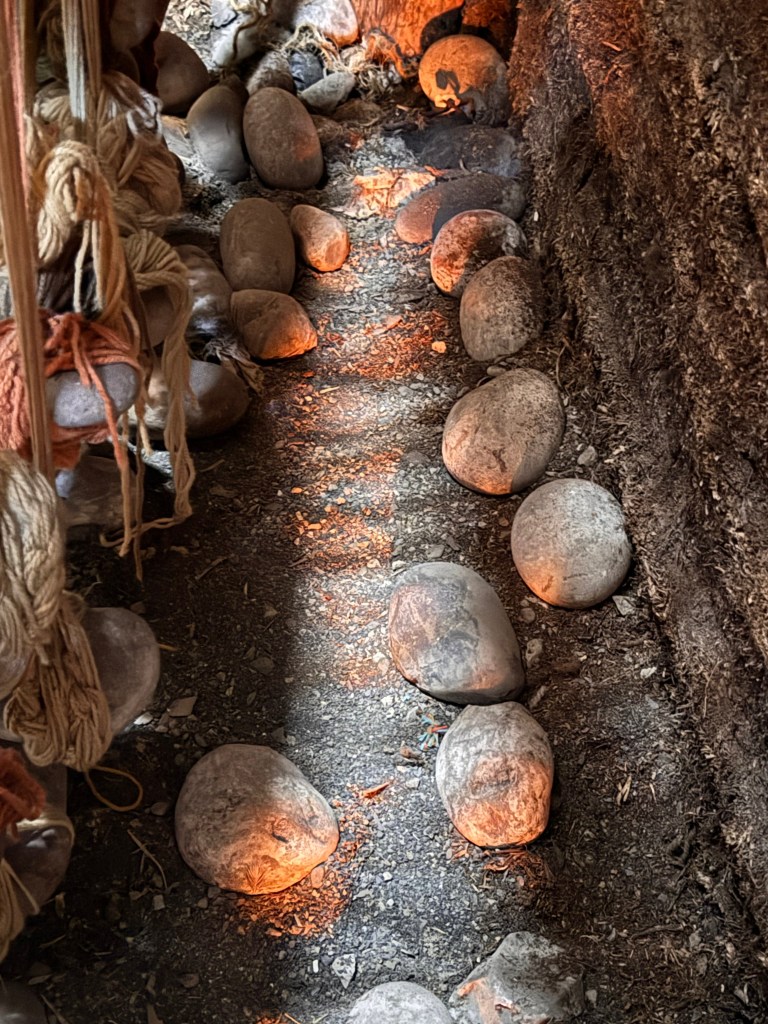
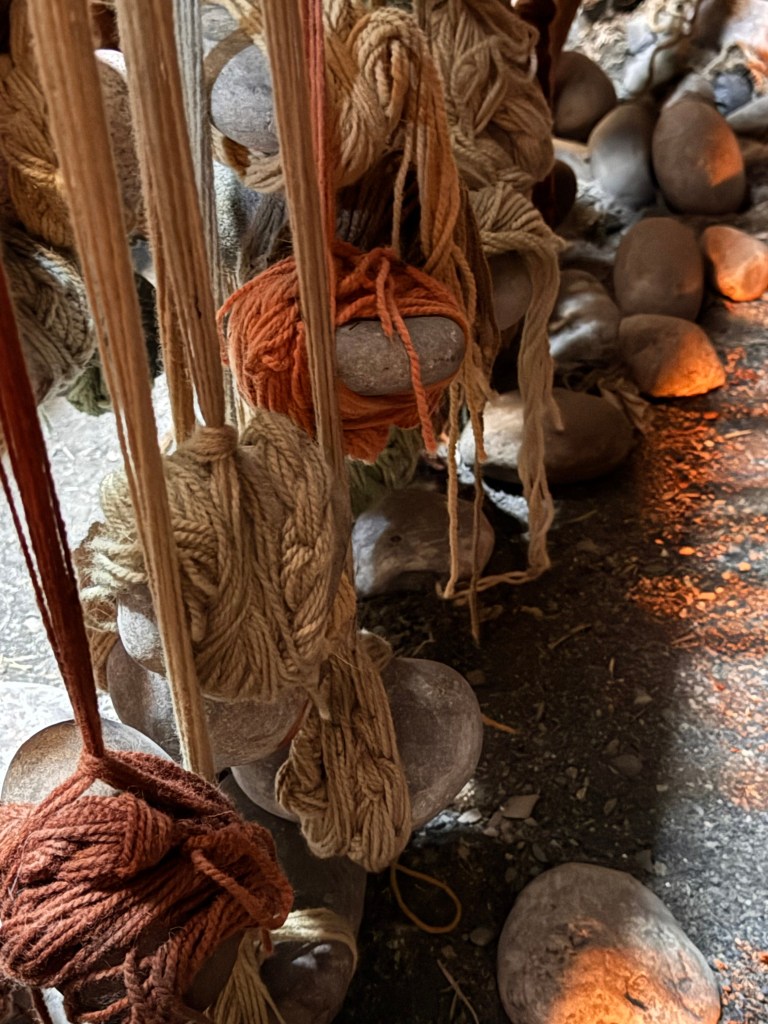
As a former weaver, I was very interested in the confirmation that spinning and weaving took place here, and in the re-created Norse loom. Evidence of the fiber work means that women were part of the expedition– in fact, it was their tools for spinning that first confirmed the presence of the Norse in Newfoundland. Women would have been vital because they knew how to make and repair the woolen sails that were so necessary for the Atlantic voyage. The park has set up a loom that shows how weighted rocks were used to keep the warp under tension, and you can see this in the photos above. The rocks like these were left behind, more or less in a pile, which helped confirm the presence of the Norse.
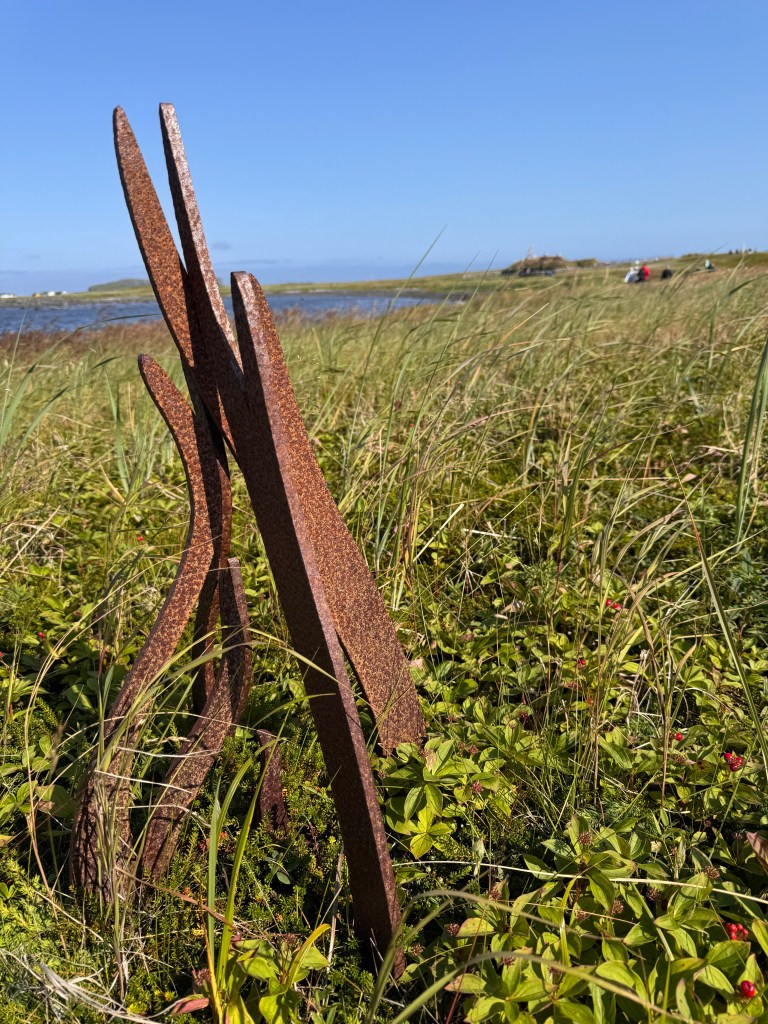
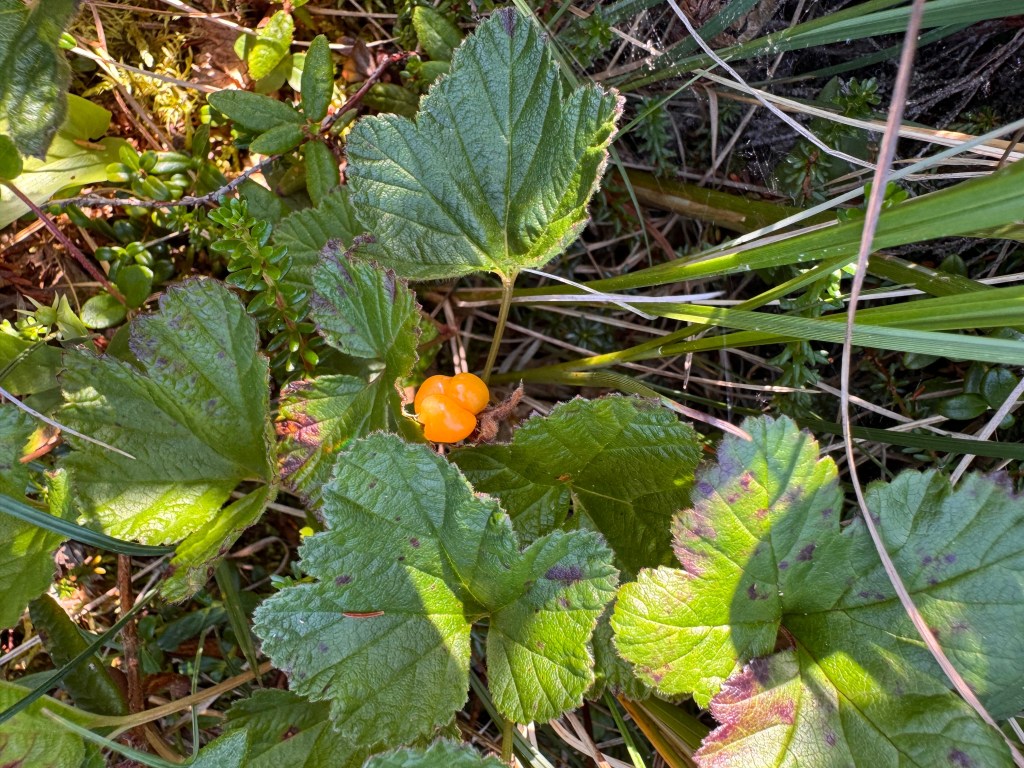
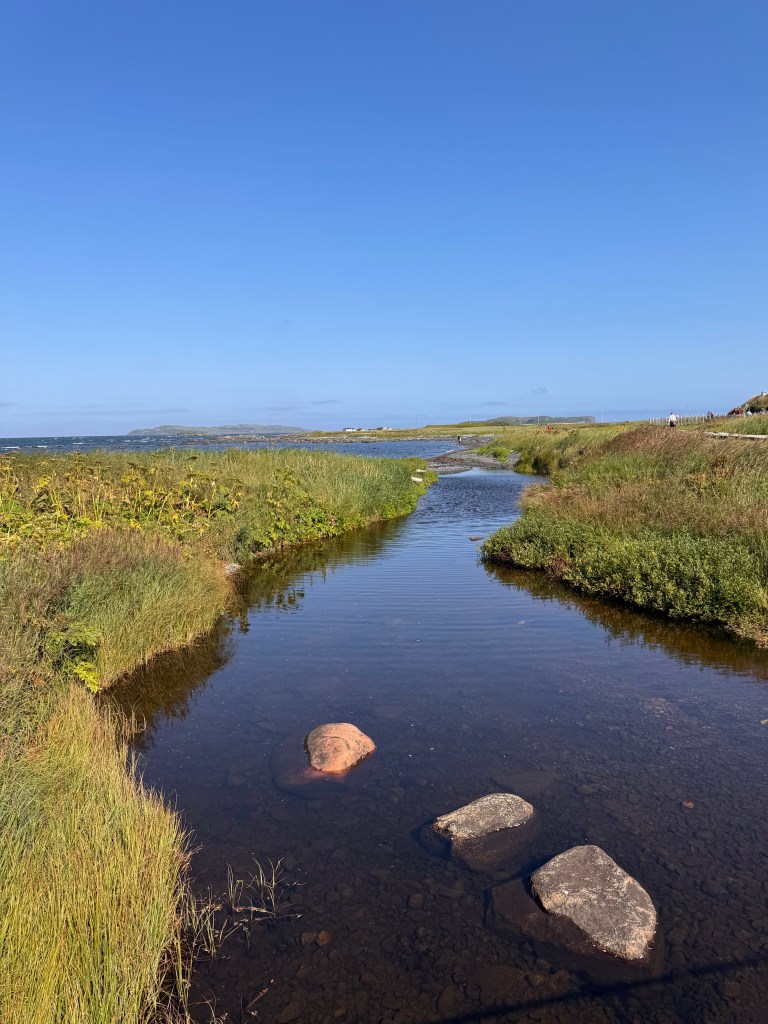
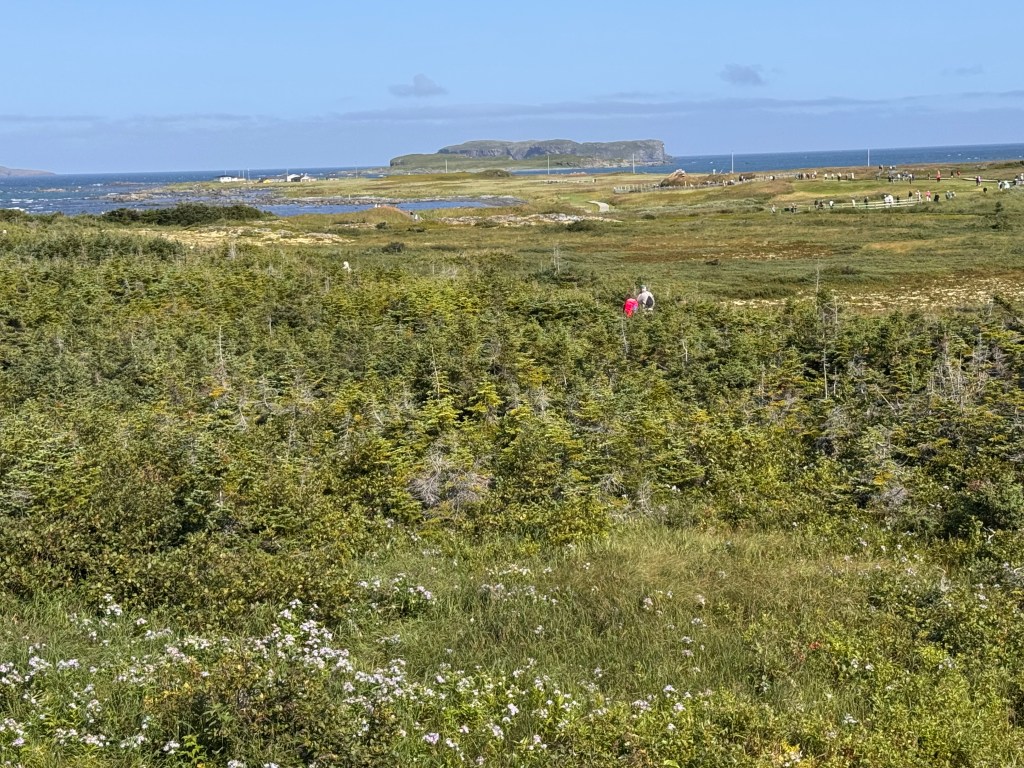
It’s really such a beautiful park. In addition to the Norse history, modern iron sculptures show where ancestral indigenous people had their fires. While the Norse sagas relate contact between these people and the explorers, this contact did not happen at L’Anse aux Meadows. Parks Canada has a well built and maintained boardwalk that takes visitors around the archaeological depressions and to the reenactment location. We found our first bakeapple (cloudberry) just off the boardwalk (middle picture)!
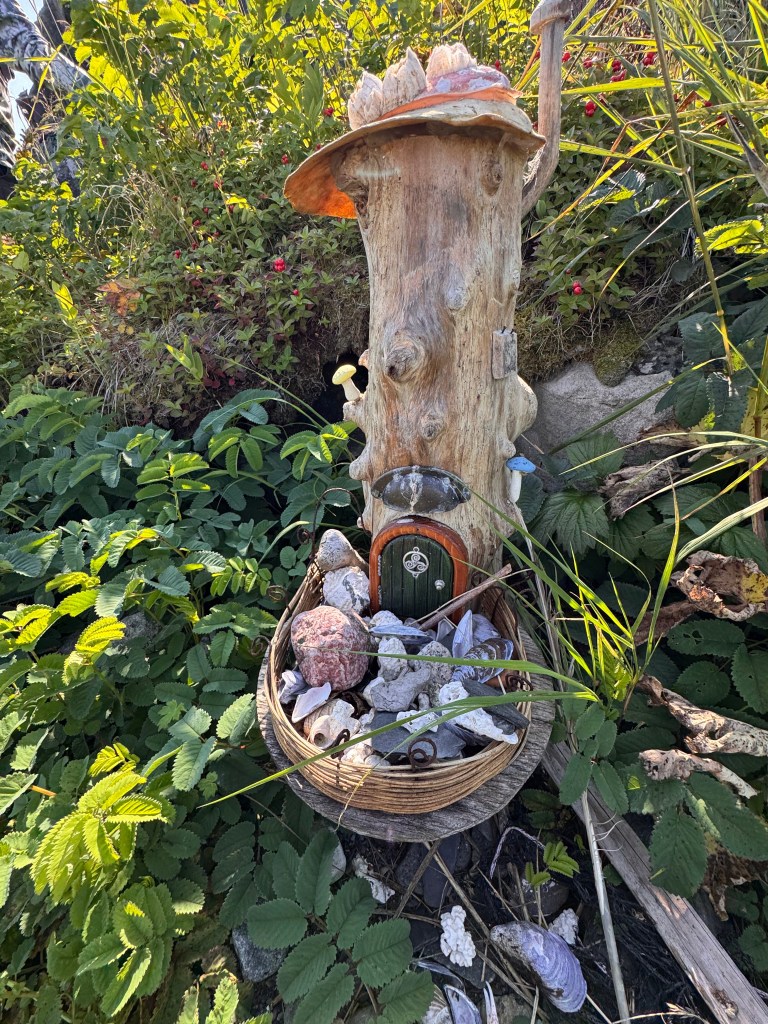
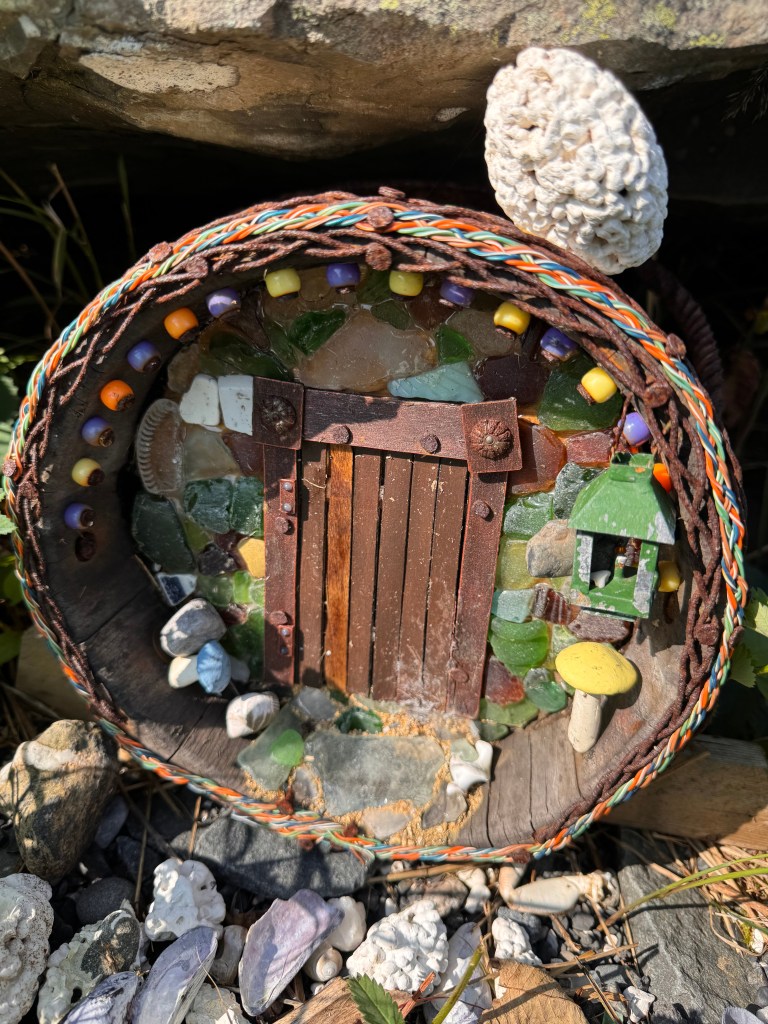

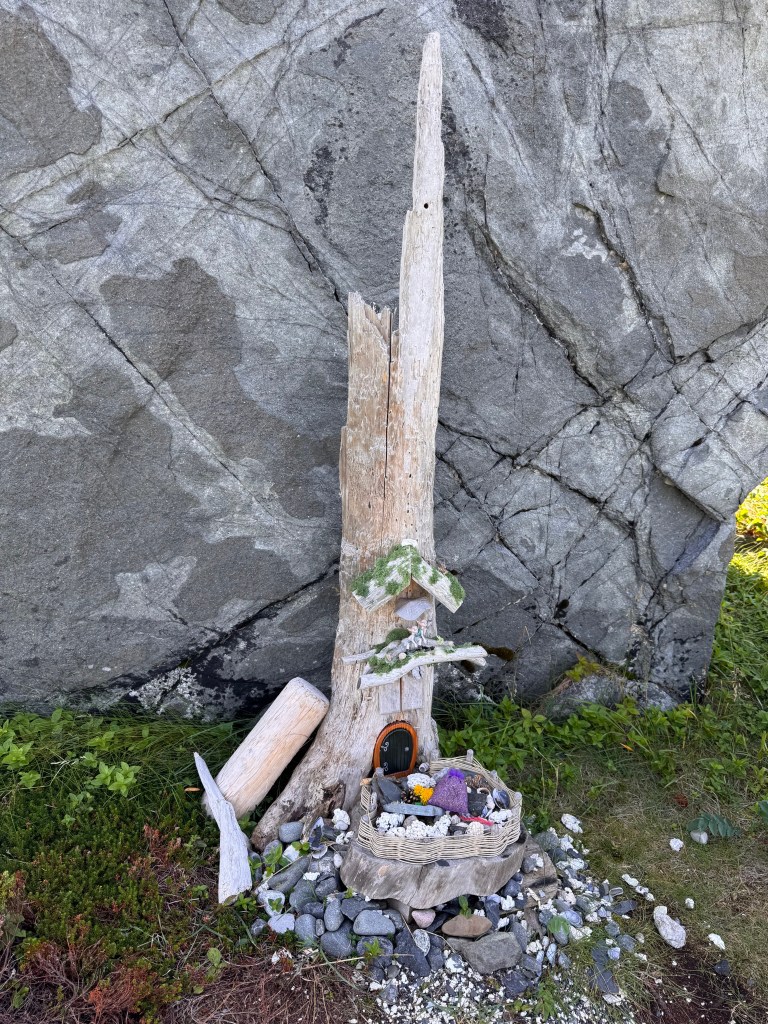
We also walked along a trail closer to the ocean, and there were adorable and elaborate fairy houses to be viewed.
After a fish cake lunch, we headed off to a museum in St. Anthony that marks more recent history: the Grenfell Centre.

Wilfred Grenfell (1865-1940) was a rather late bloomer, raised in Britain, who became a physician and took a trip to Newfoundland where he was moved by the plight of the poor people there. With poor nutrition, little cash money for shoes, and meager shelter, most of the population was at the mercy of the “truck” system, which kept fishing families in debt to the company store, year after year. Grenfell became a physician/missionary and worked to improve the lives of everyone he met.
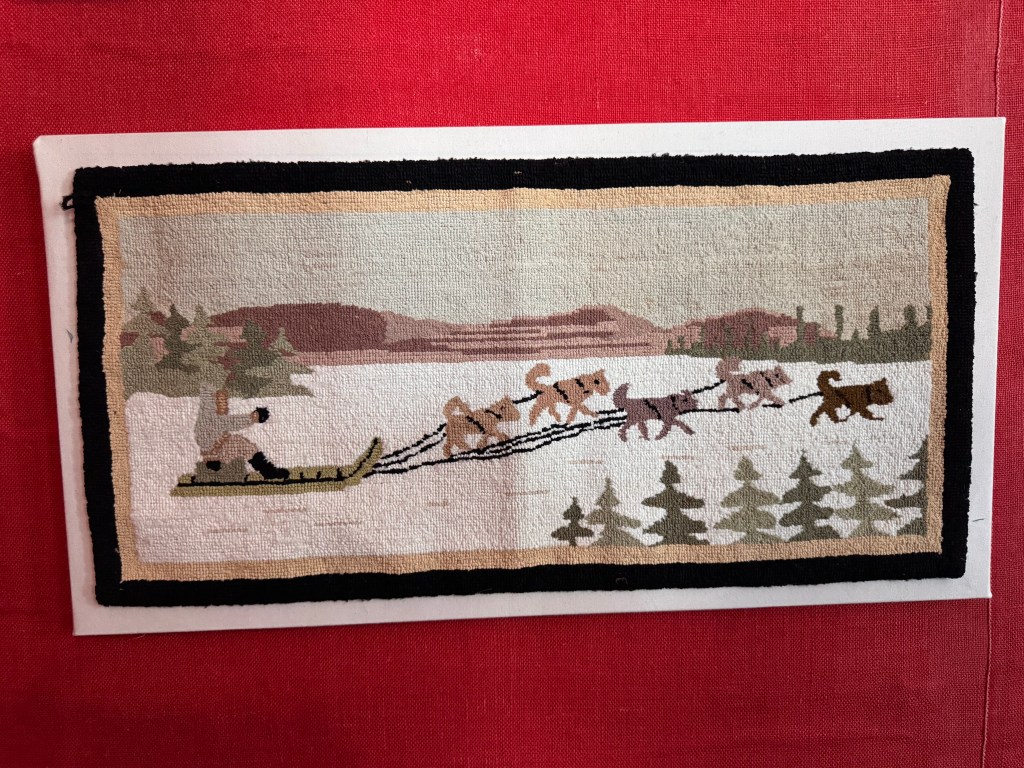
He had some great ideas, including building “industrial,” a way for people to do handwork to sell for cash. The hooked rugs are a particularly fine example. Eventually, Grenfell met and married an American heiress with connections, Anne MacClanahan (1884-1938), who was very important in publicizing his work and assisting him. [Example #2 of 20th century men who married well]. Together they built a hospital, which is still in service, along with the workshops.
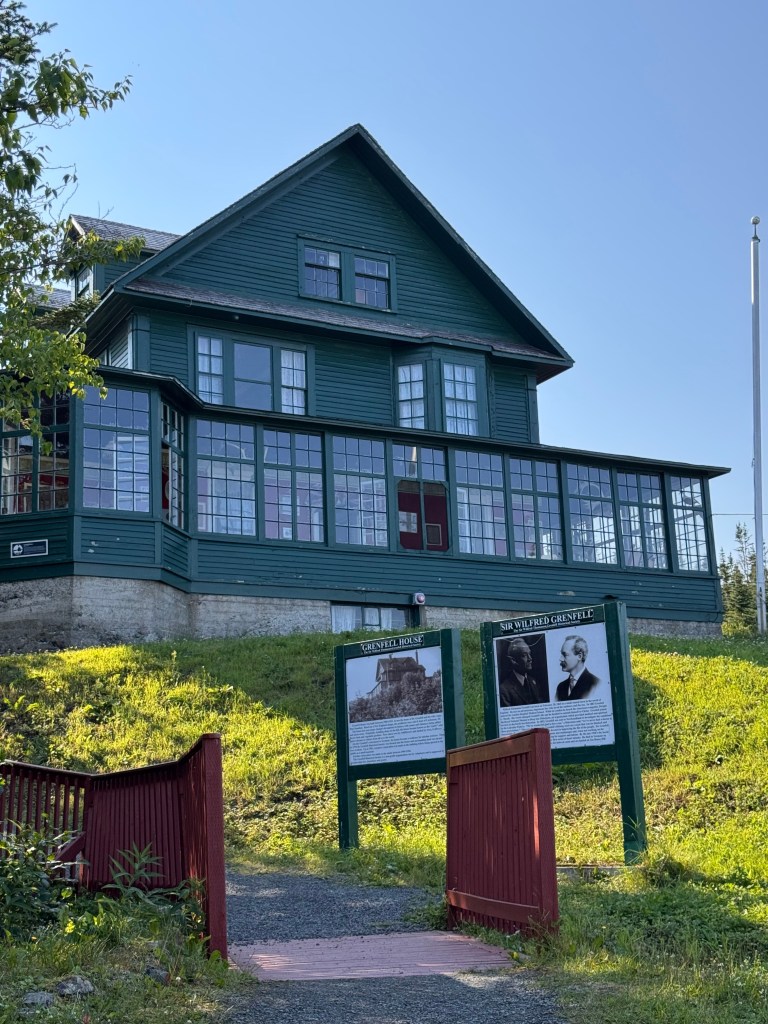
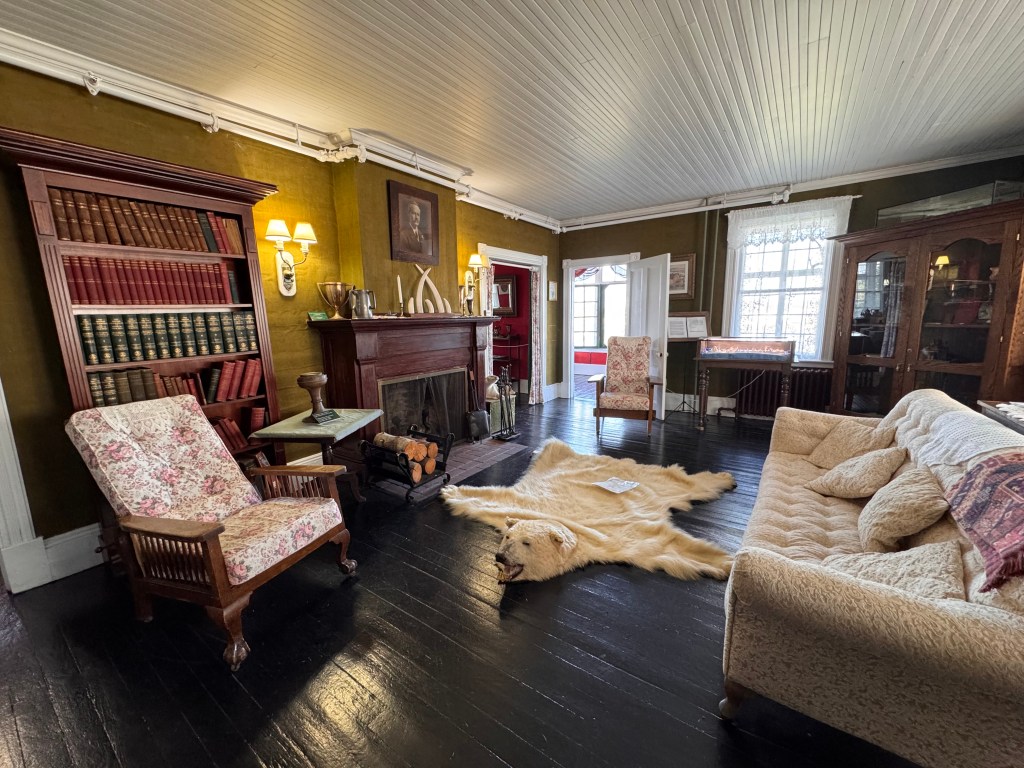
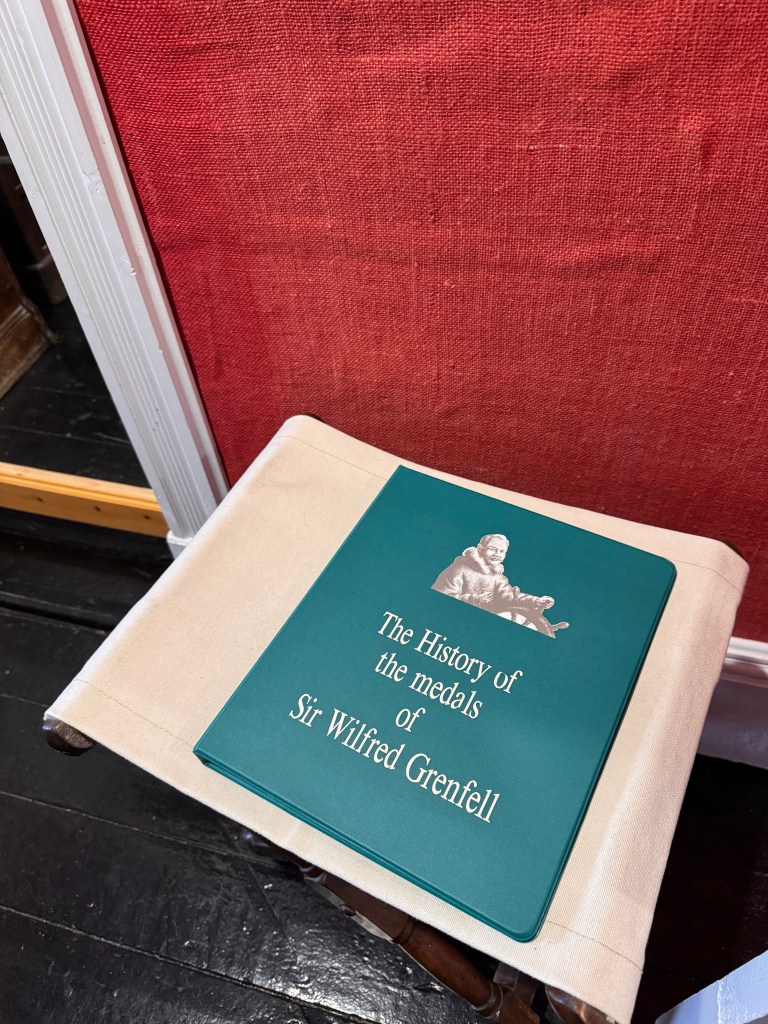
The charasmatic story of the Grenfells inspired other doctors and nurses to come to Newfoundland, and the Centre was also helpful in sending promising students away for nursing and midwifery education so that they could return to help their communities.

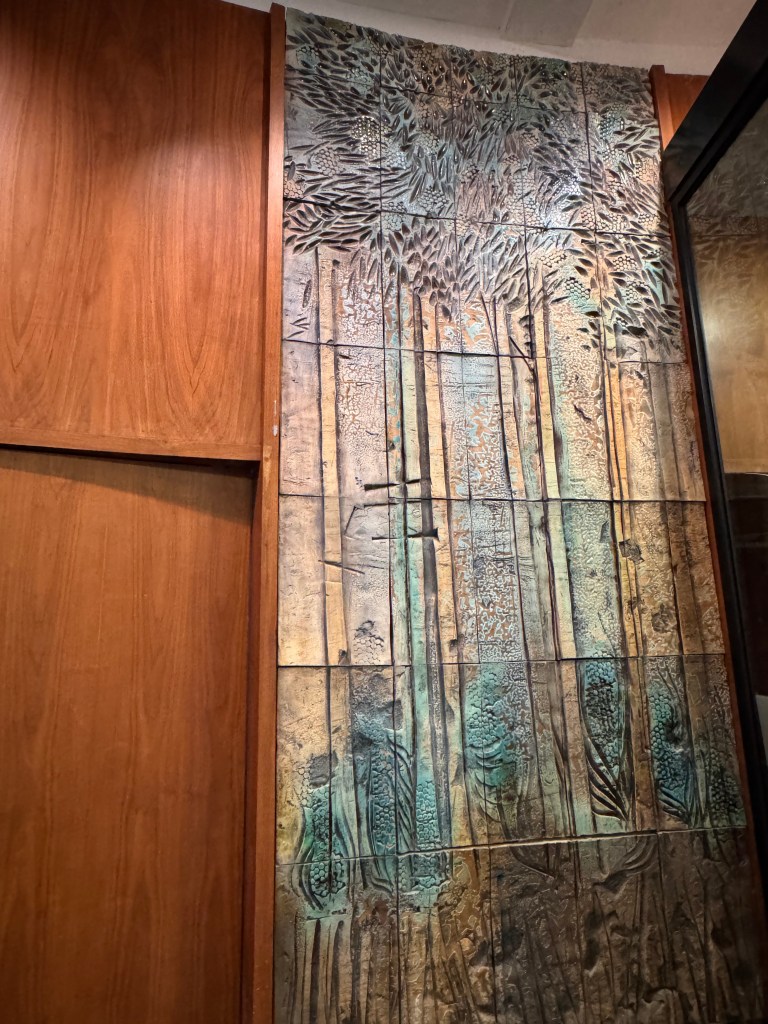
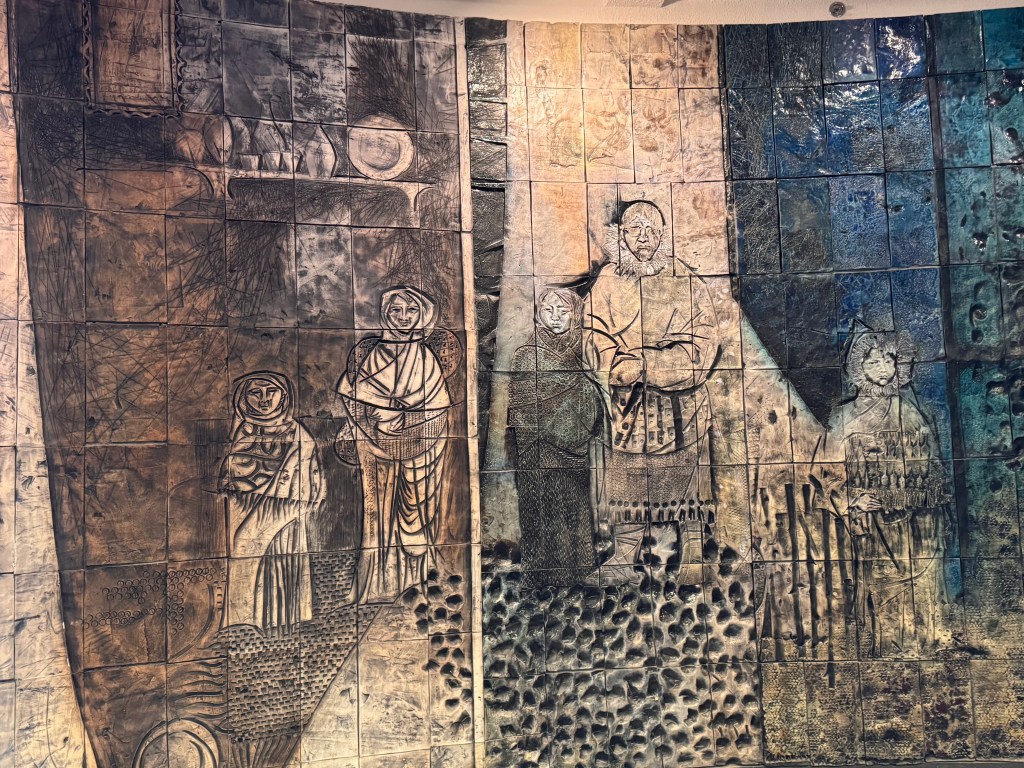
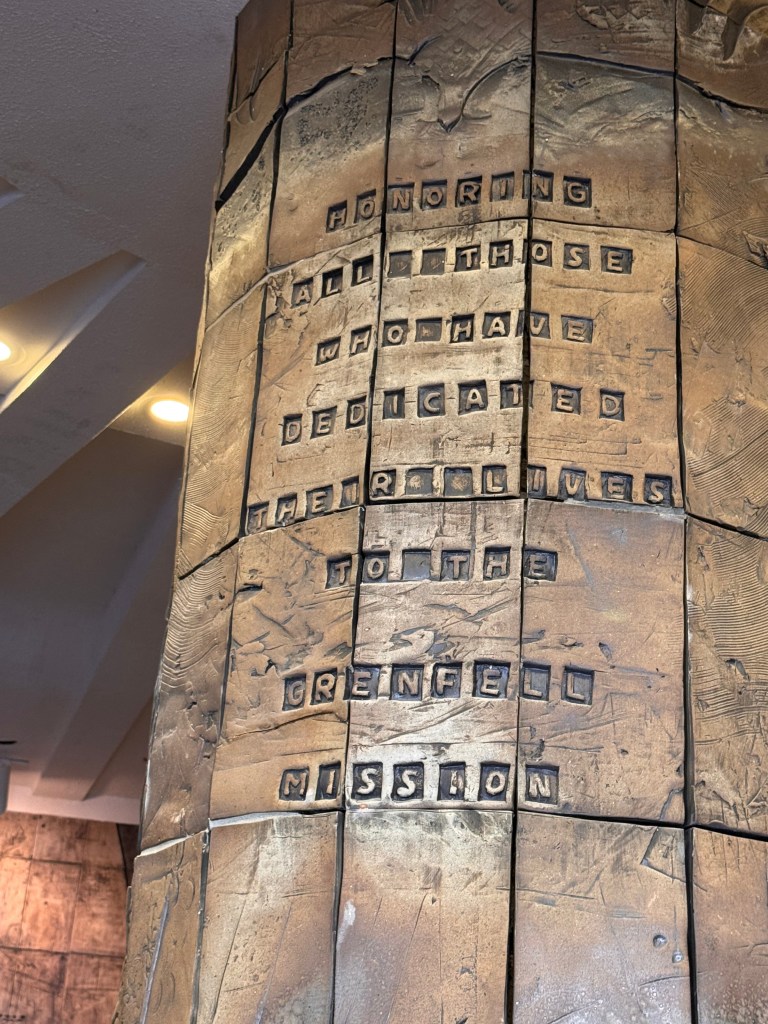
The hospital is named for one of the physicians who, inspired by Grenfell, stayed for decades in the community. The rotunda of the hospital is decorated with ceramic mosaics on the wall, created by an artist who had only one arm. They are beautiful and relate the history of the area.
We had time for a walk to dinner, which was a Newfoundland style meal called a jigs supper: essentially a boiled dinner. A local duo played traditional folk songs for us, and near the end of the evening, summoned a guest to play the spoons along with them:
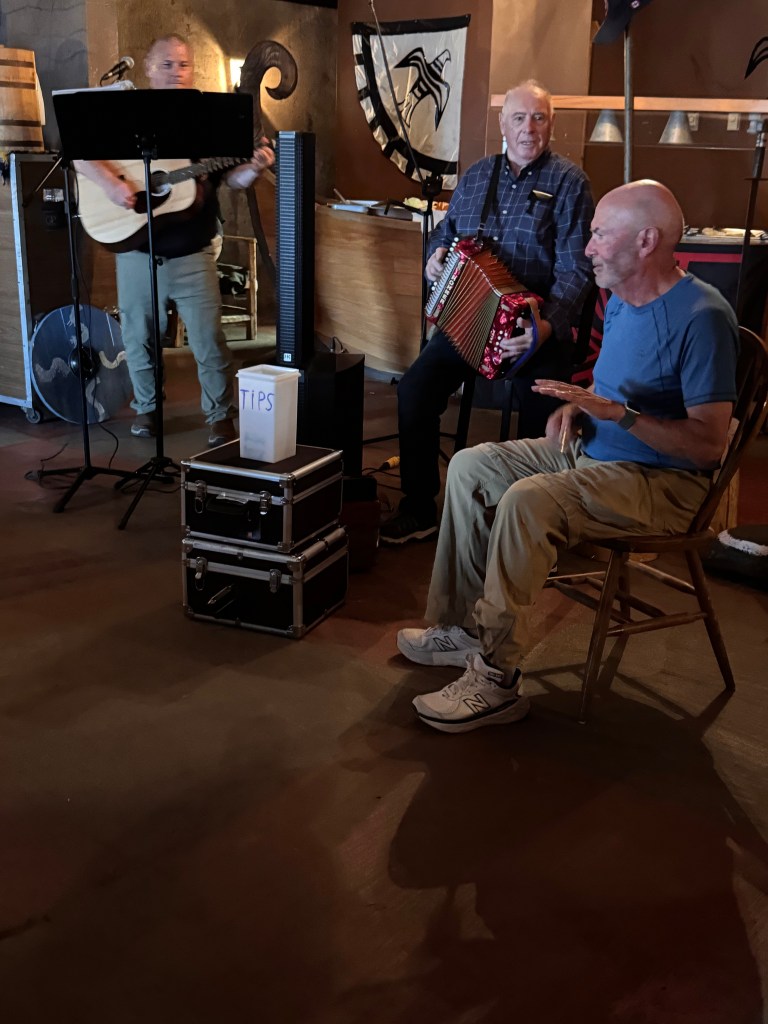
He got a hearty round of applause! [Example #3 of 20th century men who married well.]


Leave a Reply