

We rose very early morning to get on our bus, then wait for an hour to board the ferry that took us across the Strait of Belle Isle from Newfoundland to Blanc-Sabon in Quebec, reboard our bus and drive into Labrador. If our visits in this past week were to small towns, today we visited an even smaller town, Red Bay, pop. 131. Small though it may be, it is a UNESCO world heritage site, and we were able to meet the mayor who was in office when that designation was made, and hear her tell the whole story.

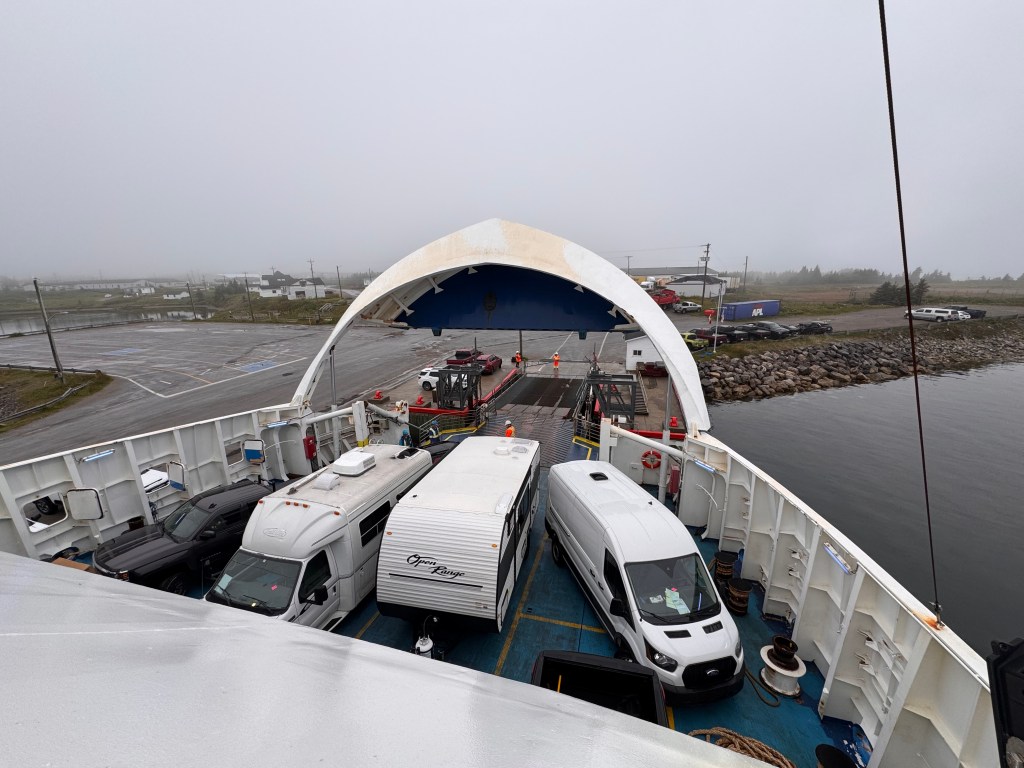
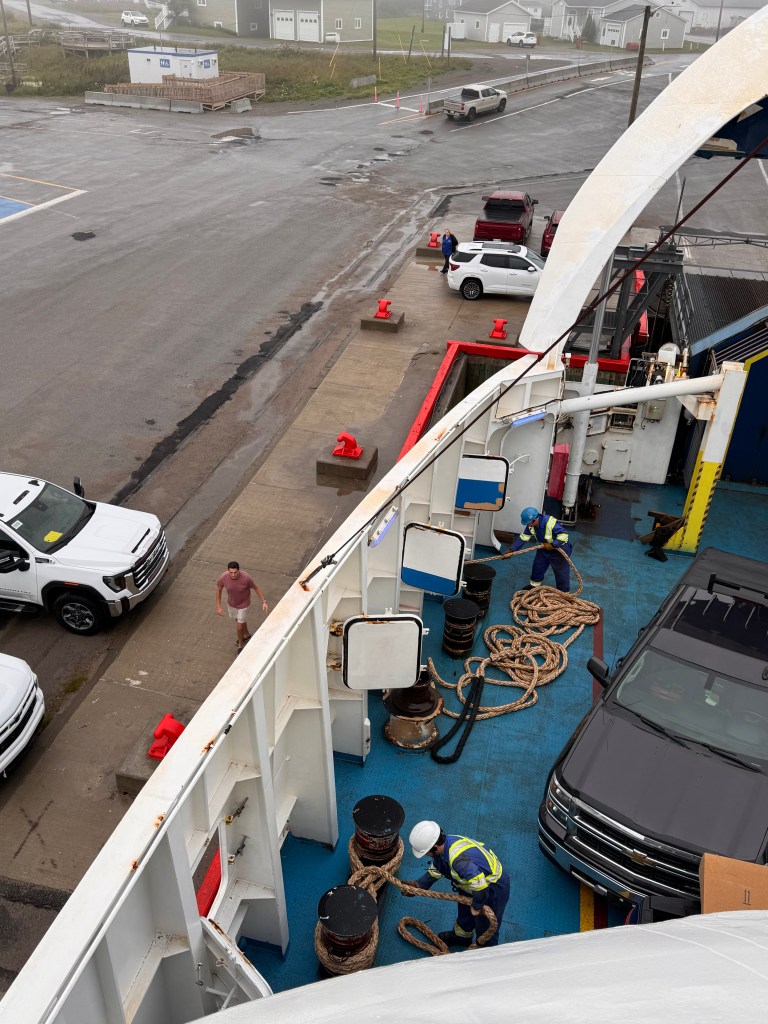
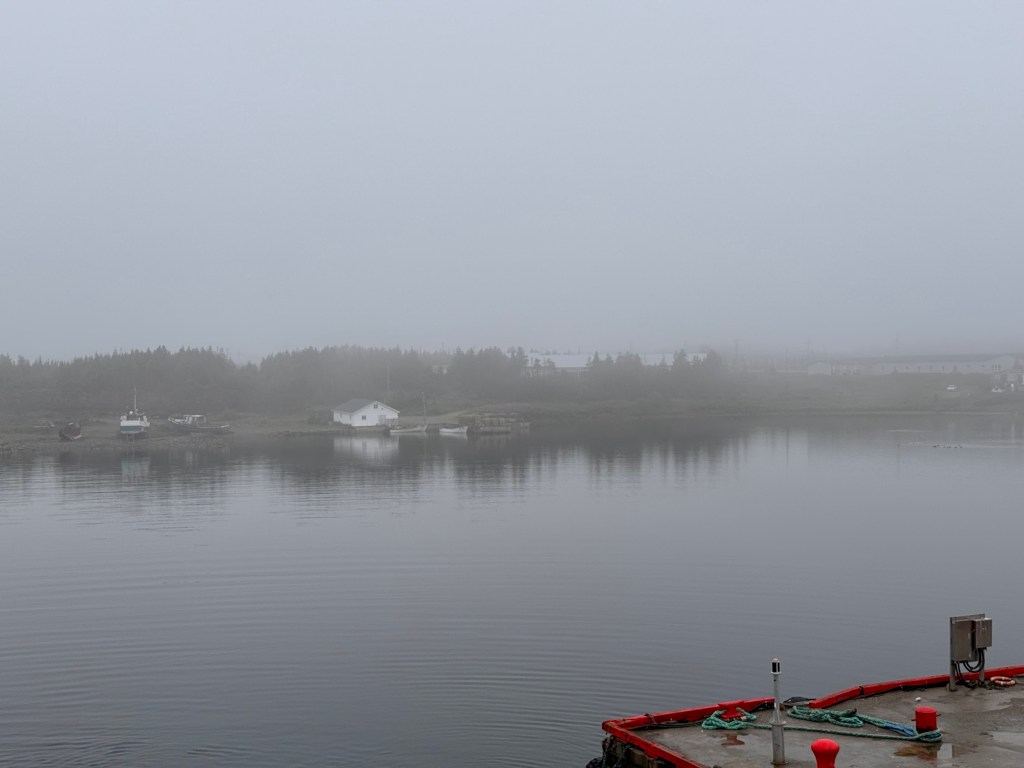
The ferry is large and holds trucks, buses, campers, and of course passengers. The fog was present the whole time, and it was surprisingly warm. My phone said it was about 65°, but the mist felt warmer. Without being able to see much scenery, Mark and I did some laps around the passenger deck, and then dozed off.
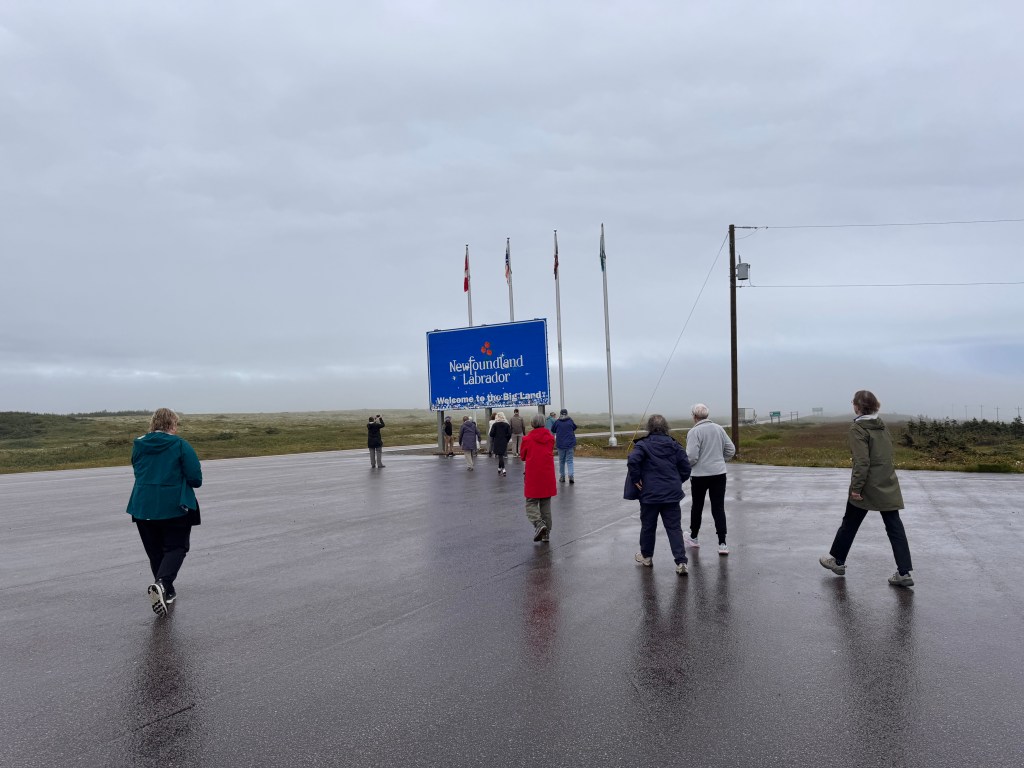
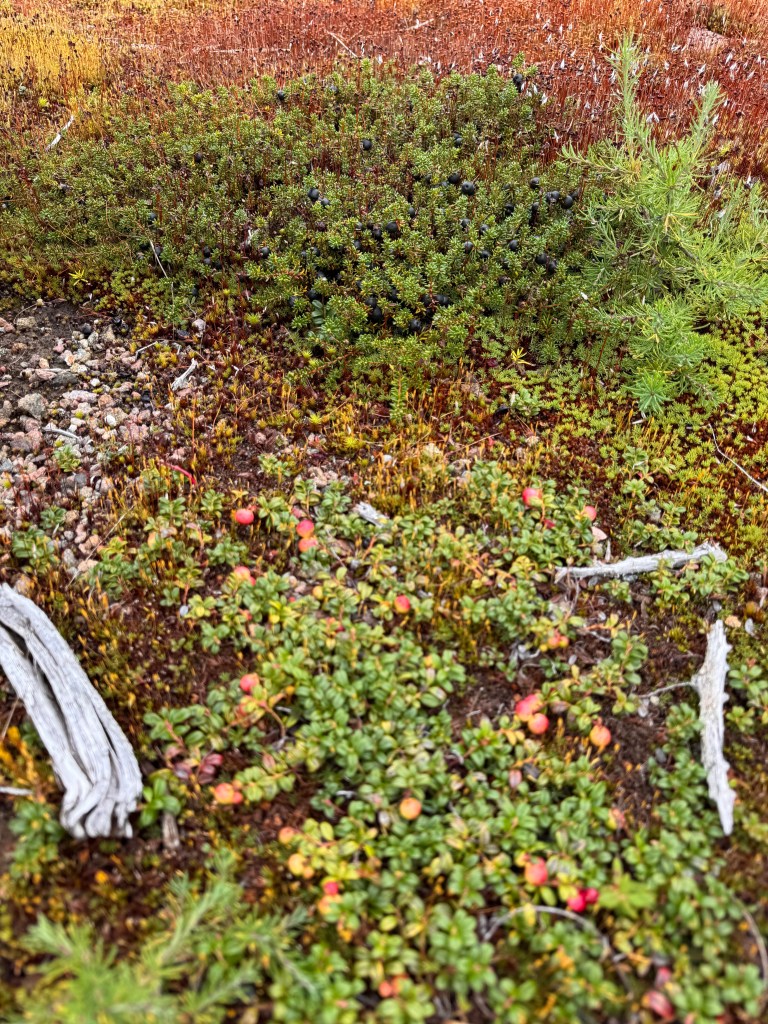
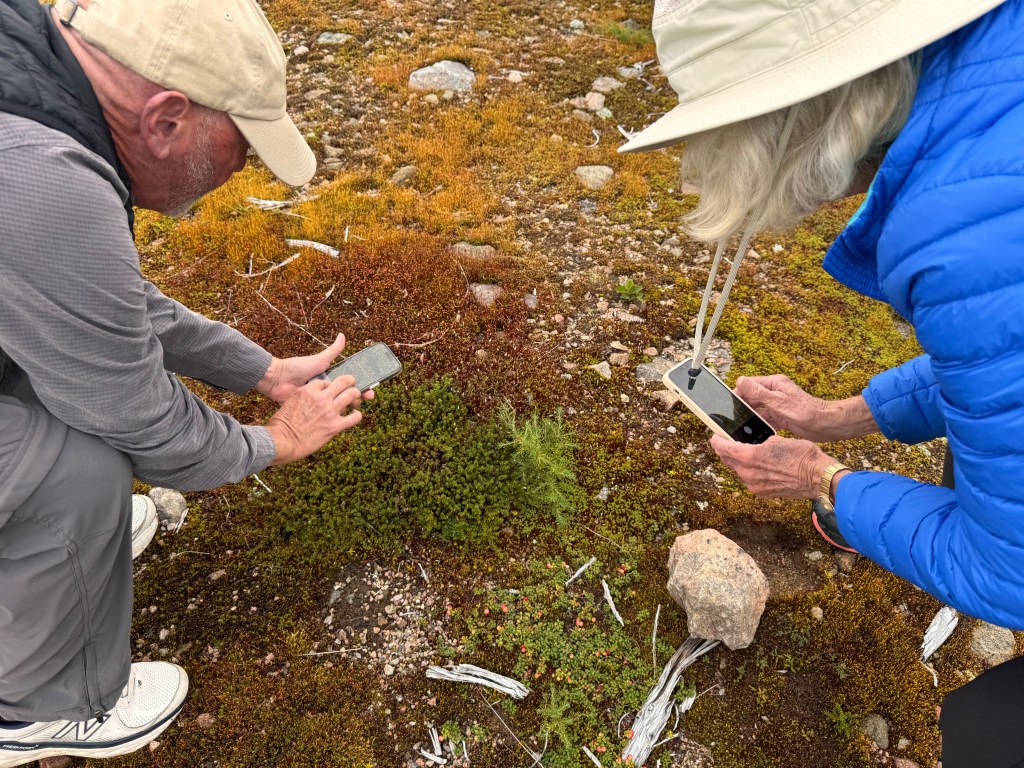
Newfoundland and Labrador are part of the same province, although Newfoundland is an island so they are not the same land mass. The landscape is more taiga than northern boreal forest. This means there are some conifer trees, but also places where the plants are low, practically flush to the ground, the way you would see them on a mountain. I’ve always called these plants, krumholz, a German word. We learned that the Newfoundland word for these plants is tuckamore.
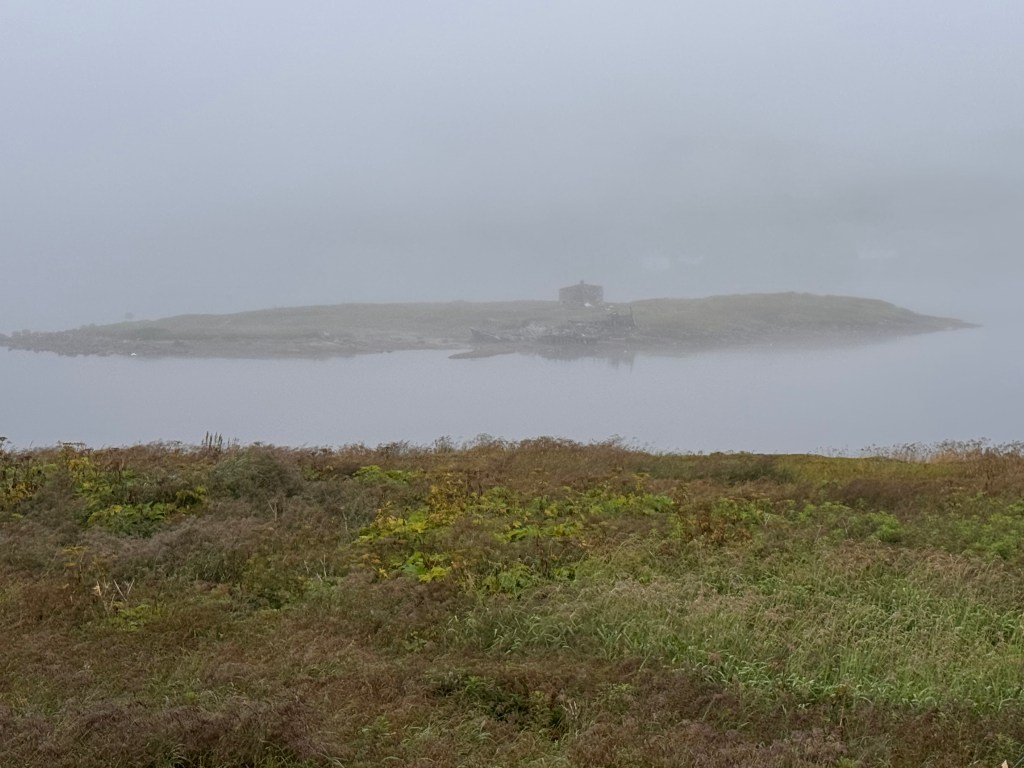
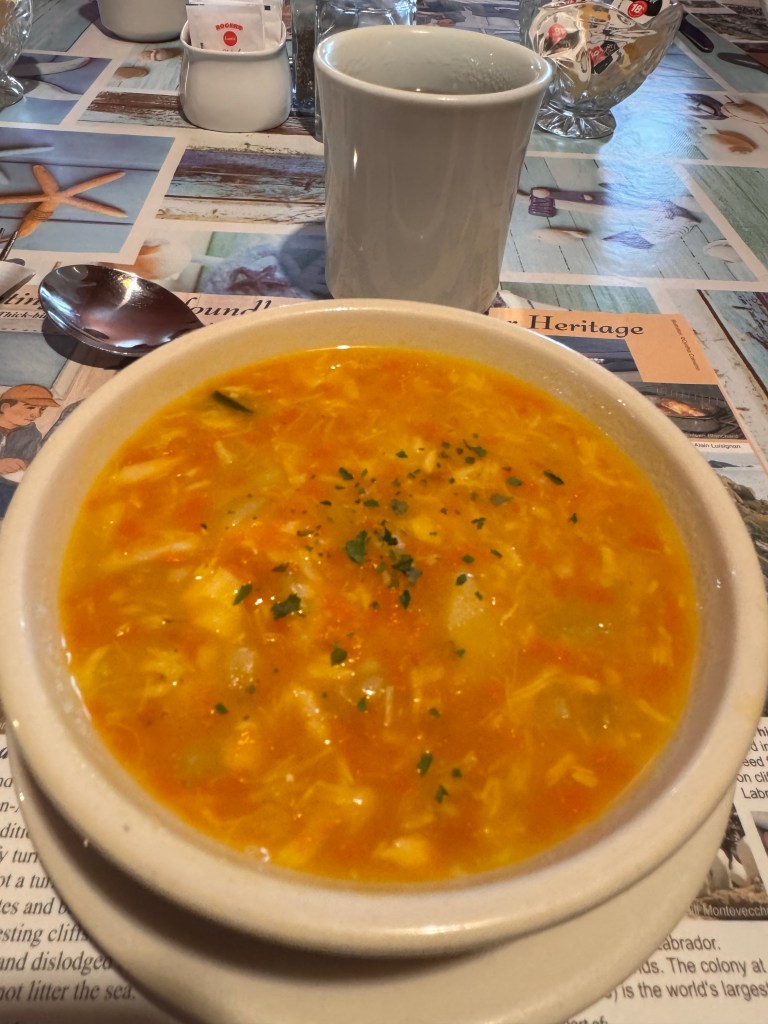
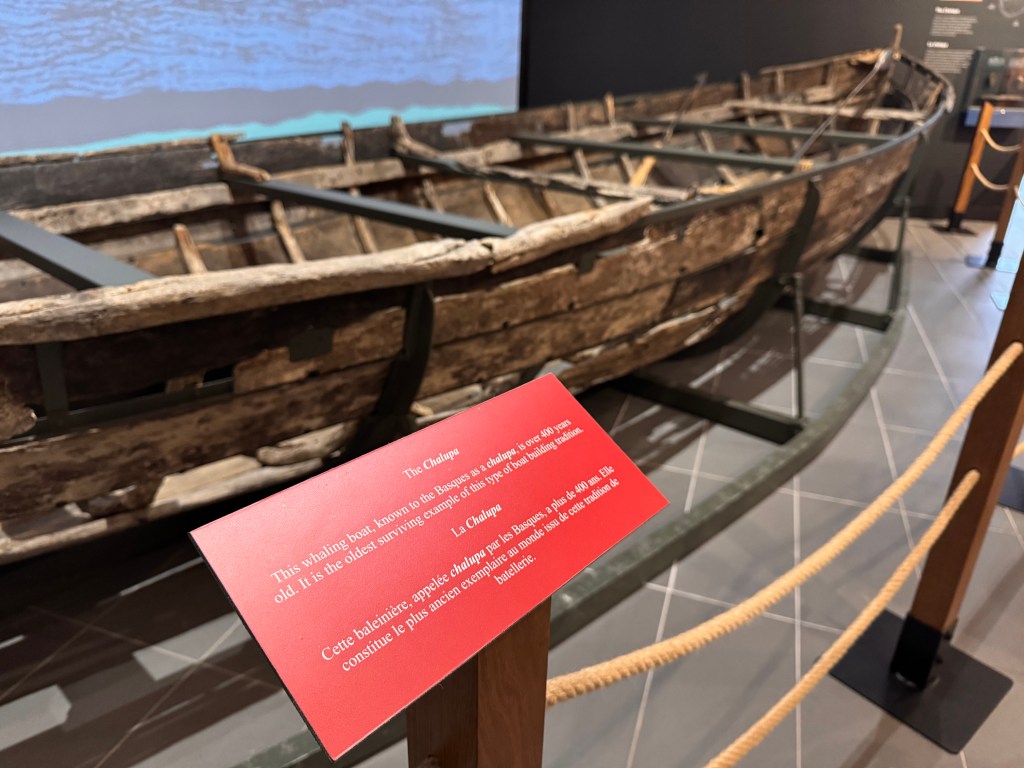
We had a warming lunch of seafood soup before walking over to the Red Bay Historical Site to learn about the Basque whalers. Labrador, of course, has a fishing history.
The idea of hunting a whale is terrible to contemplate in our era. But fortunes were made, for hundreds of years, by hunting whales, and as we learned today, whale oil powered the lights of Europe. To take advantage of this wealth of opportunity, Basque whalers would sail to the Labrador shore to hunt Right whales during their migration each spring, and return to Europe with the oil at the end of the season. Peak production was between the 1550s-1580s. The whales were broken down and the oil rendered on shore, not at sea.
The Basque whaling industry eventually collapsed, in part because the whale population dwindled, and in part because many Basque vessels were conscripted into the Spanish Armada and lost. For years in the 19th and 20th century, the townspeople of Red Bay observed eroding whale bones on the beach, looking very much like rocks, and also, there was an abundance of terra cotta tile fragments on the beach and in the water. But no one really understood the origin or reason.
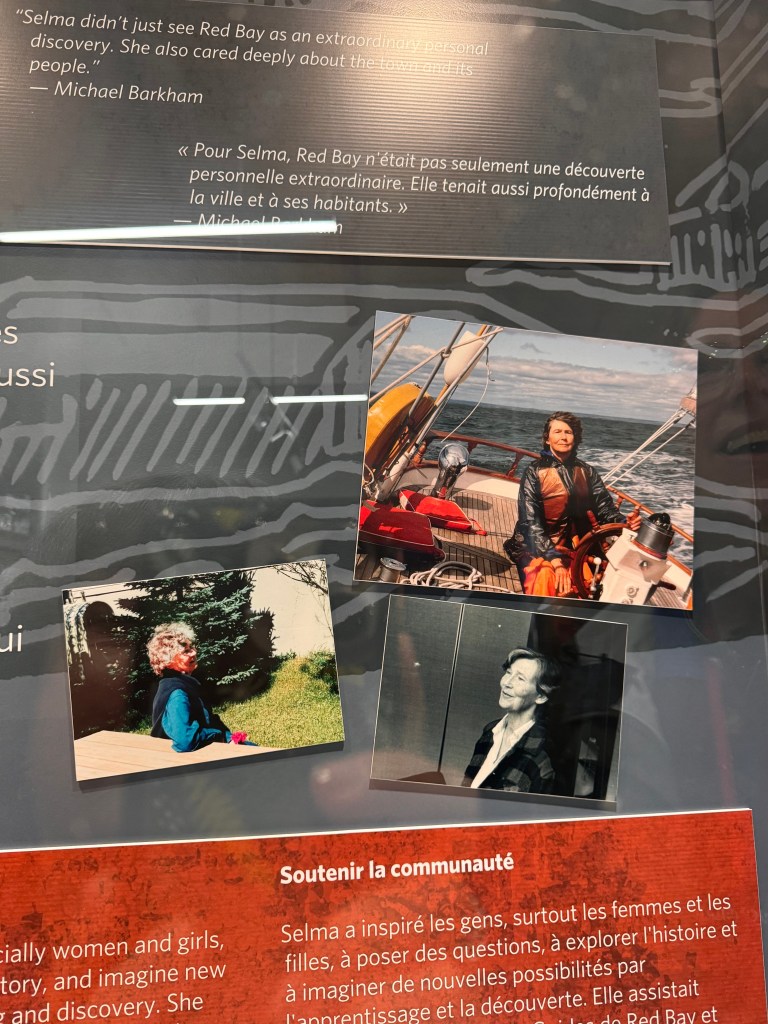
Selma Barkham, a widowed, single mother of four, had caught wind of a vessel that had been lost, in Canada, in Red Bay. She learned to read Spanish so she could go to Spain and look up wills and insurance documents dating back to the 1550s that might indicate something about the Basque merchant whale oil trade. The persistence of her work is a fascinating story. Due to her, Red Bay became a national historical site in 1993, and a UNESCO world heritage site in 2023.
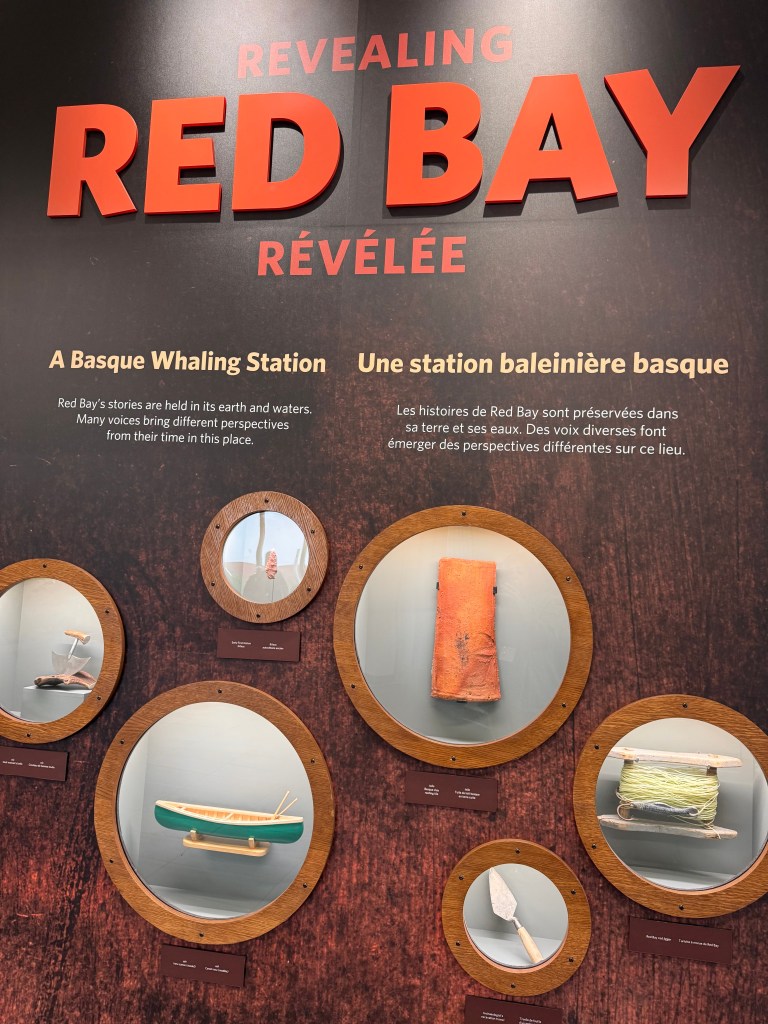
Bringing this story to life was our interpreter, Wanita Stone. She is also the current deputy mayor of Red Bay, and the former mayor. She was as lively, funny, and proud as they come. It was during her time as mayor that the UNESCO designation was granted, and she traveled to Cambodia for that year’s ceremony, to represent Canada and her town.

Barkham died fairly recently, in May, 2020. It seems like almost everyone in town had a chance to meet and interact with her, and she took particular interest in the children. When we moved to the second museum site, about Red Bay and the whale, our next interpreter had worked with Barkham as a teen. The second interpreter related how children would find the tell-tale tiles, then run up and hand them to Barkham, who received each one with great reverence, filling her cardigan pockets with the shards until they were sagging. I am moved by the image of this revered woman doing her very best to cultivate pride and interest in the uncovered history of their surroundings, in the youth.
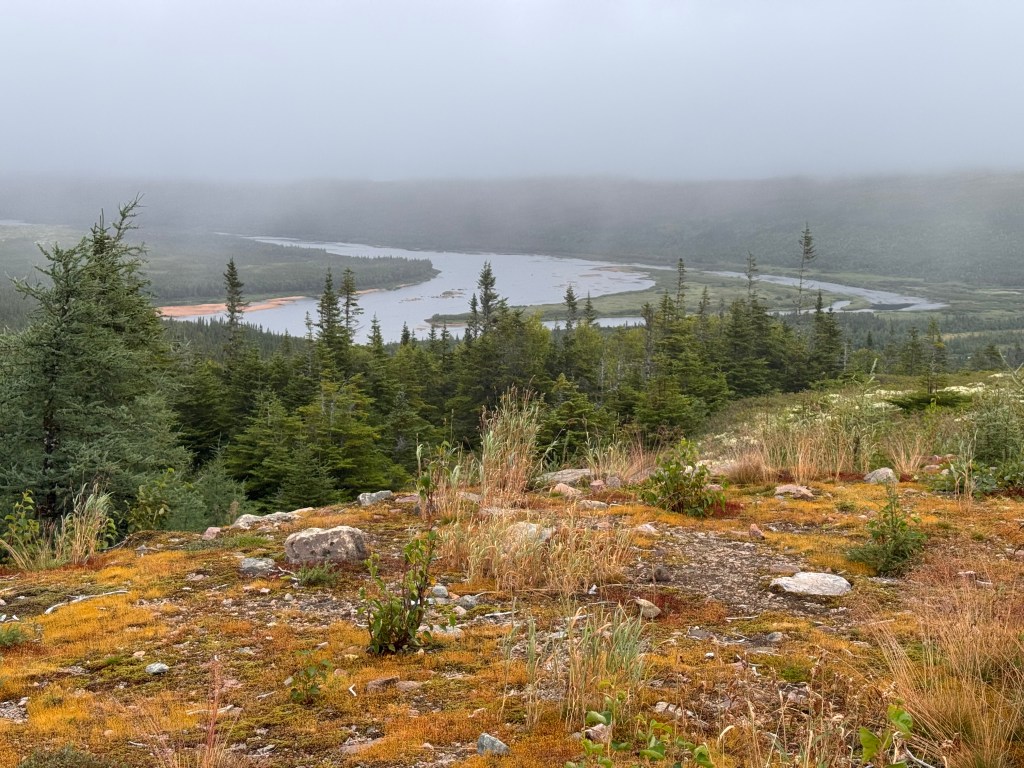
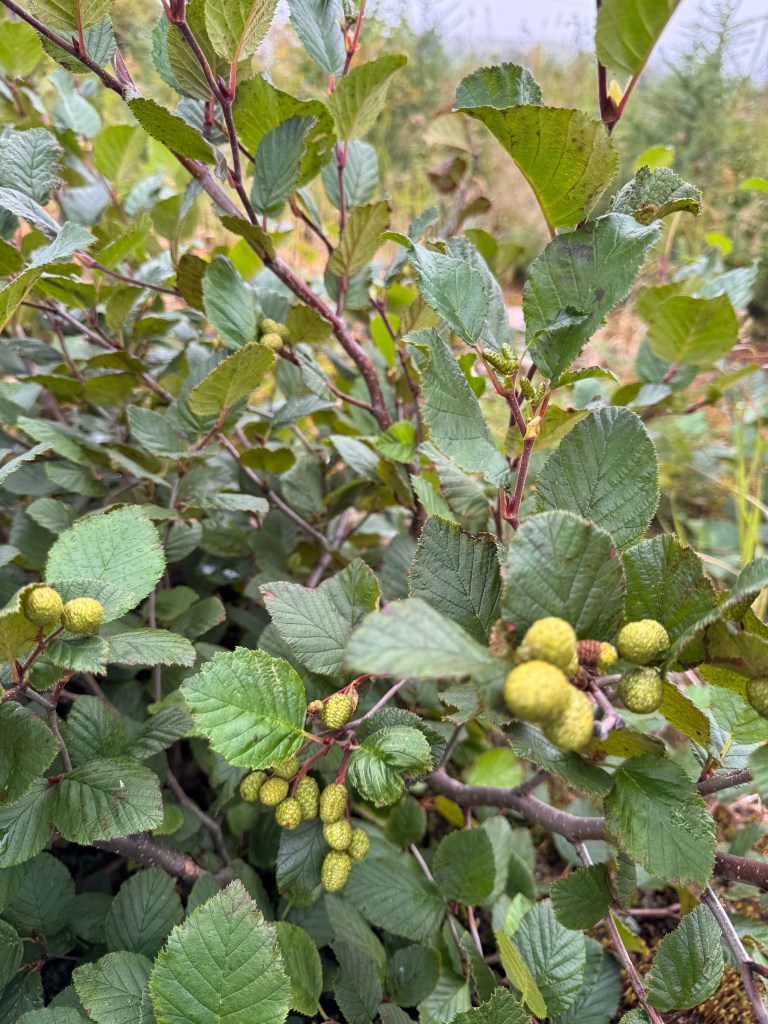
There were a few moments of sightseeing on the way back to our lodging for the night, in L’Anse-au-Clair. The beautiful valley pictured above is the Pinware River. Below are some photos of tuckamore: crowberry, which is purple, and partridge berry which is red. The shrub is alder. Mark and another participant are crouching to take clear photos.


Leave a Reply