

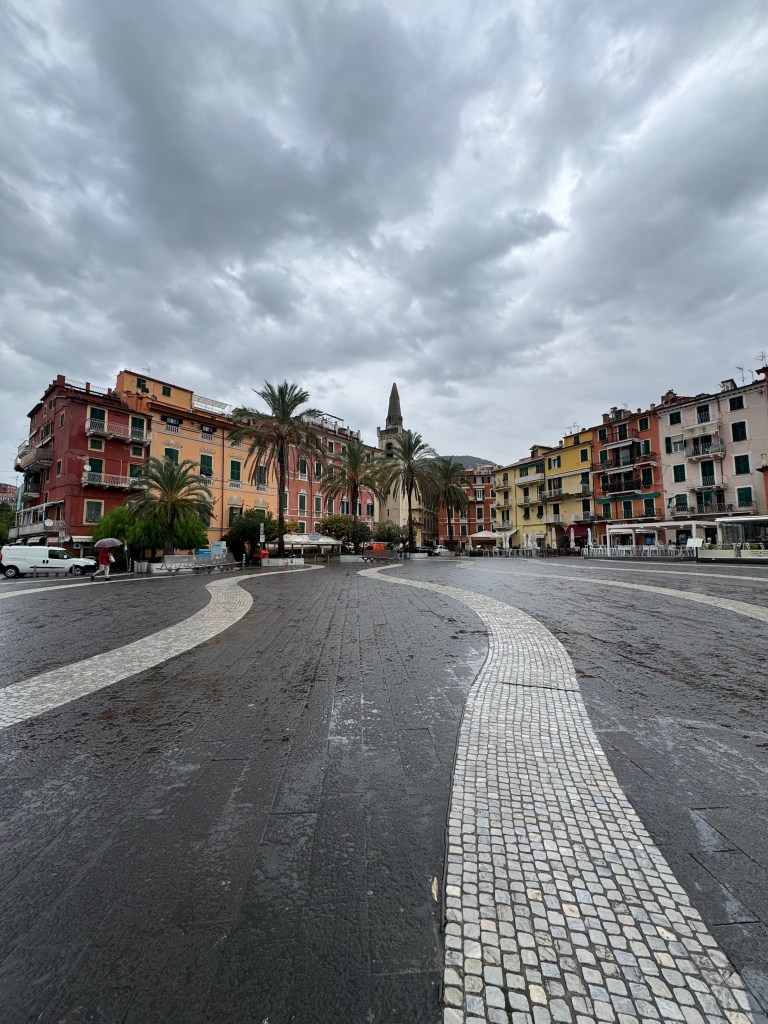
The mountain hike scheduled for today was rained out. No matter, we headed off to the pretty town of Lerici. Lerici sits across from Portovenere at what might be considered the opening to the Gulf of La Spezia. In the first three days of this trip, then, we have travelled around the most important coastline for the Genovese in terms of defense. Lerici is more “recently” famous for being the retreat and home of Percy and Mary Shelley, who lived nearby for a time, and where Percy died. The area was attractive to Byron and other romantic poets and writers of that age, and to Henry James. It’s a seaside resort now, which meant it was really empty of other tourists on this rainy fall day.
After an espresso warm up, we set off on a hike up to the viewpoints above the town. Not nearly as strenuous as yesterday, but we were still rather damp when we finished. I was very happy to have a chance to stretch my muscles though. Pretty views and the white mist made it more interesting. The name of the town above Lerici is Serra.
We boarded our bus and settled in for a 90 minute drive into northern Tuscany, to the city of Cararra, the home of white marble. It is busy; the marble is in extremely in high demand. We could see the white top of the mountain. When the bus passed little roadside creeks, the water was cloudy and the creek bed full of marble chips. We did not stop in Cararra; our appointment was for a special lunch in the hillside town of Colonnata.
The white of the mountains is striking, as is the casual use of the marble in the town, like as pavers for the piazza. I am sure those cars don’t appreciate the luxury of the surface they are parking on. With little expense in transporting the stone, and an abundance of “seconds,” at hand, the town can use marble as much as it would like.
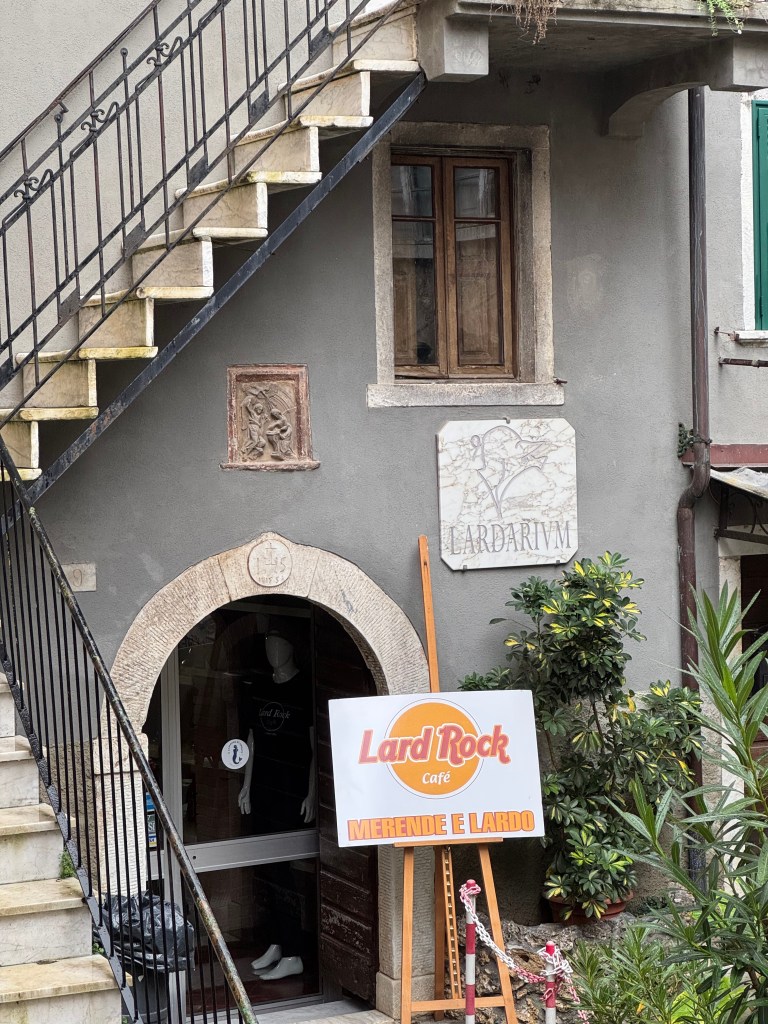
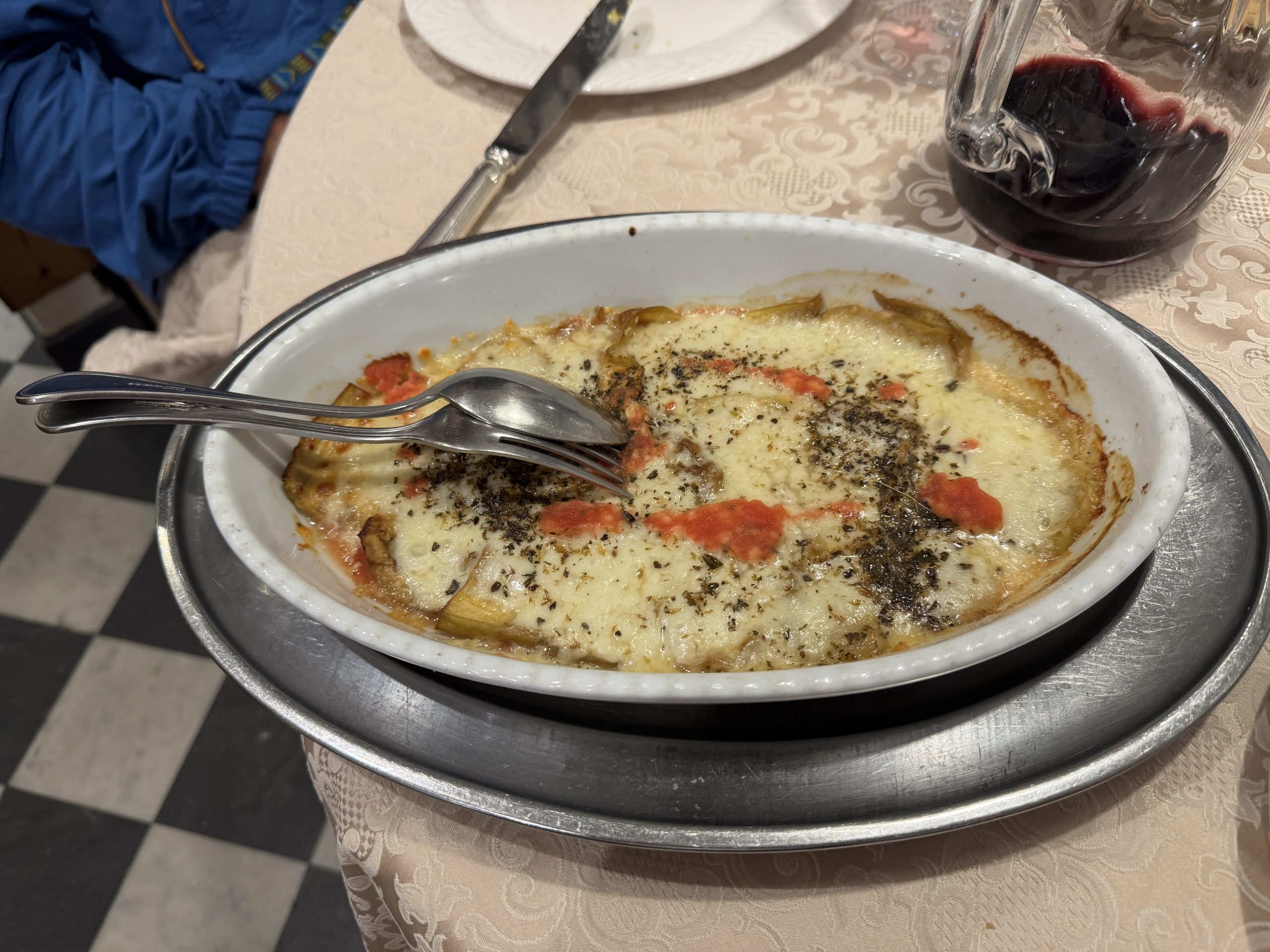
As you can see, it was a special and enjoyable meal. Colonnata is famous for its cured lard. The pork products are cured in marble boxes which are porous, thus allowing some air flow, and adding a terroir that is special to the region.
The monument to the quarry workers has a beautiful setting in front of the church, with the mountains behind. Jesus towers over as the protector. Each wedge of marble depicts different aspects of quarry work, now and through history. We could see slaves and modern workers, slides, trains, and then trucks for transporting; and wedge cutting, explosive removal and diamond cutting all cut into the sculpture. Certainly, this has never been easy work. I do hope it is safer now.
At the rate the stone is being removed, the mountain can yield stone for another 400-600 years.
We drove back to Le Grazie on a pretty quiet bus… lots of digestion going on!
Later on Mark and I walked into town for a pizza at a hopping pizzeria. The busy waiter looked dismayed to have a short line waiting for tables. He grumbled something to me in Italian; I said I speak English. Then he grumbled something more directly to me, which I understood to mean, more or less, “You come to Italy, you should learn some Italian!” and hurried off. An Australian customer glanced over and asked, “Did you get that?” I ventured my guess and it was confirmed. Well, I did know enough Italian to understand the waiter’s sentiment. He had a point, but on the other hand, ordering a pizza and paying for it doesn’t require much of a second language. Italy has made pizza a lingua franca.
Pizza was good, and the waiter did everything to get back in our good graces. We’re in for a buona notte.




Leave a Reply