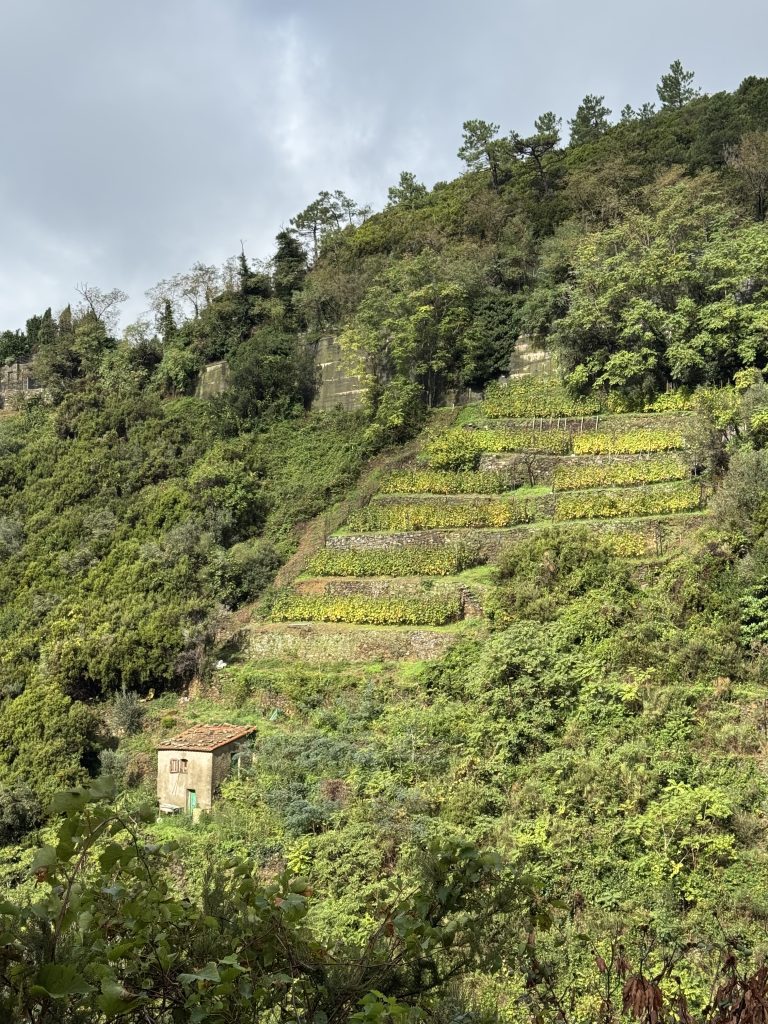
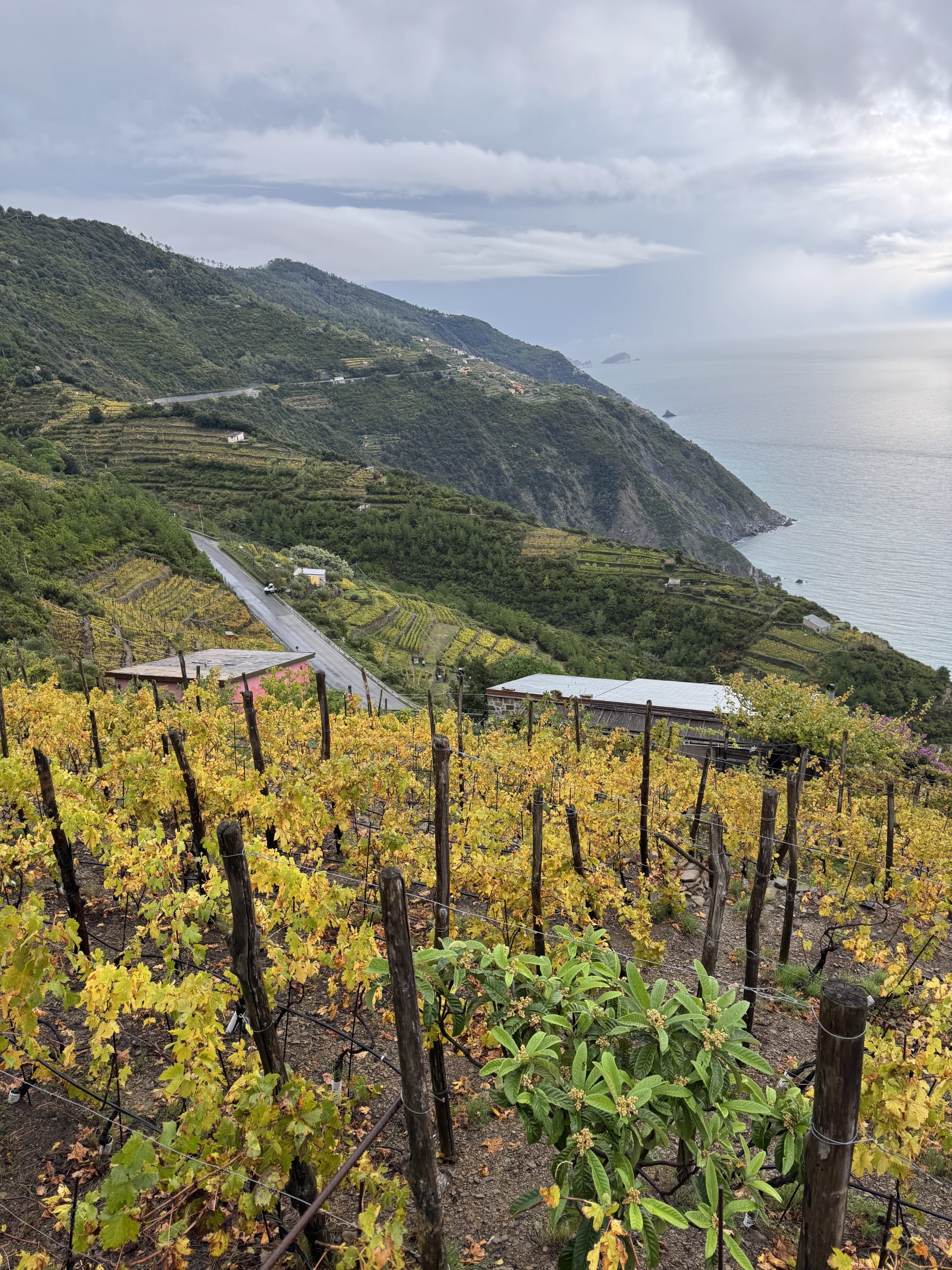
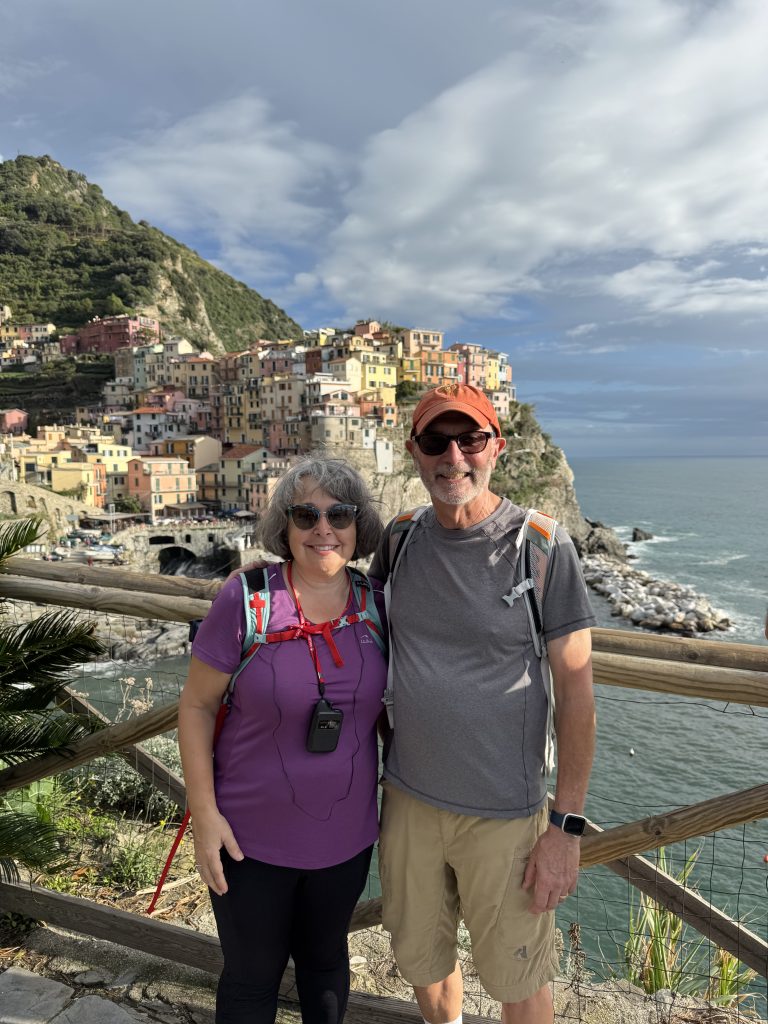
The Cinque Terre is a UNESCO world heritage site, largely because of the way it was farmed for hundreds of years. In this area, you either walk up or down but almost never level.
Today, we hike for fun, exercise, scenery, and we always know where our next meal is coming from. To imagine farming on these terraces, day after day, carrying a harvest, and in simple sandals, is to feel very humble.
I am also very appreciative of how important a sense of safety was. The motivation to be a farmer in this area is because it was so hard for marauders and pirates to access. The people who settled here arrived in the high mountains first, and then moved lower to establish the seaside villages, over time. They were escaping from something and looking for peace and security. That was worth the price of the labor.
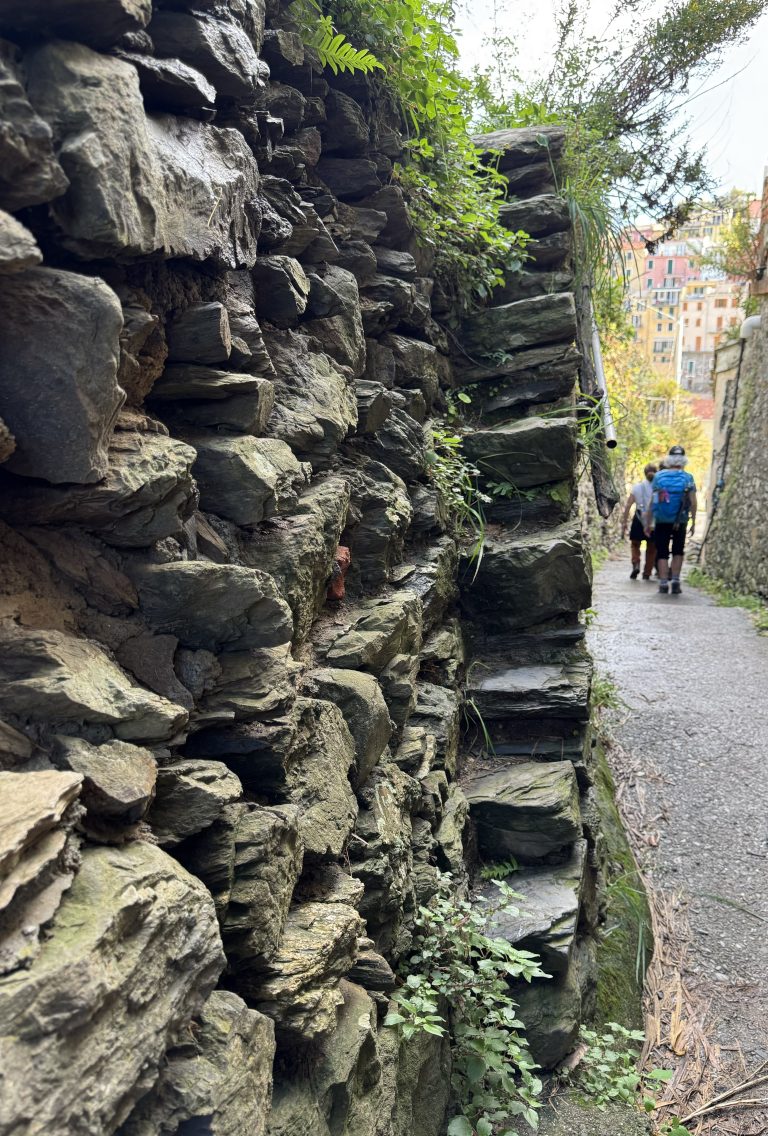
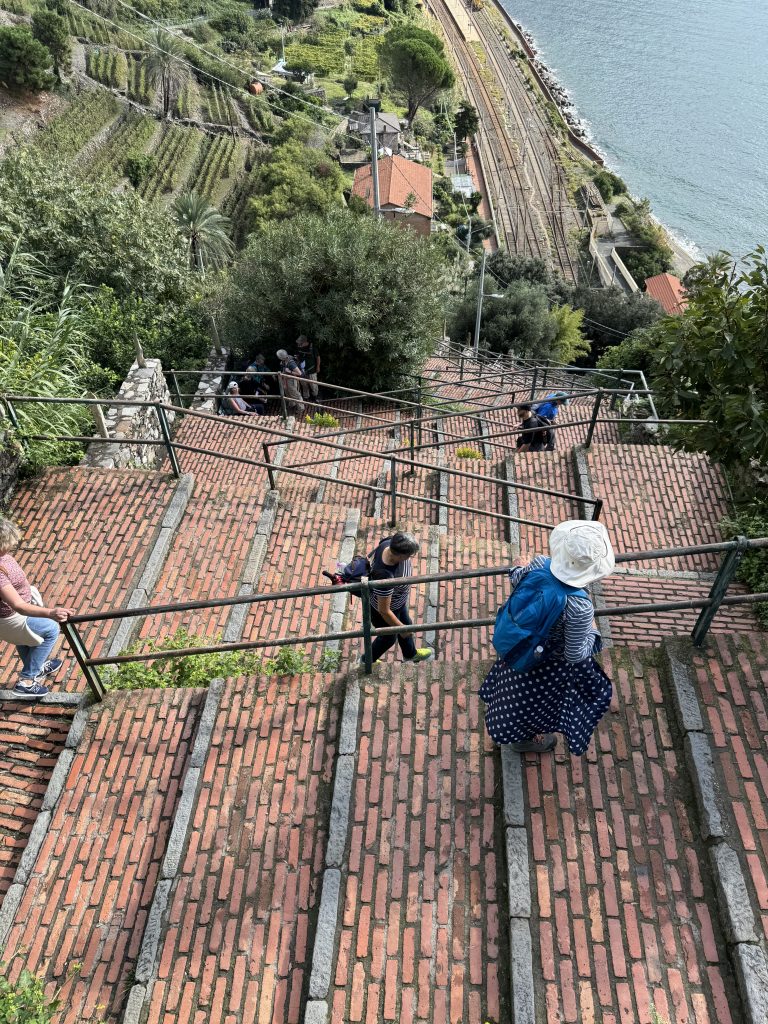
In the photo below, you can see the steep and narrow steps that people used to use to access the terraces.
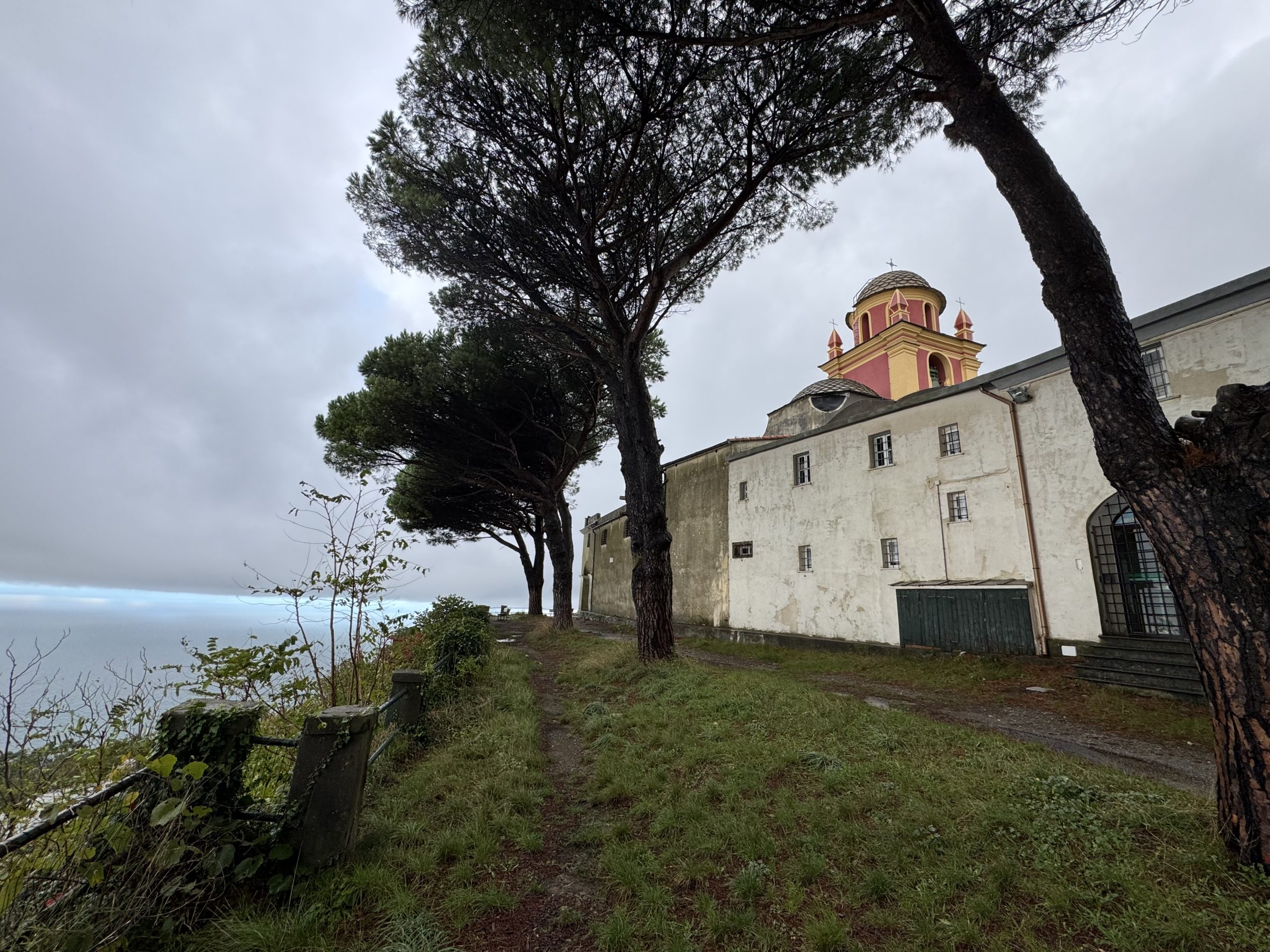
We started today’s hiking in the rain, at the top of a ridge above Riomaggiore, the most southern of the towns. There is a church sanctuary here and very beautiful views, even in the mist.
The current church dates to 1537, but it replaced a church that was built in the 3rd century. It is dedicated to Mary.
We walked down to Riomaggiore, taking it rather slow because the path, with its smooth, cobbled rock surface, was very slippery from the rain.
Once in Riomaggiore, we boarded the very convenient train, and were whisked through the mountain tunnel to Corniglia.
Corniglia is the smallest of the five towns, and from the train station you have to climb more than 300 steps to get into the tiny town itself.
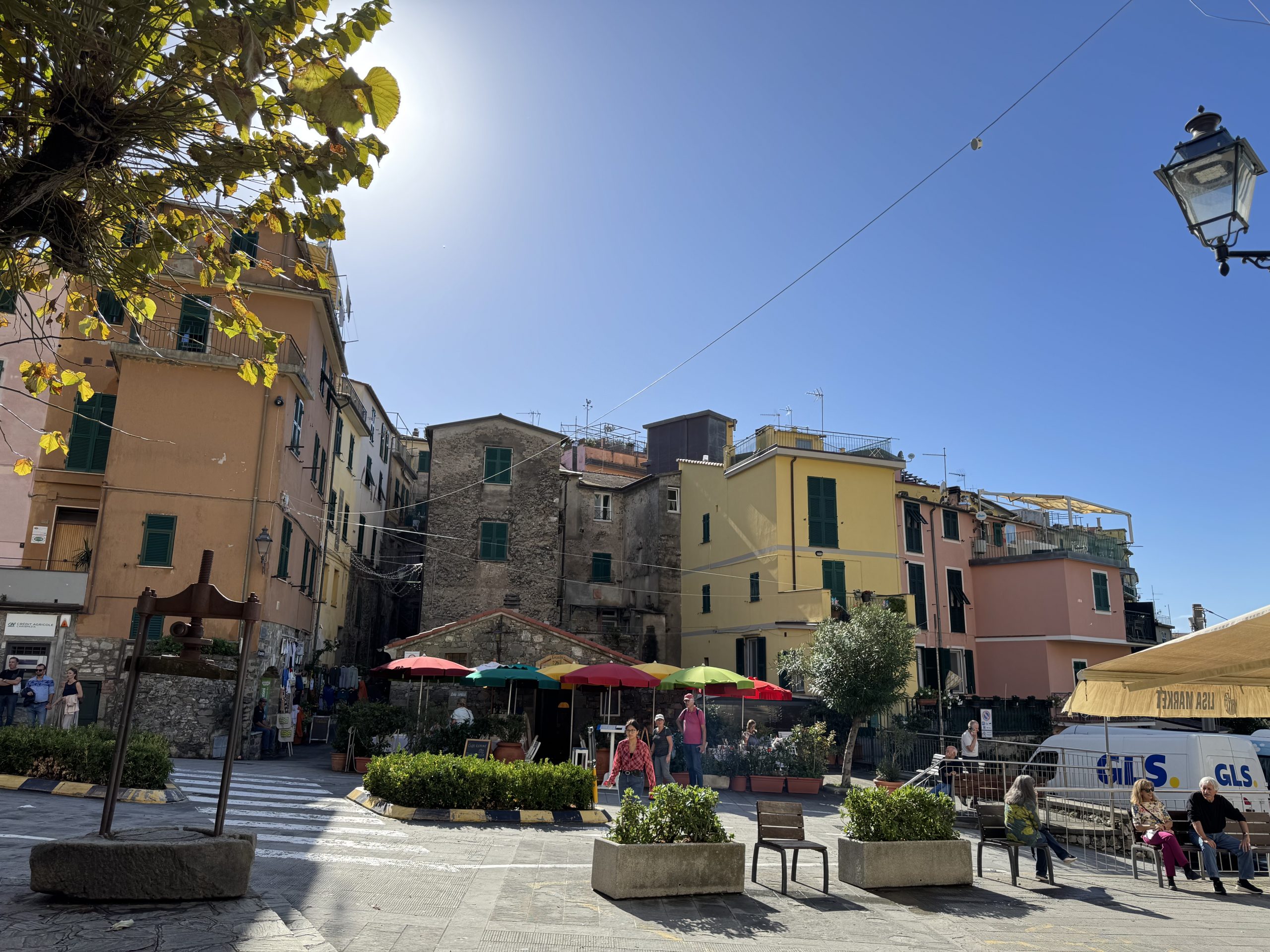
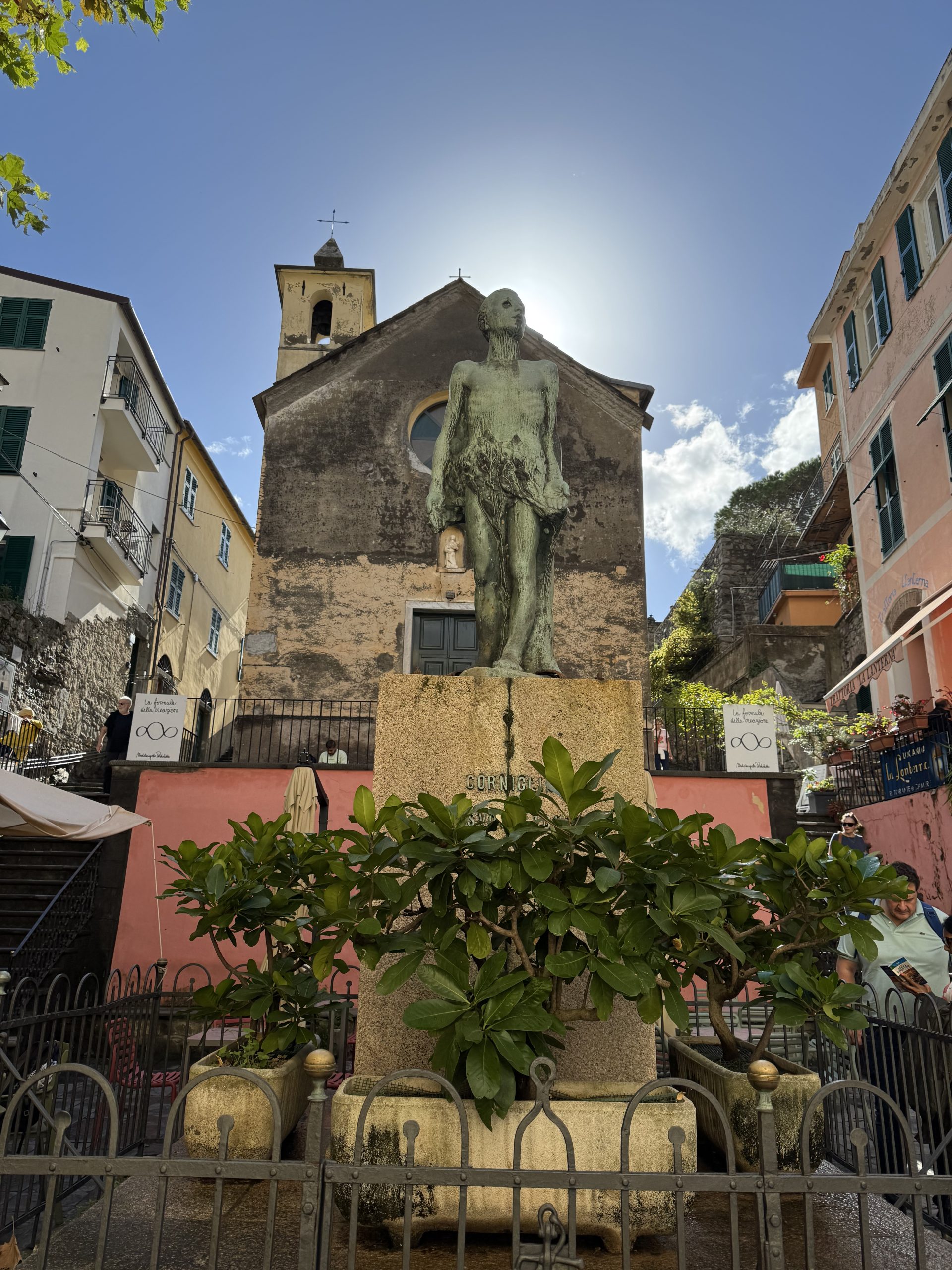
It’s not as much visited as the others, and was far less crowded. With only one commercial street and one piazza, it was pretty easy to “see the town,” and make a choice for lunch.
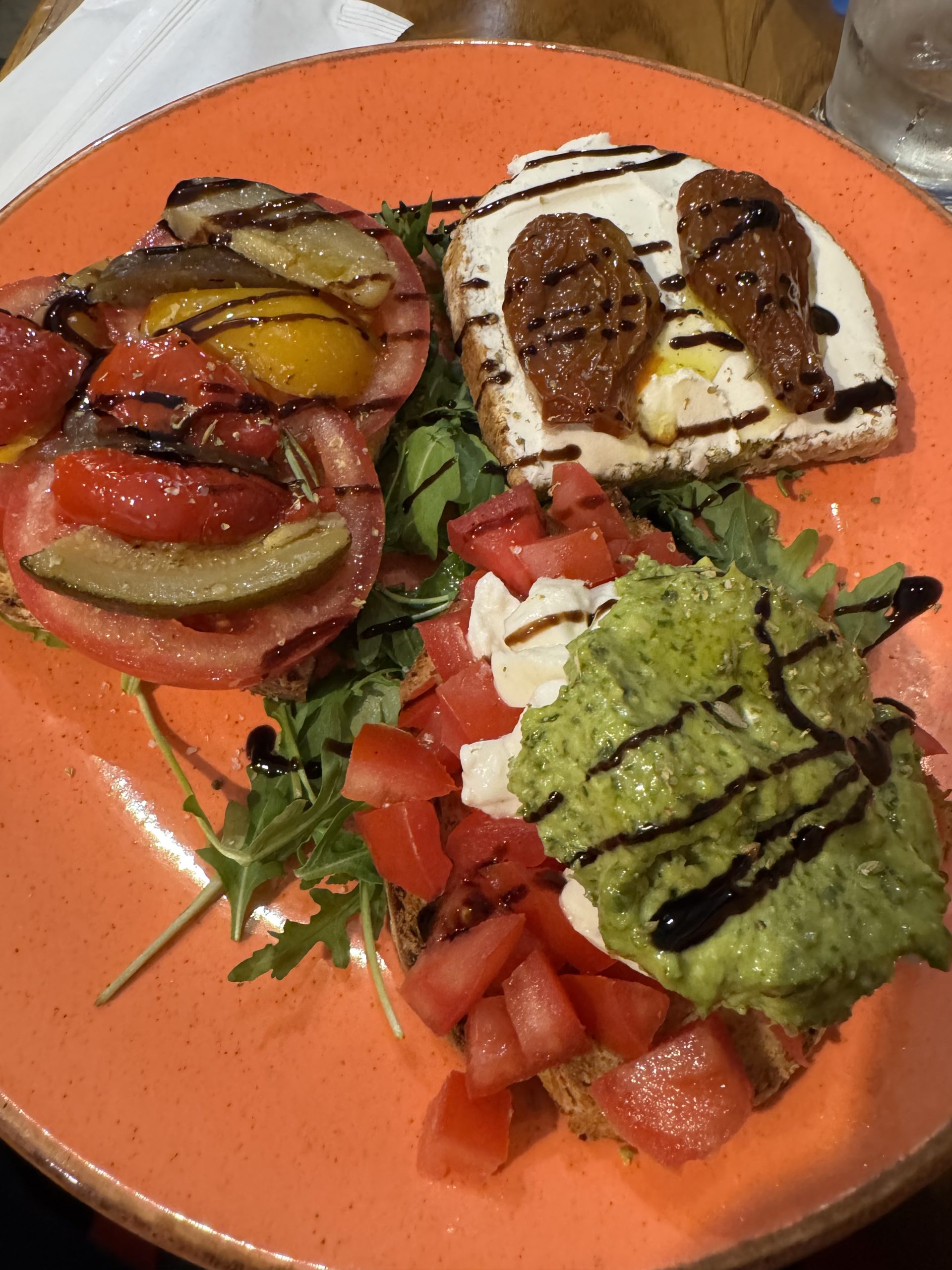
It was a nice lunch: a trio of bruschetta at Pan Vin.
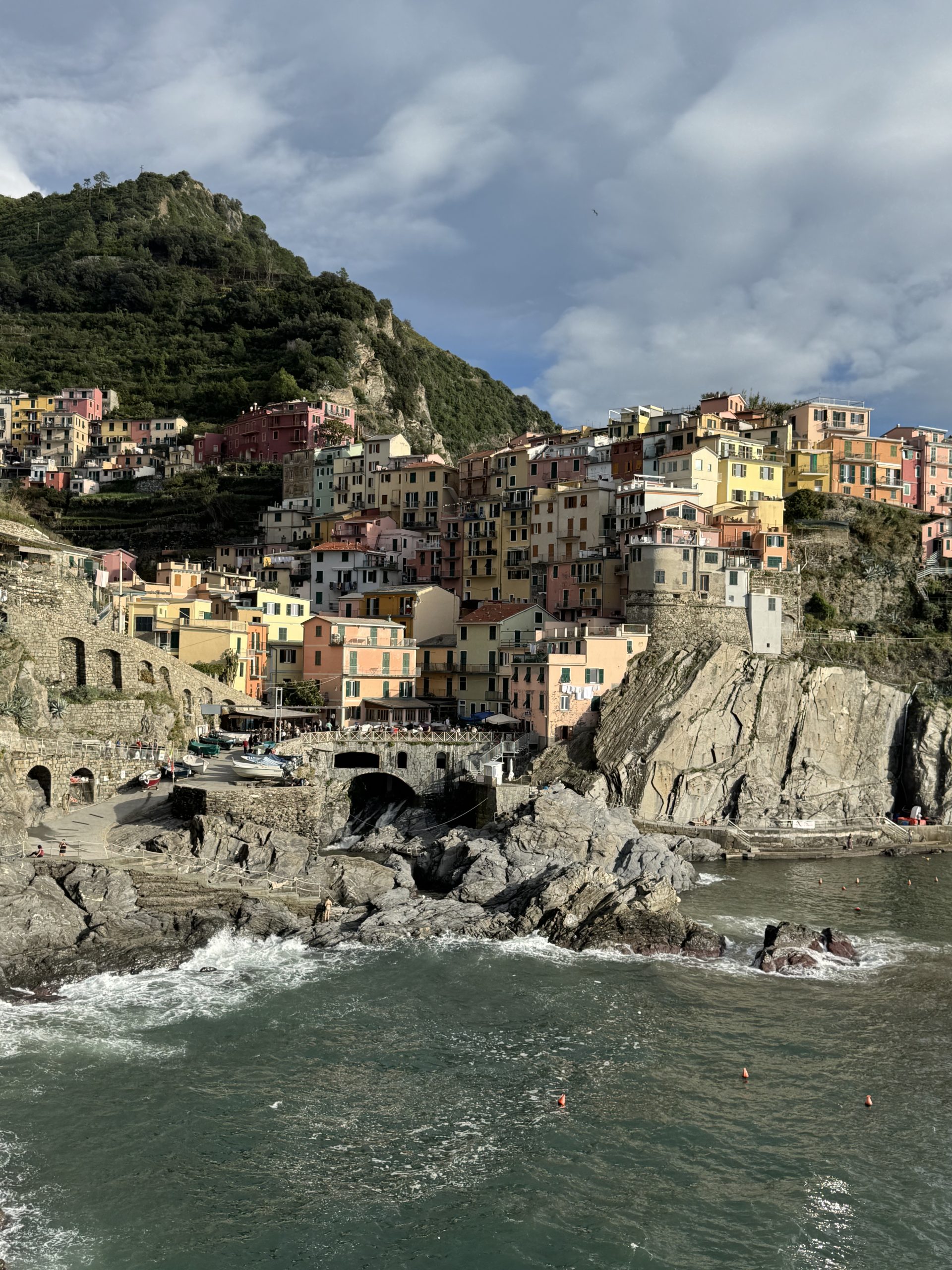
We left Corniglia by train to visit Manorola, the second smallest of the five towns. It is extremely pretty, and probably my favorite. We had a nice walk up to a promenade with wonderful views.
In the oldest part of Manarola, it was possible for them to draw a gate closed at the fortress tower, so they were very much protected from marauders.
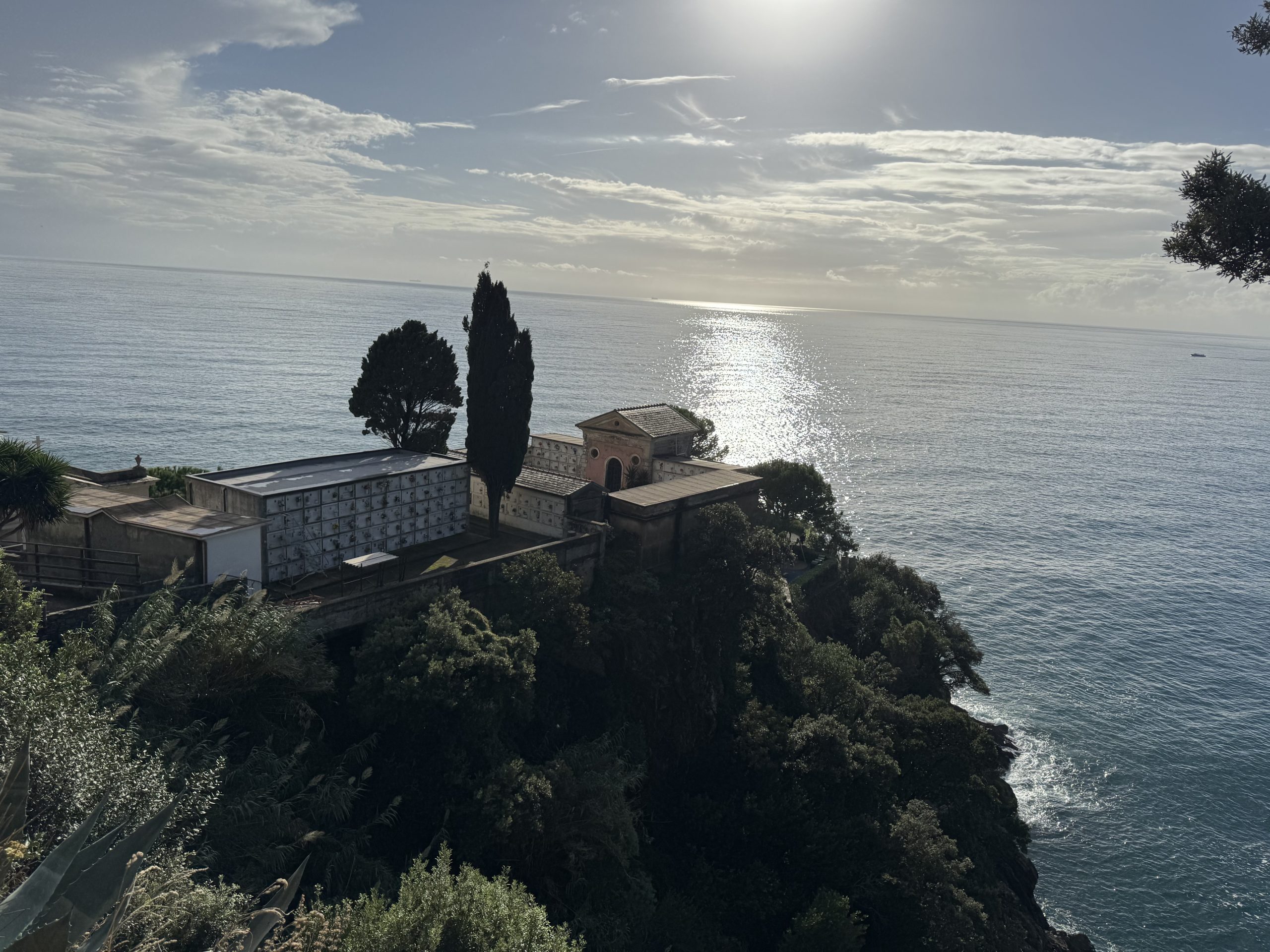
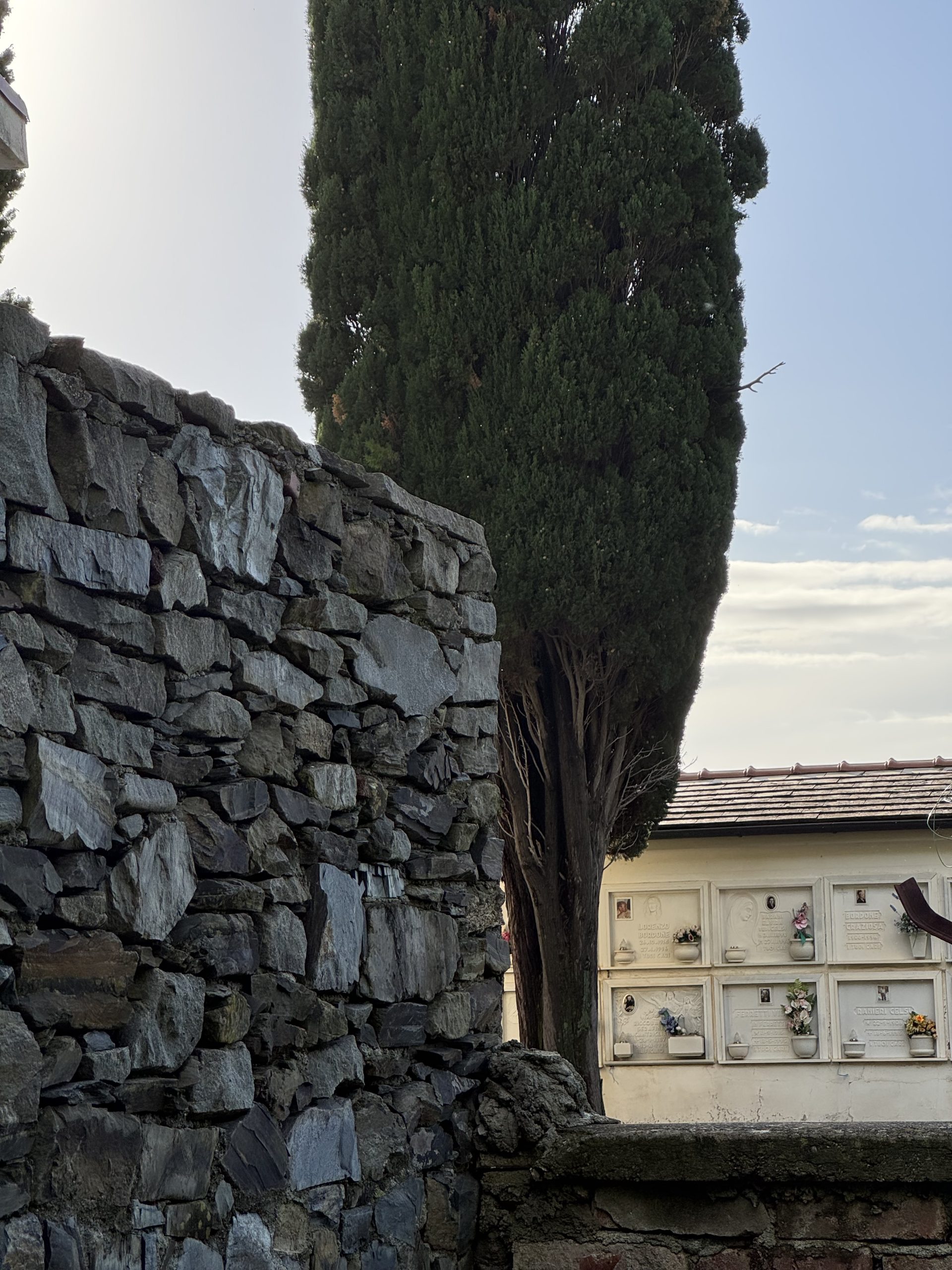
The town has an interesting cemetery, perched, like everything else, on a cliff. The remains are in a wall, more like a mausoleum in style.
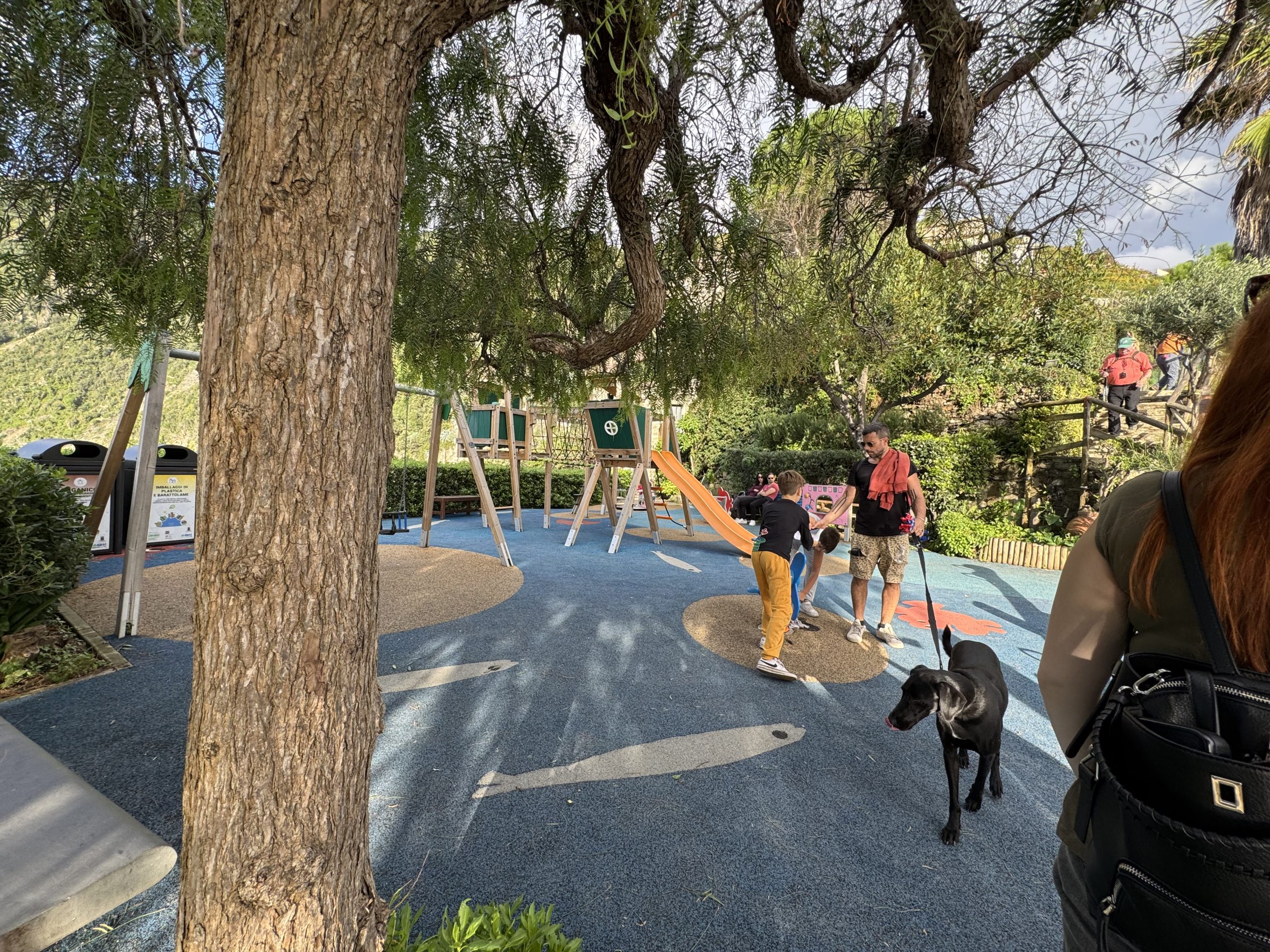
On a more joyful note, the town has given a section of its precious flat area over to children for a playground. I do love to see citizens prioritizing play for children!
We had a pre-dinner lecture about the Via Francenia, the pilgrim road from Canterbury to Rome that goes through towns inland from here. Finally, we finished up with a quiet hotel dinner.
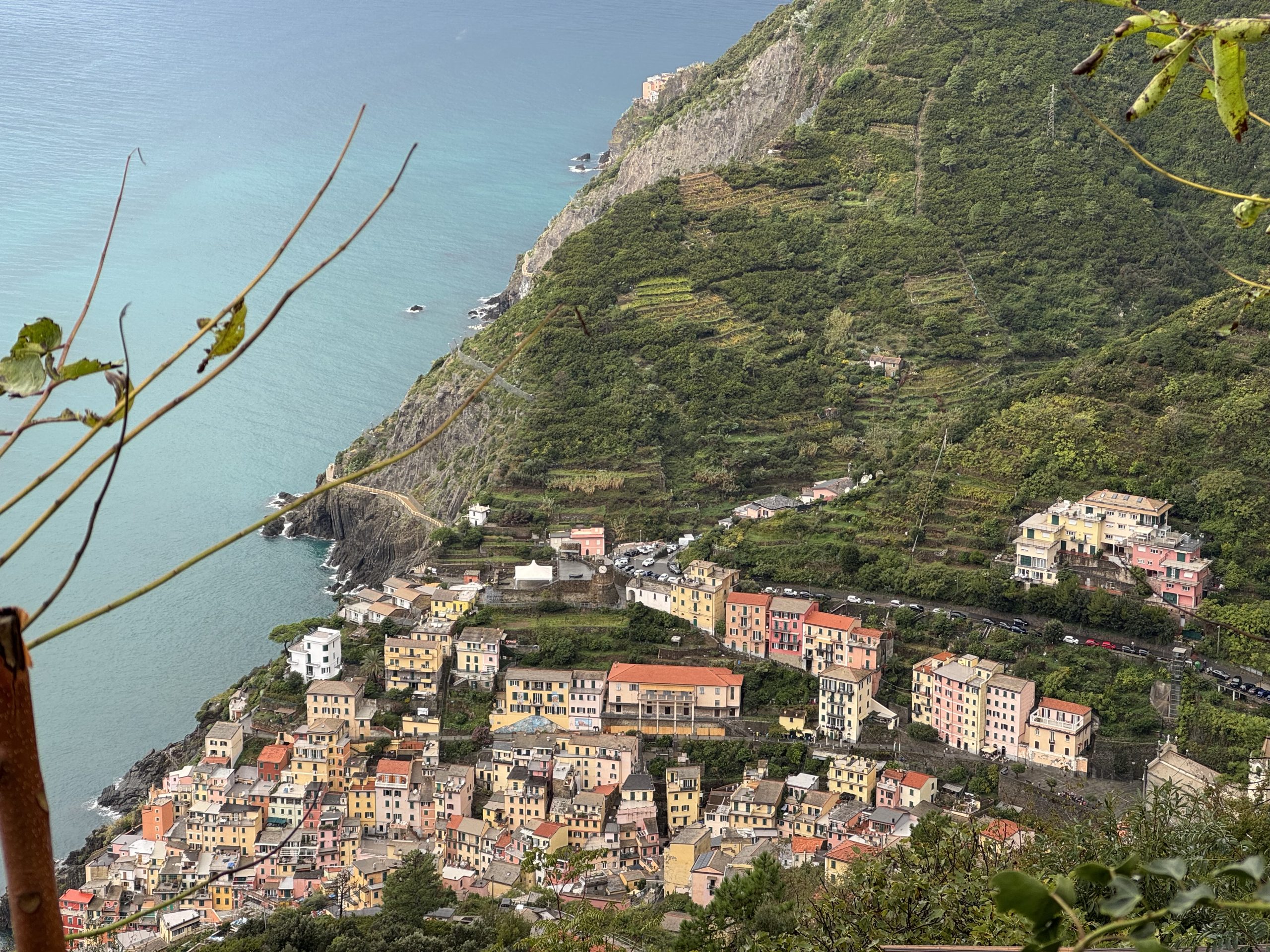
One last item for thought is about the vanishing terraces that made this area famous. In my photos, you see areas of terraces, and lots of trees. This landscape has changed greatly over the past seventy-five years. The terraces are vanishing.
In order to maintain the terraces, the area has to be cleared and farmed. Seventy-five years has seen generations of change; farming, especially in an area that requires so much extra work even to get to the crop, just isn’t as desirable as a lifestyle.
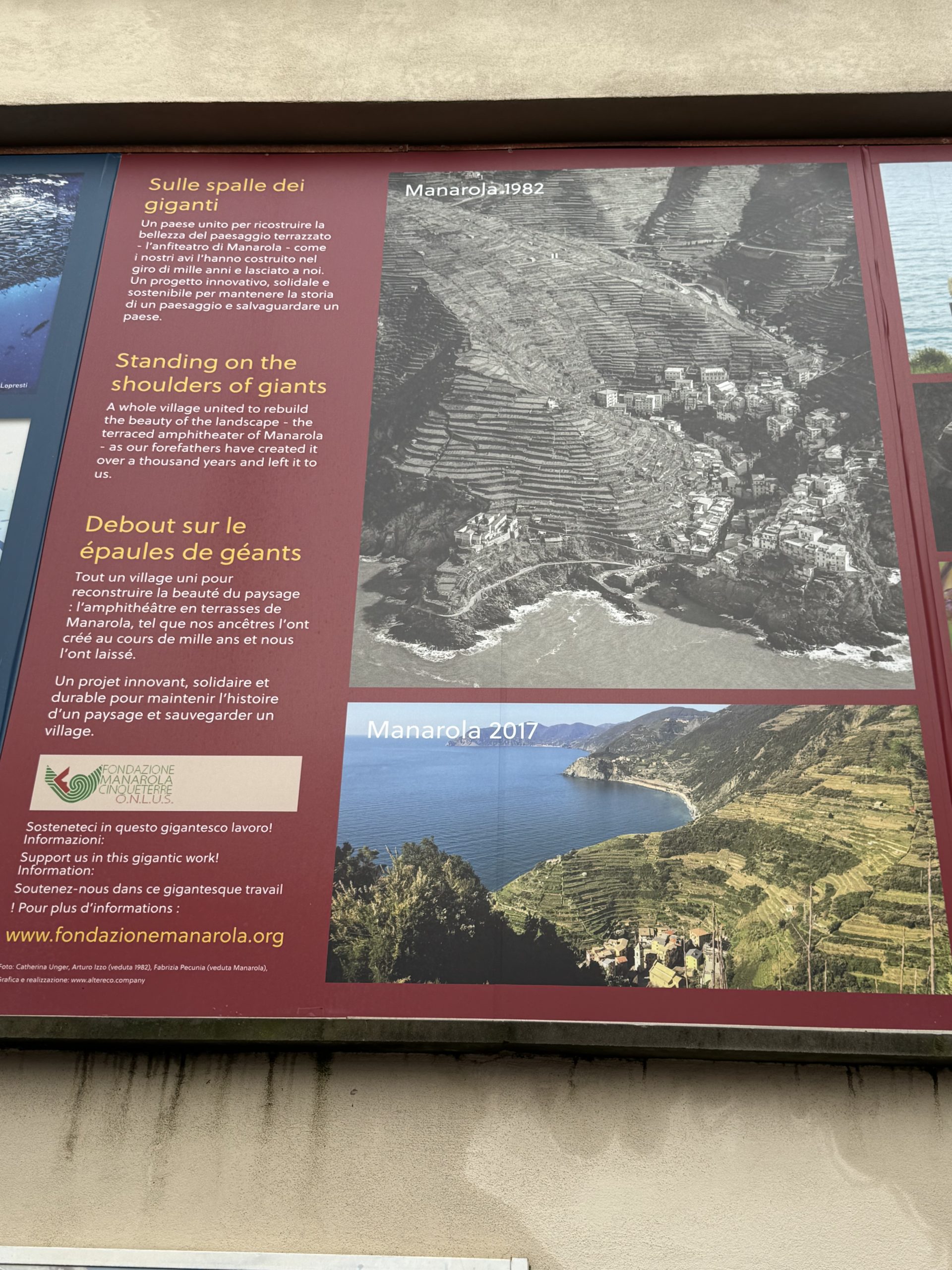
The terraces that made Cinque Terre famous are, unfortunately, vanishing. The trees that grow on the abandoned terraces actually degrade the dry rock walls as the roots expand. I took a photo of a sign with a photo from the 1980’s. You can compare it to my photo of a similar hillside from today.
The national park owns only 15% of the land in Cinque Terre. Protecting this UNESCO heritage site is going to take a great deal of cooperation with current land owners (many of whom may live internationally and not even in the region). Otherwise, after hundreds and hundreds of years of hard human work, nature will return the hills to its original landscape.


