

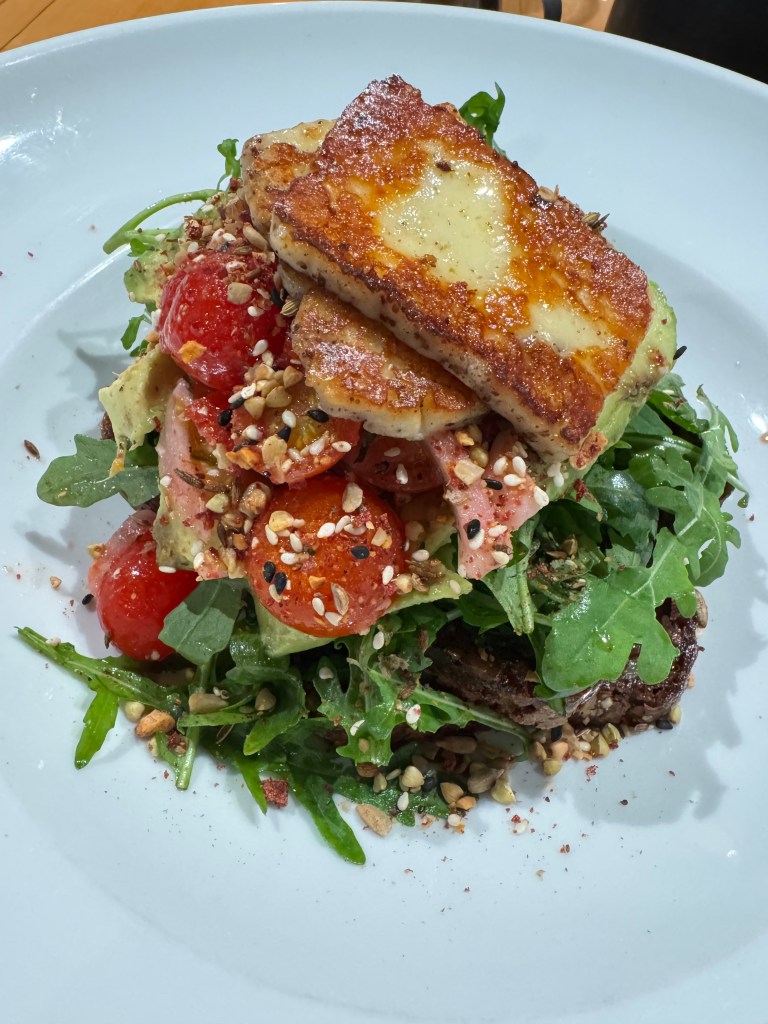
Before any walking, there was breakfast at a cafe named Relishes. They absolutely have avocado toast mastered: smashed avocado with tomato, rocket, haloumi, and seeded bread. You might feel healthy just looking at the photo:
Our morning walk, along Waterfall Creek track and Motatapu track, had some elevation gain with many viewpoints of the valley. A very large benefit to exertion ratio. By now, conversation with our group is so interesting and natural, the time just flies by.


Lake Wanaka is large, the fourth largest in the country, and the part we were looking down on is called Bishops Bay. The town of Wanaka has become very popular, and understandably so. It is chic, has lots of outdoor activities (including skiing), good food, and lots of views. There is some suburban sprawl from the main lakeshore. The lake is about 980 ft deep, but even given that, the guides said they had never seen the lake so low. There is a famous tree “in the lake,” that is an iconic photograph, but we won’t have it because the tree is out of the lake, as the water has receded so much.

After the hike we drove to a sheep farm for lunch. The farmhouse is about 100 years old and and was restored by a previous generation, along with the addition of beautiful gardens. Our lunch was from the garden and we ate on a patio. Two interesting things we learned from Alana, our host: Raw sheep’s wool can be used as mulch around plants. It holds moisture in the soil and has antibacterial and antifungal properties that help protect plants. Right now, wool, especially the “rough” romney wool, does not command a high price. It’s easier to use the wool on the garden than to try to market it all, since the sheep have to be sheared for their health. I’d love to try wool in New York, under tomato plants, which really succumb to fungal spores in the soil.
The second new information was about the market for deer antlers with the velvet still on them. China can’t get enough of it! The deer will grow the antlers back. The antlers are frozen and bar coded like any agricultural product, and then exported through a middle man. They sell for $120 NZ per kg! After doing a little more research I’ve learned that New Zealand is the top producer of deer antlers: 450 tons (from farmed, introduced red deer), while China itself produces 400 tons. Fans, especially in China, believe it is performance enhancing in all ways, including as an aphrodisiac. It has growth factor in it, as well as a host of minerals and other nutrients.


After finishing our fine lunch, we were dropped off along the lake a couple of miles from town, and had a nice walk back to town. Mark and I did some quick shopping and otherwise got cleaned up and organized for an early departure in the morning.
Dinner was at the historic Cardrona Inn. We enjoyed a drink on the beautiful terraces, and I enjoyed visiting with another guest who was a retired veterinarian and had a friendly Jack Russell terrier named Jessie. The inn had this fun sign of FAQs:

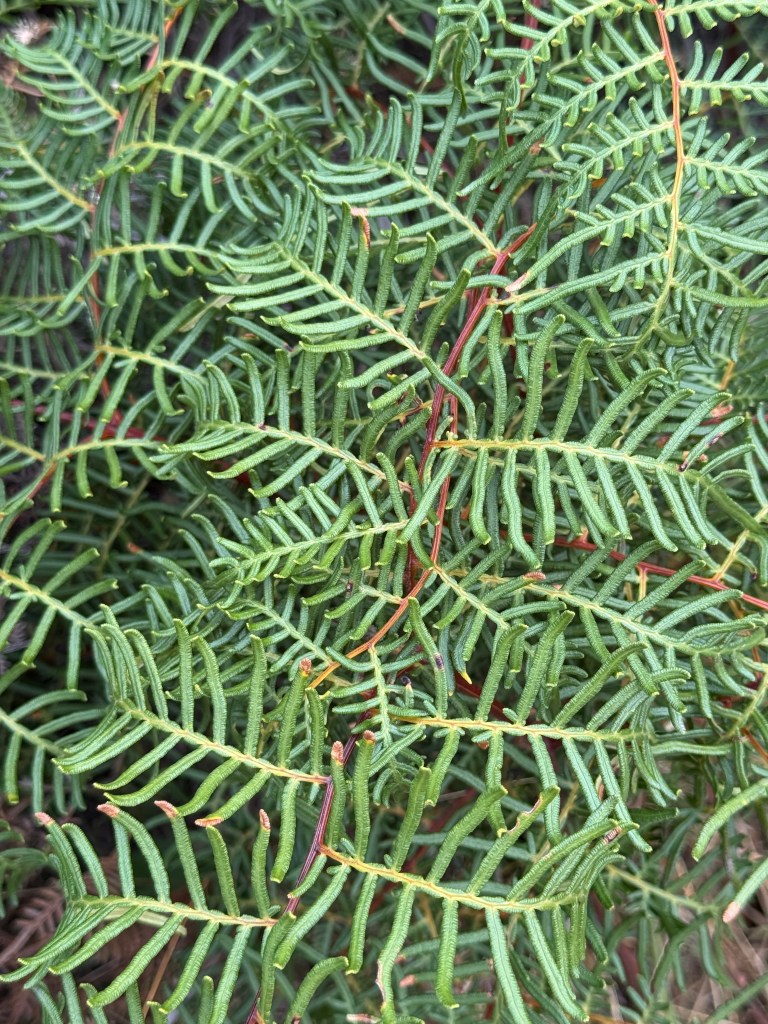
On the morning walk, we saw this bracken fern (Austral bracken, Pteridium esculentum) for the first time. It was remarkable for having leaves that felt like plastic. Ferns are tough.



Leave a Reply