


My title is deceiving. Thematically, we transitioned from antiquity to the city of Naples today. Physically, I do not think you can gradually transition into this city. It’s busy and full. So far our pockets have not been picked, but we are on guard and it’s the city in Italy where we have most often been warned. We have had more people chatter at us from the sidewalks. Like NYC, there is a lot to take in all at once.


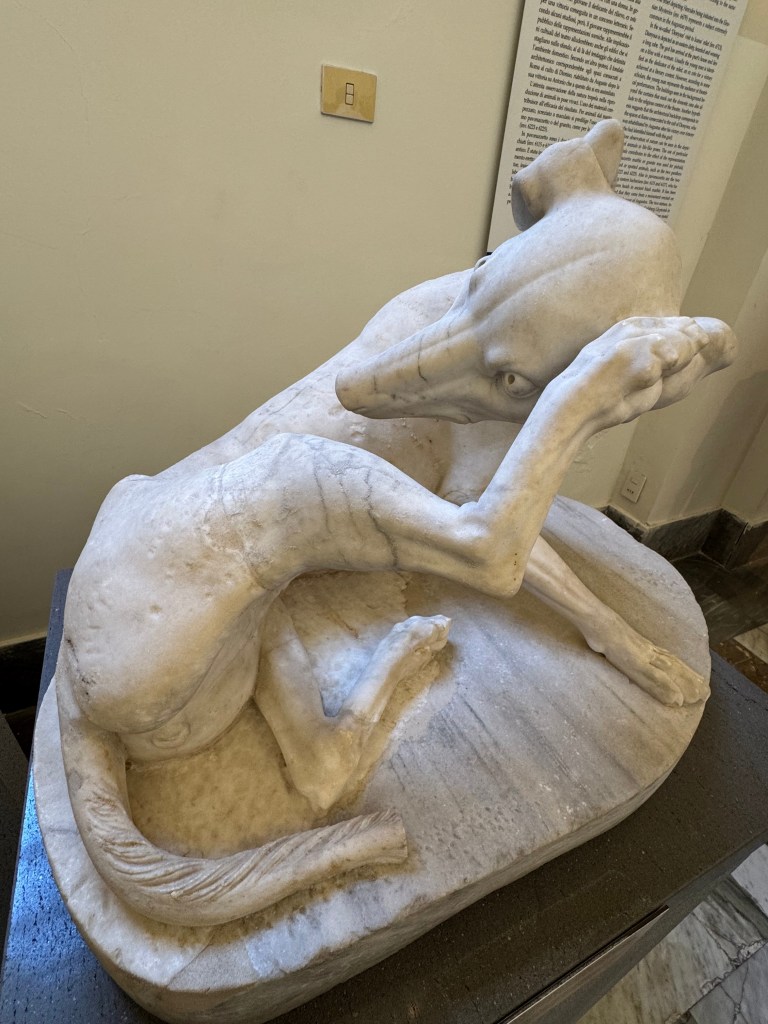


Starting with the antiquities museum was a nice idea. Items recovered from Pompeii and Herculaneum are here. Even before these were excavated, the Farnese family had an immense collection, begun by Pope Paul III. Eventually these became the property of Charles I, the Bourbon King of Naples, and the collection was consolidated in Naples.
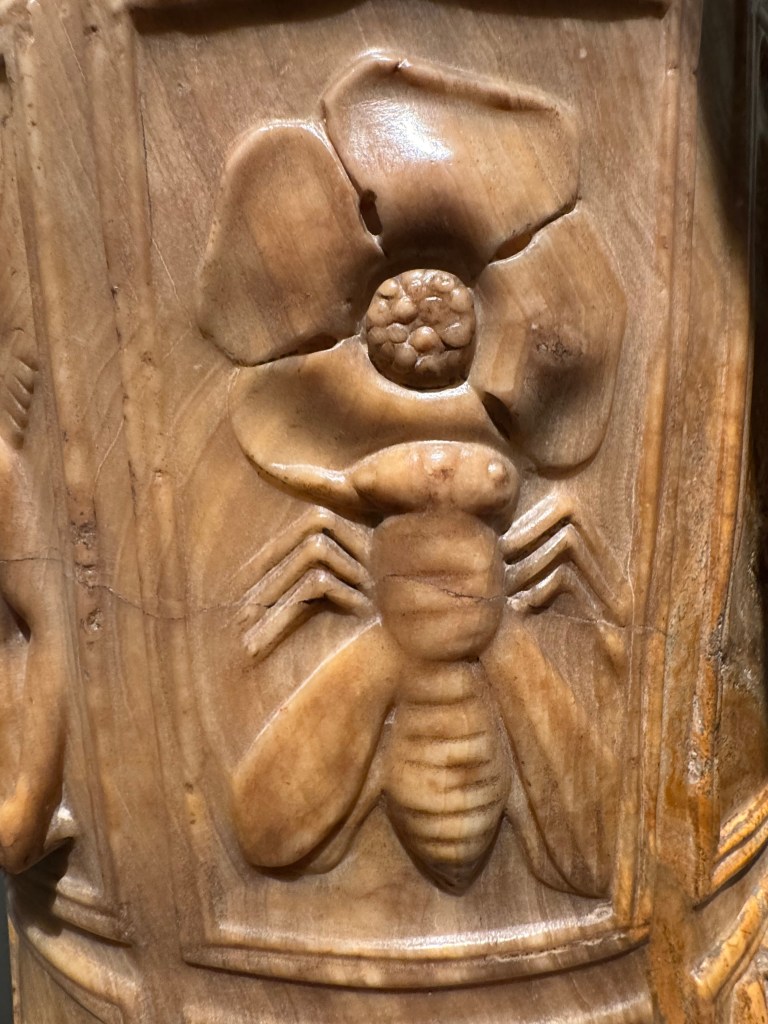
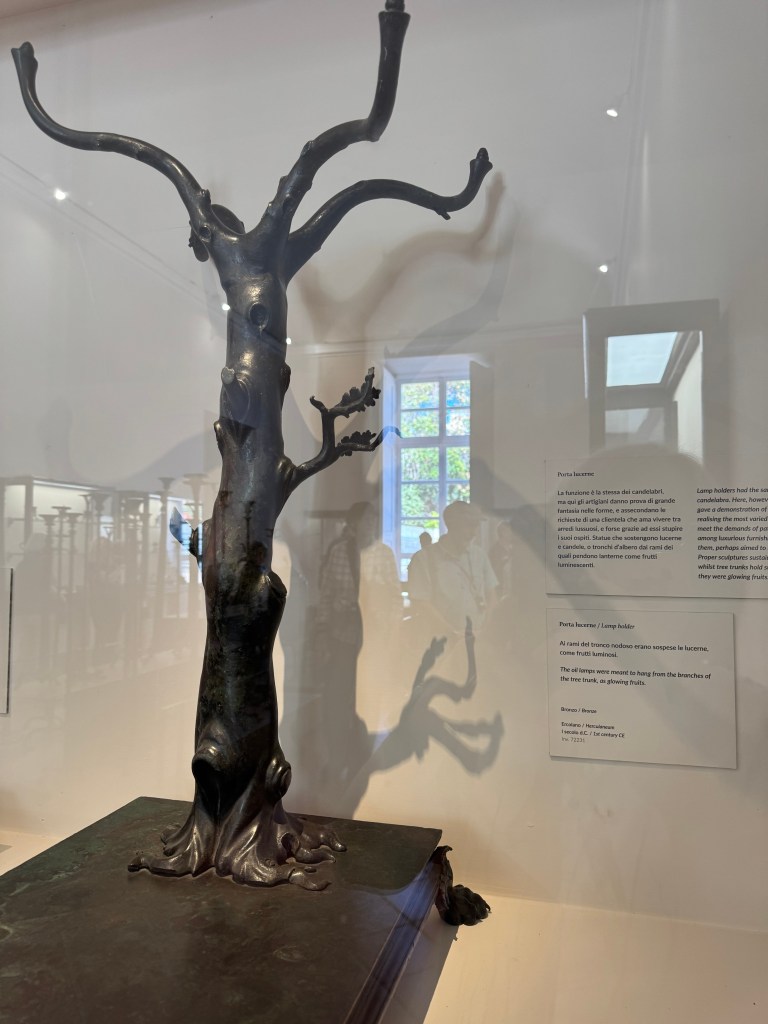
The every day items from Pompeii are interesting. The highly decorative every day objects do give a sense that life was pretty good in Pompeii, since they had so much time for crafting.

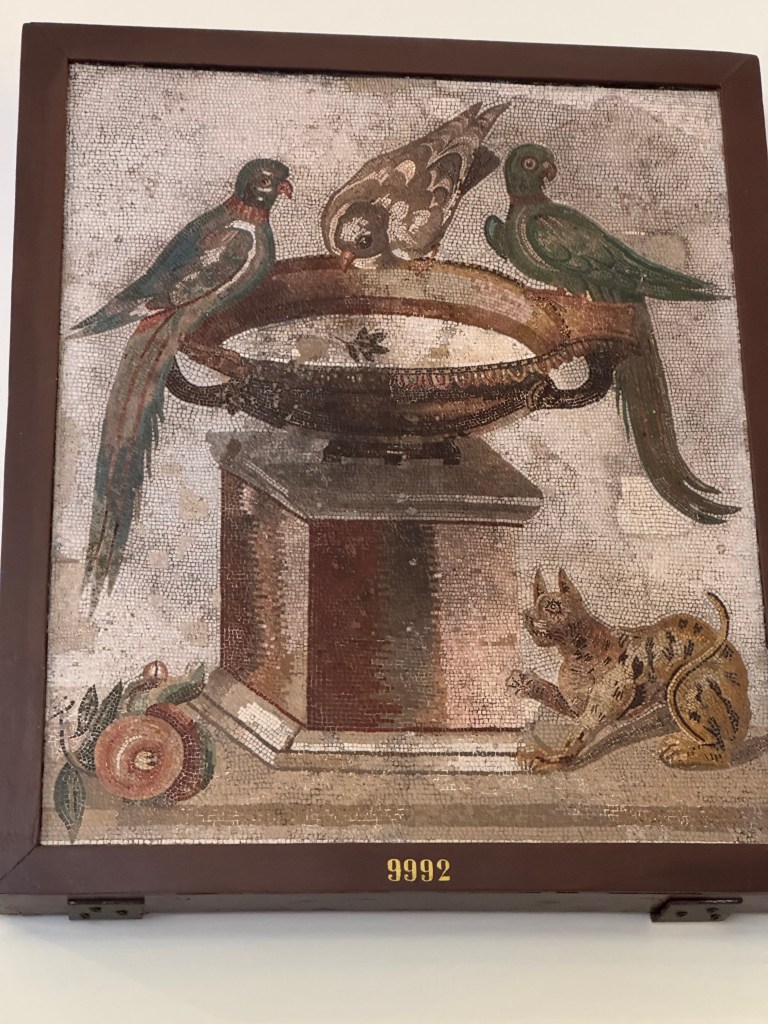
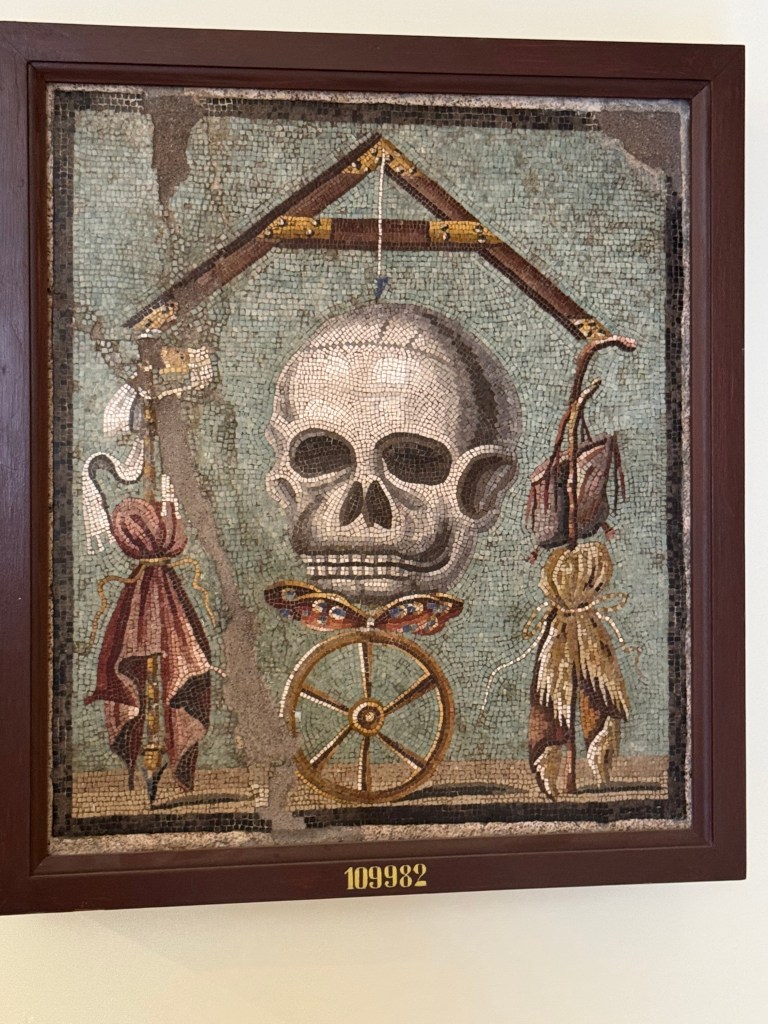
The mosaics are beautiful, and so detailed they looked like paintings. I liked the ones of birds bathing, and the allegorical skull explaining that rich or poor, we all end up the same.

We visited the chapel of San Severo, which charges and then limits your time to just 20 minutes in a room with so much to see…but no photos allowed. The stone carving was very delicate, especially in any treatment of textiles, like netting or a veil.

We had lunch in the busy heart of the old city downtown. The streets are narrow and there are lots of shops. Pizza and variations of stuffed doughs are common street food. Pastry shops are everywhere. Naples is the home of my mother’s favorite pastry, sfogliatella, a shell shaped pastry with attractive layers of dough stuffed with ricotta or pastry cream. The pastry has a satisfying crunch, and having the layers peel away is also gratifying. In America, the filling seemed to have citron or candied fruit quite often, and I was repulsed by that flavor as a child. There is much more variety now, and certainly here. The helpful tip is that this pastry tastes better if it is heated a bit. This gets advertised on the street too.


Our last tour was of the Cathedral of Santa Maria Assunta, or the Duomo di Napoli, the resting place of the blood of San Gennaro. It was the site of a Roman temple, and then an early christian church, and has a basilica of Santa Restituta inside of it. The interior has been refashioned many times, but the the most recent version is baroque, so there is an awful lot to look at.


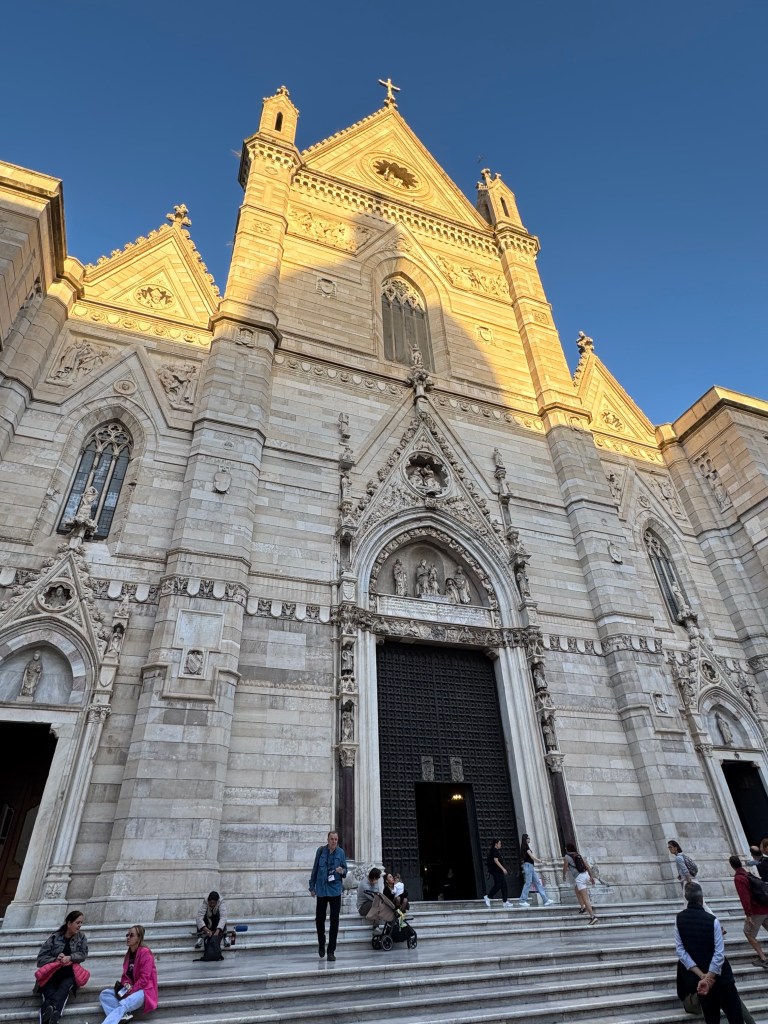
The ampule containing Saint Gennaro’s blood is taken from a vault three times a year to see if it will liquify. In New York, this feast day is a huge street festival. In Boston, we never heard of this saint! In the chapel there was a prayer to St Gennaro on signs, near the area for lighting a candle.

Strength and courage. This is the bottom line for this busy, full city, living in the shadow of an active volcano.


Leave a Reply