

We left Mexico City behind and drove to Puebla today. We had a few interesting stops along the way.

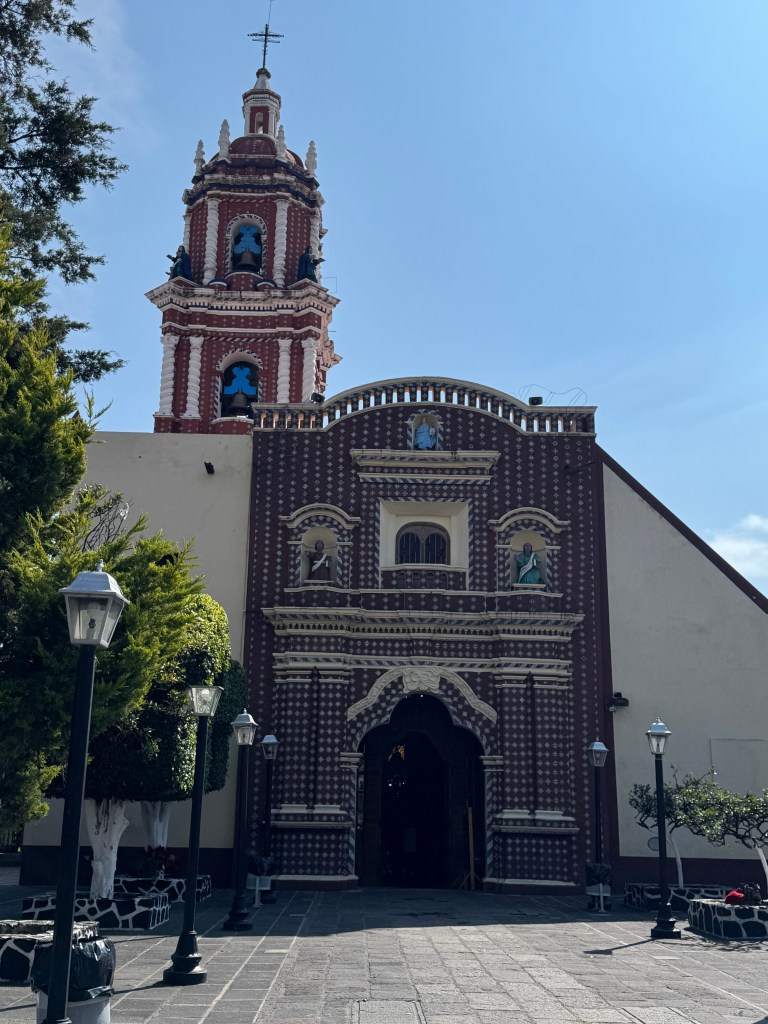

The first was to see Santa María Tonantzintla. Although no photos were permitted while inside, we were allowed to take a few from the doorway. It is carved of wood that was then gilded, in a style called Mexican baroque. The amount of decoration is hard to overstate. We learned that the style has a name that roughly translates to “the fear of an empty space.” Tonantzin was the mother goddess of the Nahuatl people. As the Spanish converted people to Catholicism, she was replaced on this site by Santa María. The church was constructed from the 16th century into the twentieth. The craftsmanship is awe inspiring, as is the integration of what pre-contact people valued and revered, combined with the tenets of Christianity.

Our guide bought has a stack of fresh, warm tortillas for a snack on the bus. A Mexican will typically eat five to seven tortillas a day. Corn is traditional and preferred although people eat flour tortillas in the North. Corn flour by itself is not nutritious because the seed coat is not digestible to humans. Around 3,500 years ago, some women (probably) figure out how to treat corn with lime. We call this process nixtamalization. It sort of partially digests the corn in an alkaline solution, and that makes nutrients more available to humans. Tortillas taste better in Mexico, they just do. Maybe it’s the fresheness, maybe it’s the water or the variety of corn itself? When we return home I am going to do some sample tasting and find our best brand among those we have in our shops.


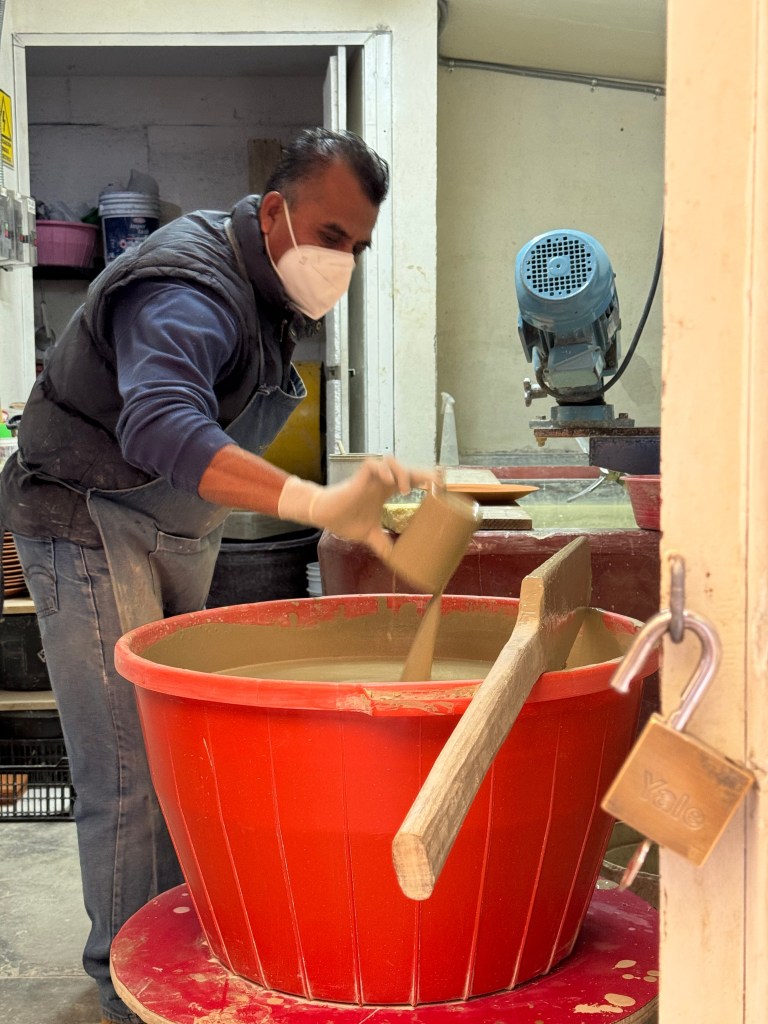
Our next stop was a Talavera pottery. This is the colorful Mexican pottery that is seen in so many places. We learned how it is made– it’s a slip process– and the stairs show the traditional range of glazes. To be traditional, it must use two clays from Puebla, the area of origin, although other areas in Mexico also make Talavera pottery.

Our next stop was at the former Convent de Santa Rosa which houses “perhaps the most famous kitchen in Mexico,” according to our guide. Legend has it that in a scramble to prepare a meal for a short-notice visit from the viceroy, the nuns came up with traditional Puebla mole sauce in the convent kitchen. While mole in general means a mash of ingredients, Puebla mole is dark and rich, and usually has a vast number of ingredients with chocolate, cinnamon and sesame and of course chiles among them. It can take days to prepare. I made it once, though not with the one hundred or more ingredients that some people use!


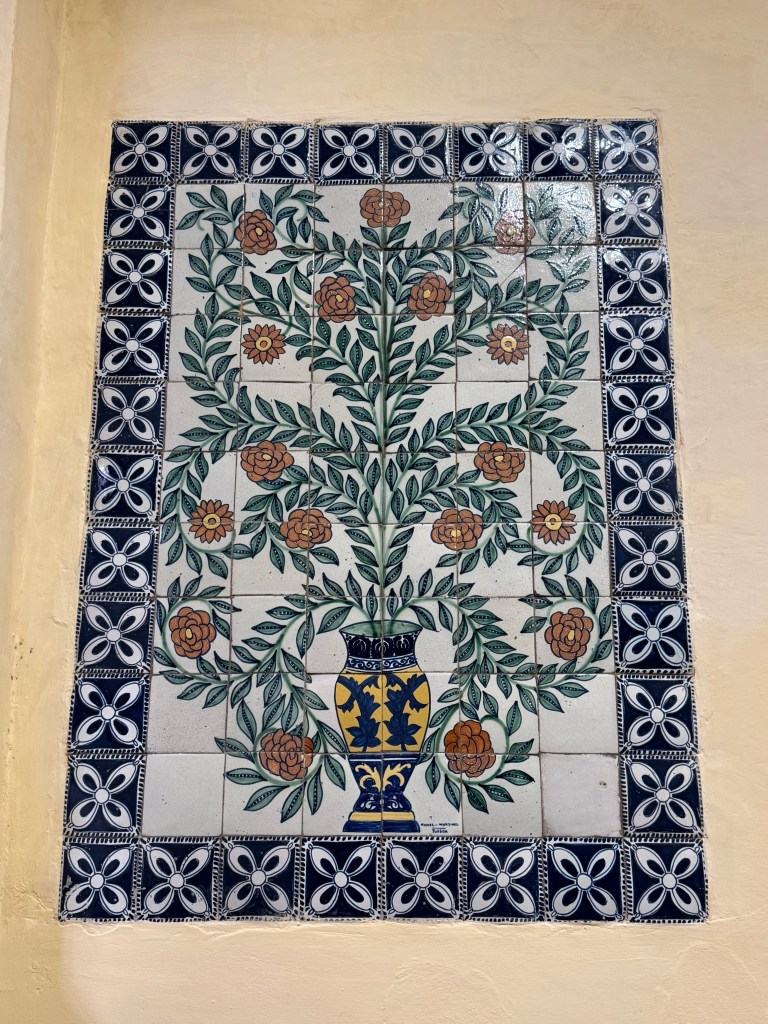
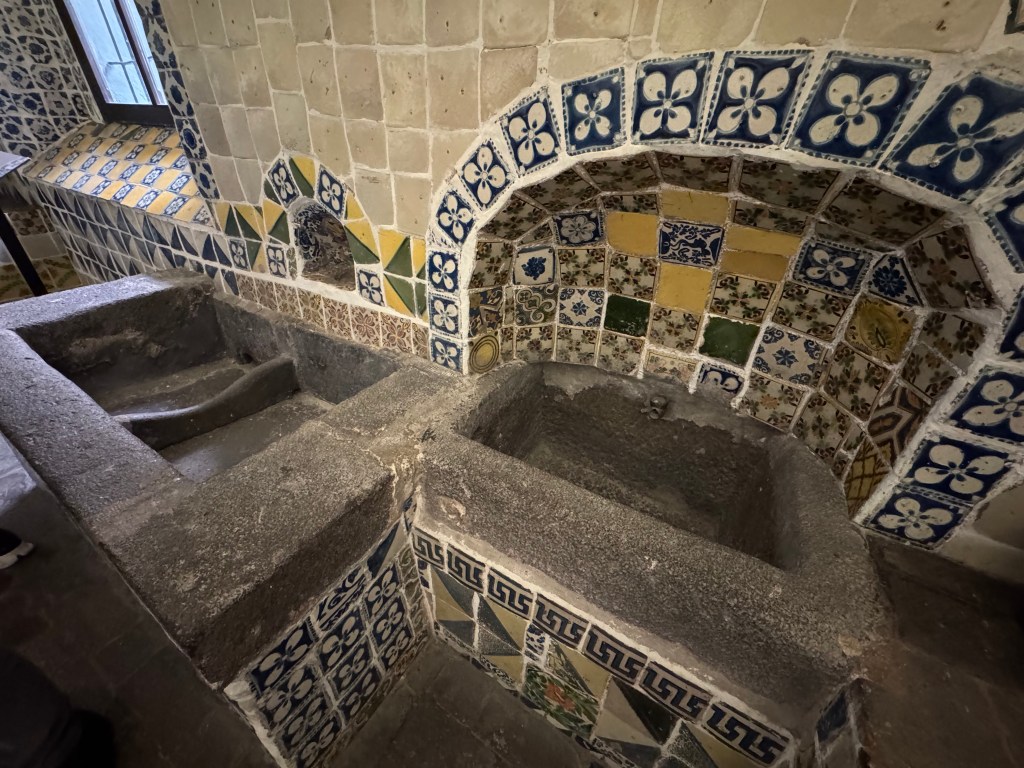

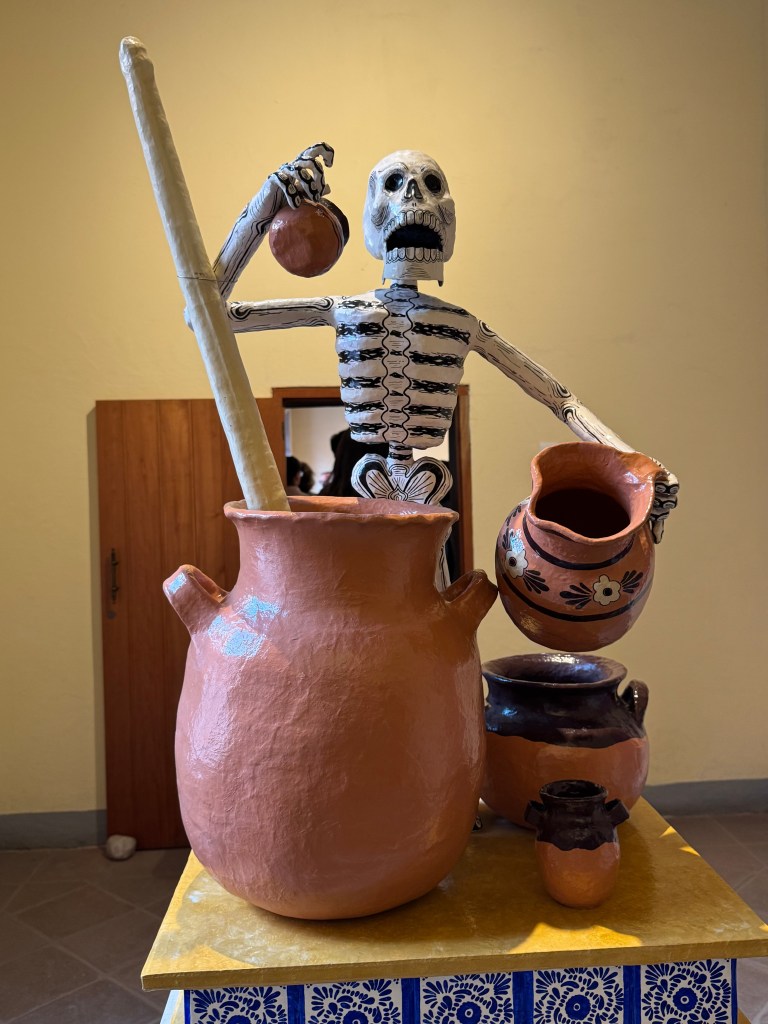
The former convent has even more treasures, because it is the home of a folk art museum. I have a huge enthusiasm for Mexican folk art, although I don’t know a lot about it. It is often very colorful and can also have that characteristic of “fear of empty space,” that we saw in the Mexican Baroque church, especially in some wood carving and embroidery. The museum was arranged by category and here are few examples of things I really liked:


We checked into the pretty Casona de los Sapos, which means hotel of toads! Dinner was a molé sampling. After some appetizers of tostadas, we were bibbed. And not with plastic ones, as you might wear to eat lobster. These were cloth bibs. A small plate with an array of spoons was placed before each of us. Then six small pots, each with a different molé were served. Pork was covered with a different sauce in five of the pots and the sixth held refritos. We had rice and warm tortillas to eat with the molés.


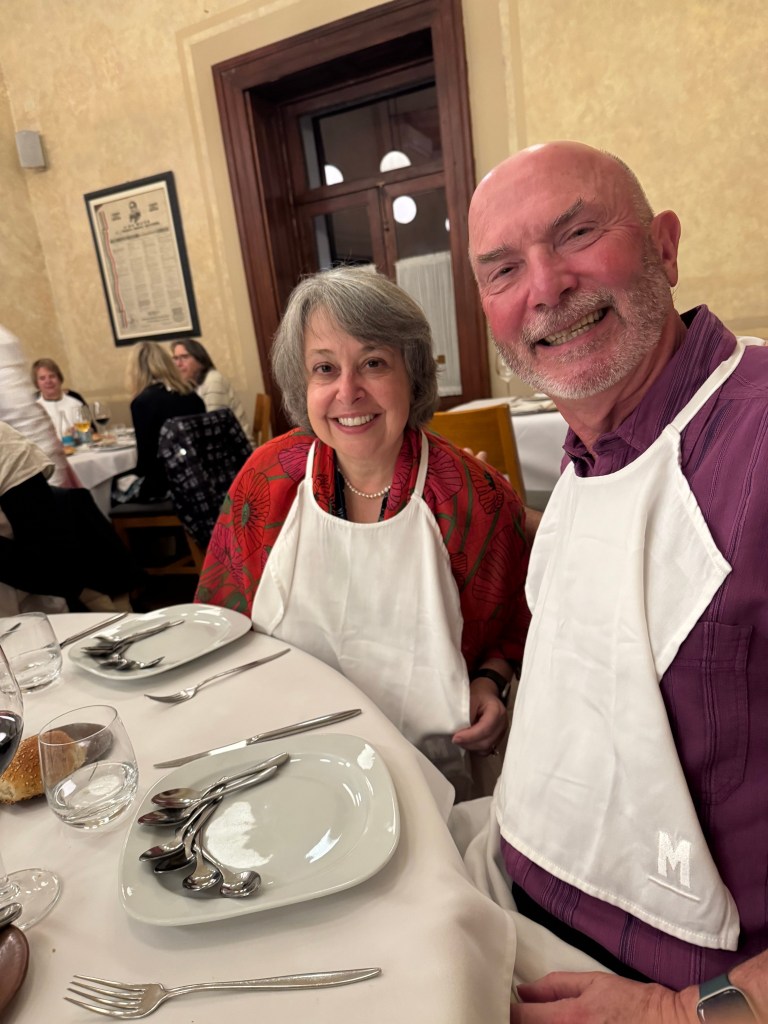
The traditional molé was my favorite, although the peanut molé and a banana one were also really great. The whole experience was very fun. Looking forward to walking some of it off tomorrow.


Leave a Reply