


The photo above shows my breakfast this morning. A tamale! It was the first of two tamale meals for the day.
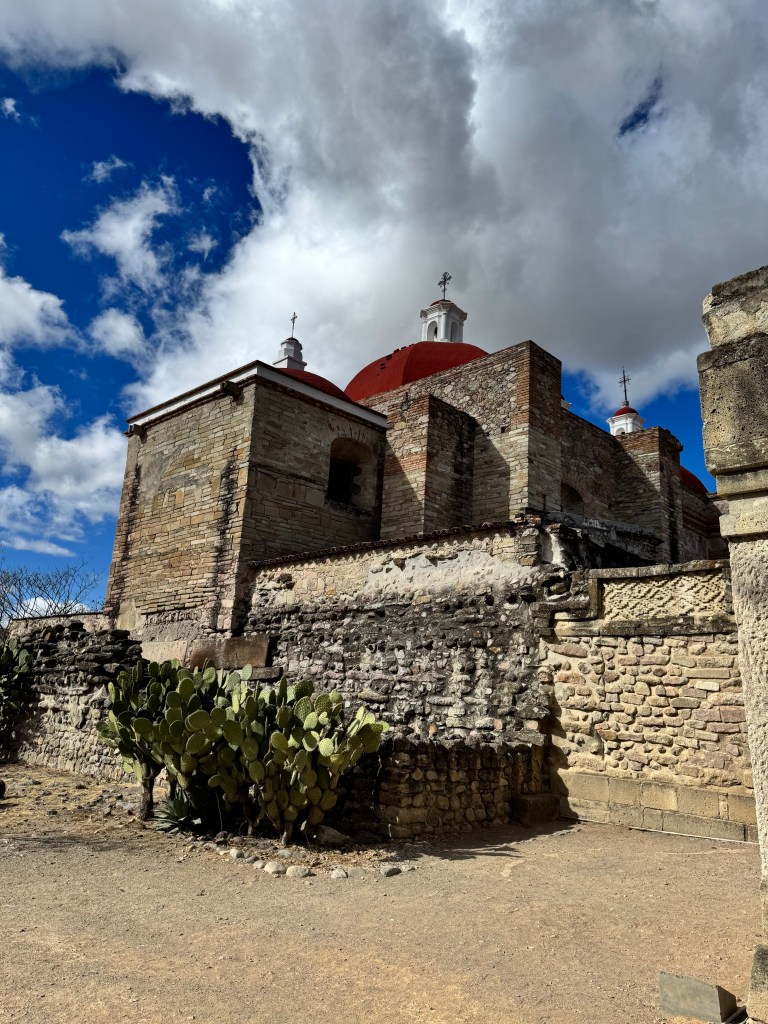
By now we know the score, whether it was the Christians in the former Roman empire or the Christians in the former Mexica empire, the old temples were used as foundations for new Christian churches. In Mitla, the remains of a Zapotc temple and palace can be explored a little bit in the area around the church. The church itself is not in great shape– it was damaged in an earthquake. The temple and palaces were a major religious center for the Zapotec.
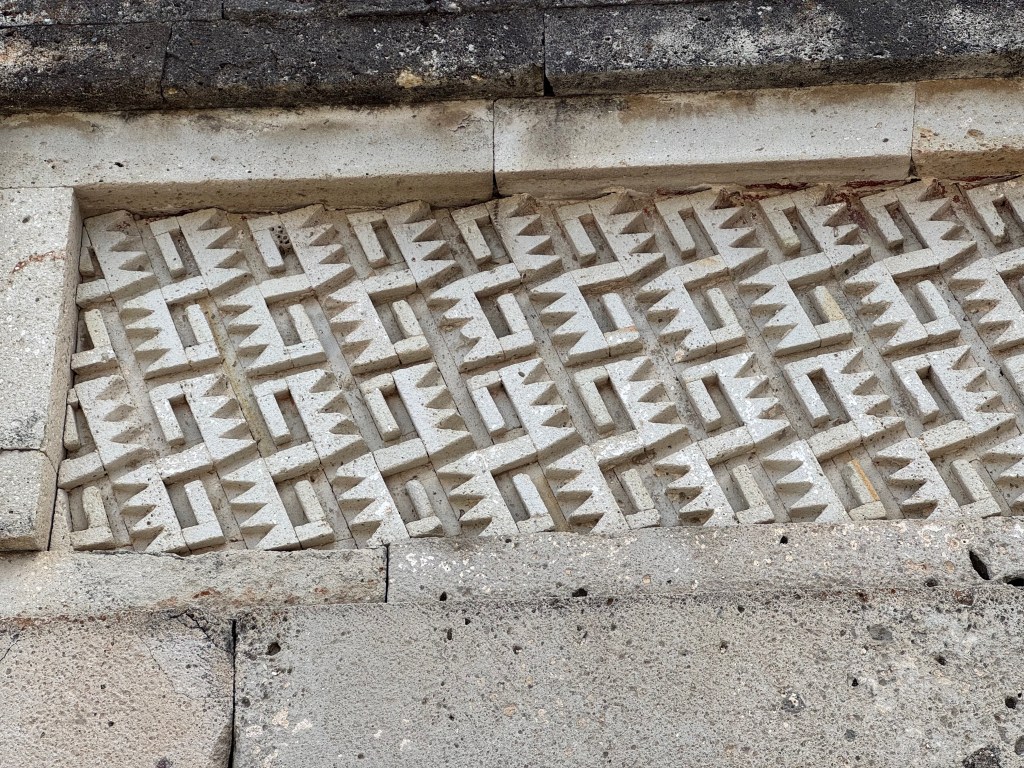


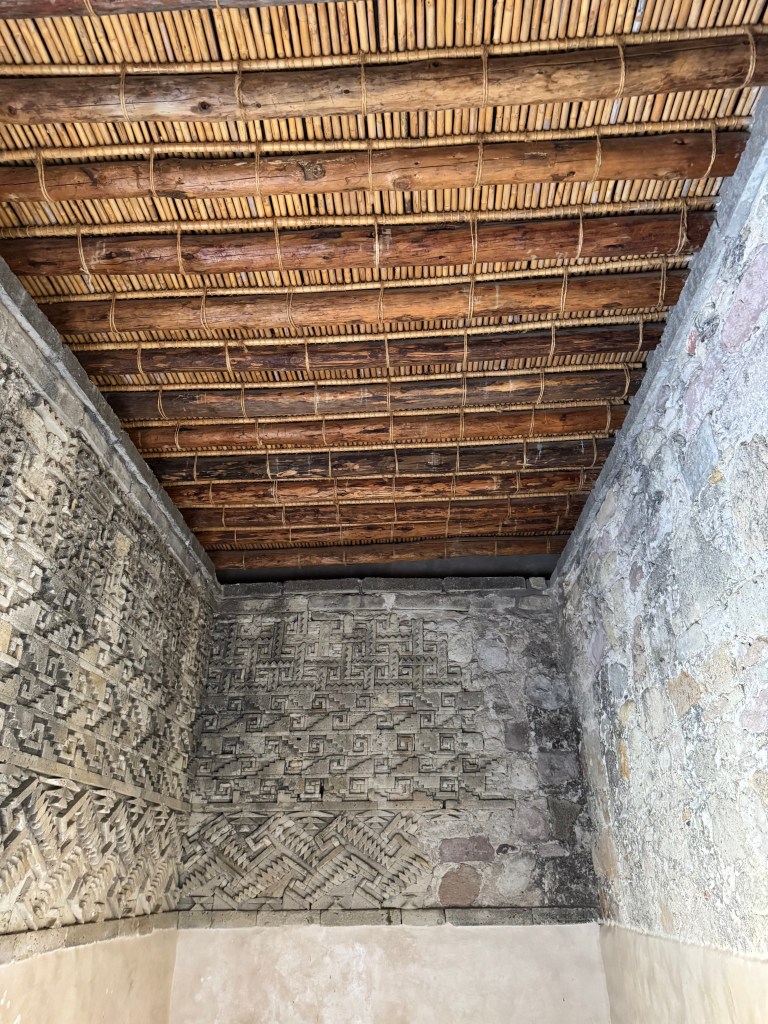
Mitla is famous for the highly decorated stone work. The patterns along the top don’t ever seem to repeat. They may date from as long ago as 100 CE. We climbed the famously steep steps to enter the palace area. We learned that the steps are steep to create a sort of stage so that people could see the rulers from far away.


We had a quick shopping stop to patronize the stalls along this streets. I found a shirt:

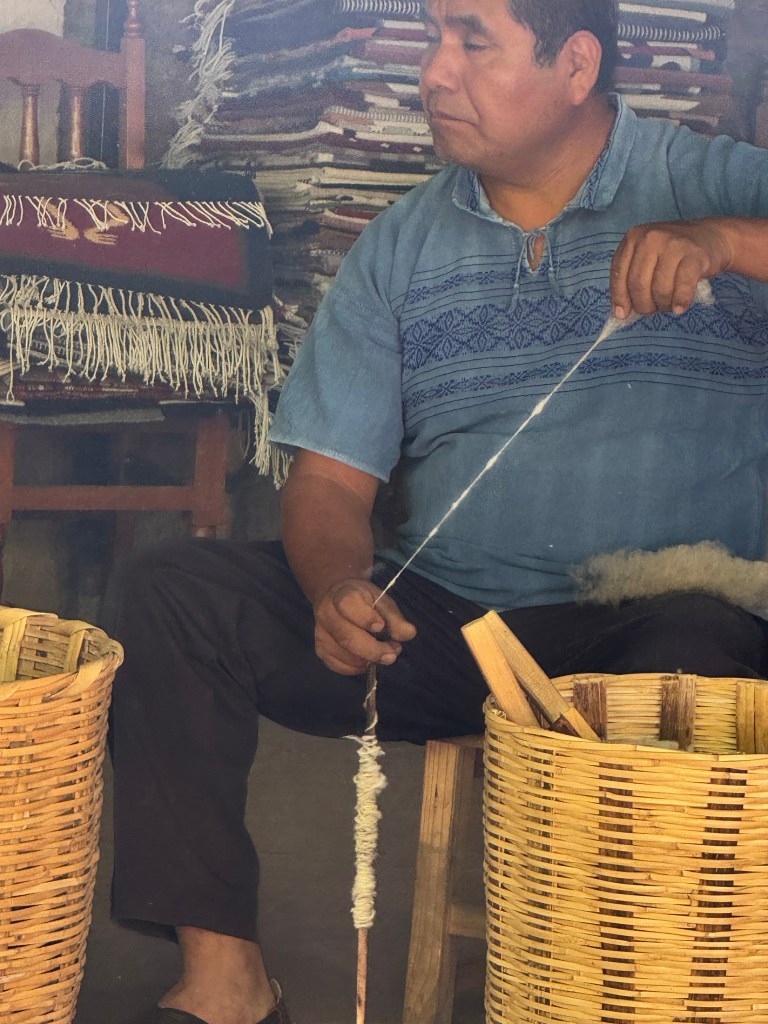
We left Mitla to drive to Teotitlán del Valle to visit a family of Zapotec weavers. They also made us lunch, and we spent hours there. The entry area of the home is where an altar to the ancestors is. We needed to be received in this location by exchanging formal greetings and presenting our hosts a gift, in this case a candle that stayed lit on the altar during our visit. We were each individually received by the oldest member of the household and her adult son, who is one the family’s master weavers.
The home has a central courtyard which is the workshop for dying, spinning and weaving. Living quarters and the kitchen are upstairs. We headed to the kitchen first.


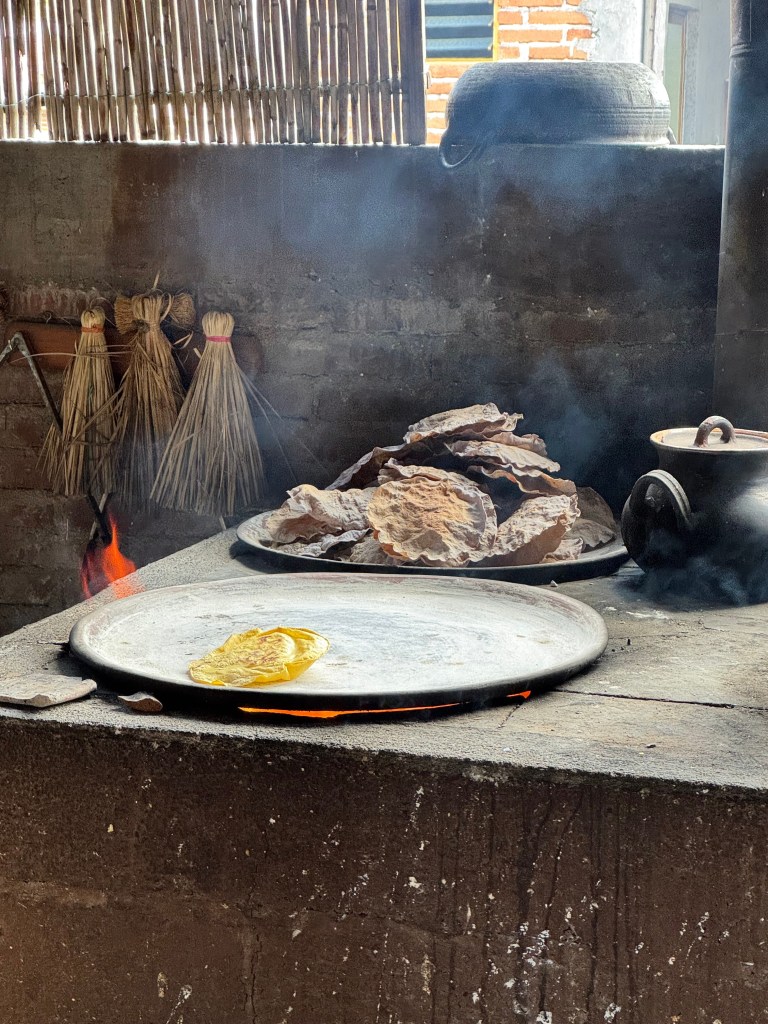
Our lunch was being prepared. We were eager to see how the corn is processed to be nutritious by being soaked overnight in lime(stone) water and then mashed on a metate before being pressed and grilled. We also saw the array of vegetables that were being cooked into a soup for us.


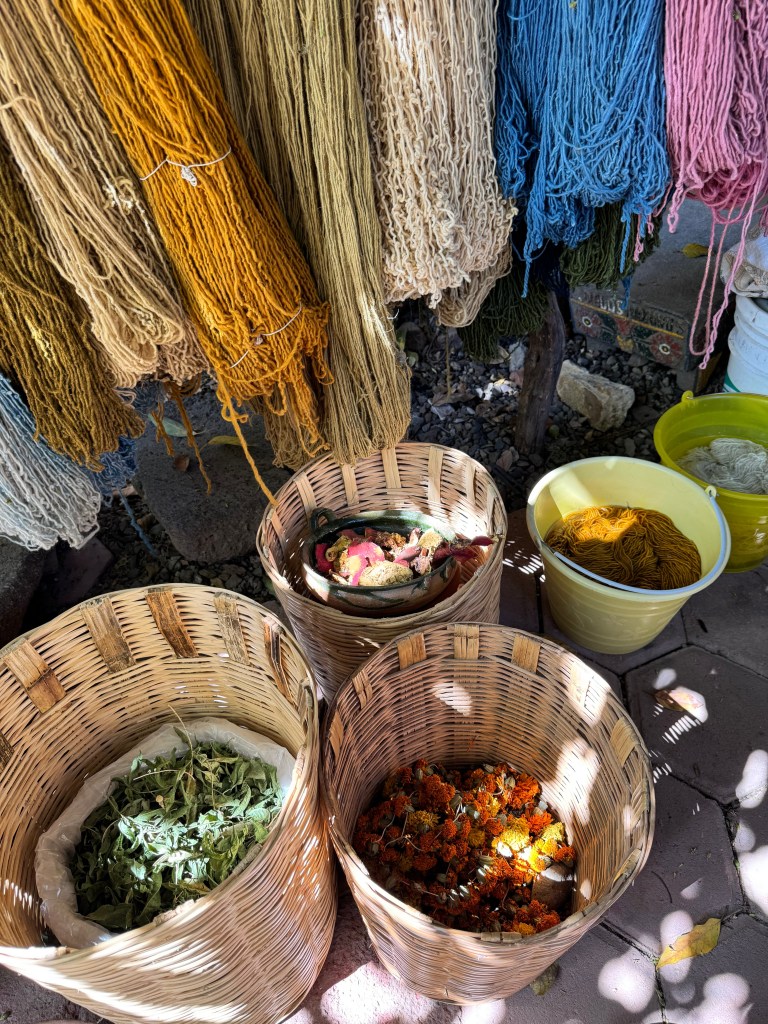

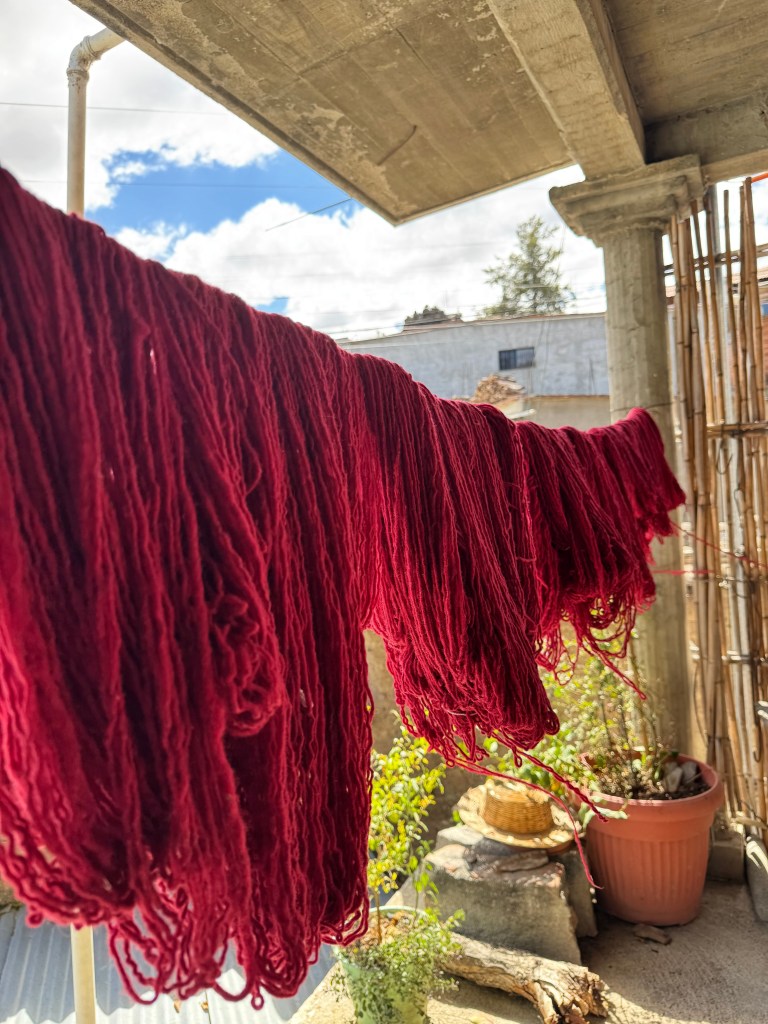
The most interesting color is the red. It is very dark and bright. The color comes from the the Cochineal insect and in English the dye is called carmine. The scale insect lives on the opuntia cactus. Mature female chocineal insects are laboriously hand-harvested, then killed by drying. The dried insects can be used right away, or stored, or exported. The Spanish named them “grana cochinilla,” so people in Europe thought it was a seed. This helped the Spanish maintain a monopoly on cochineal.

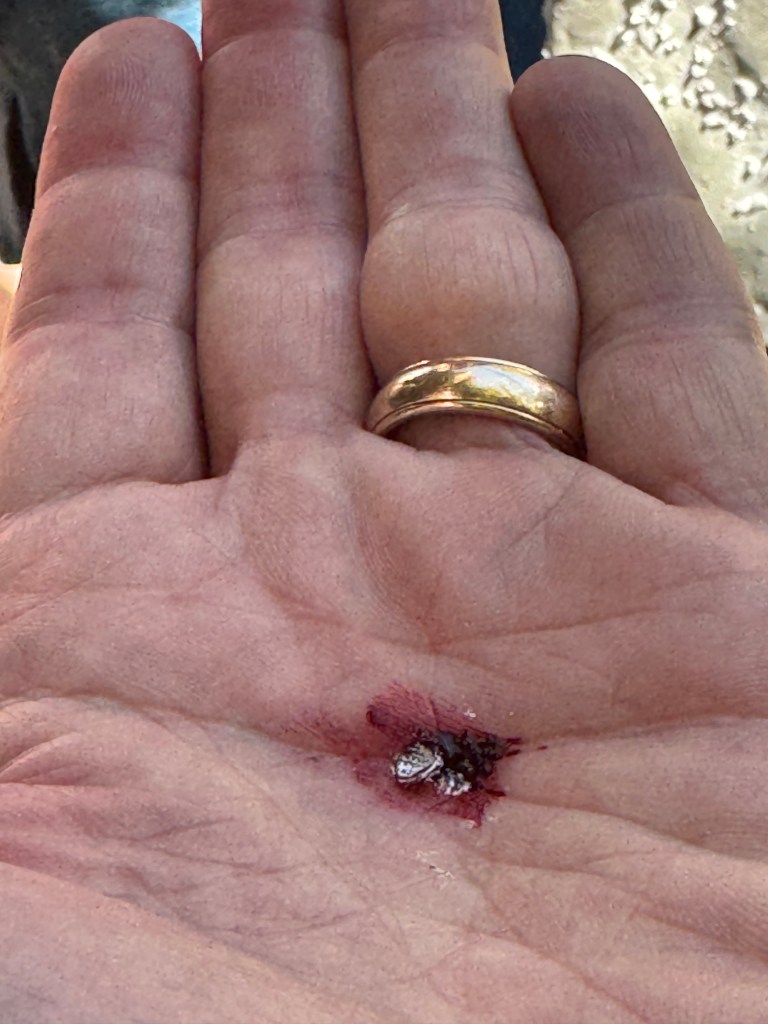
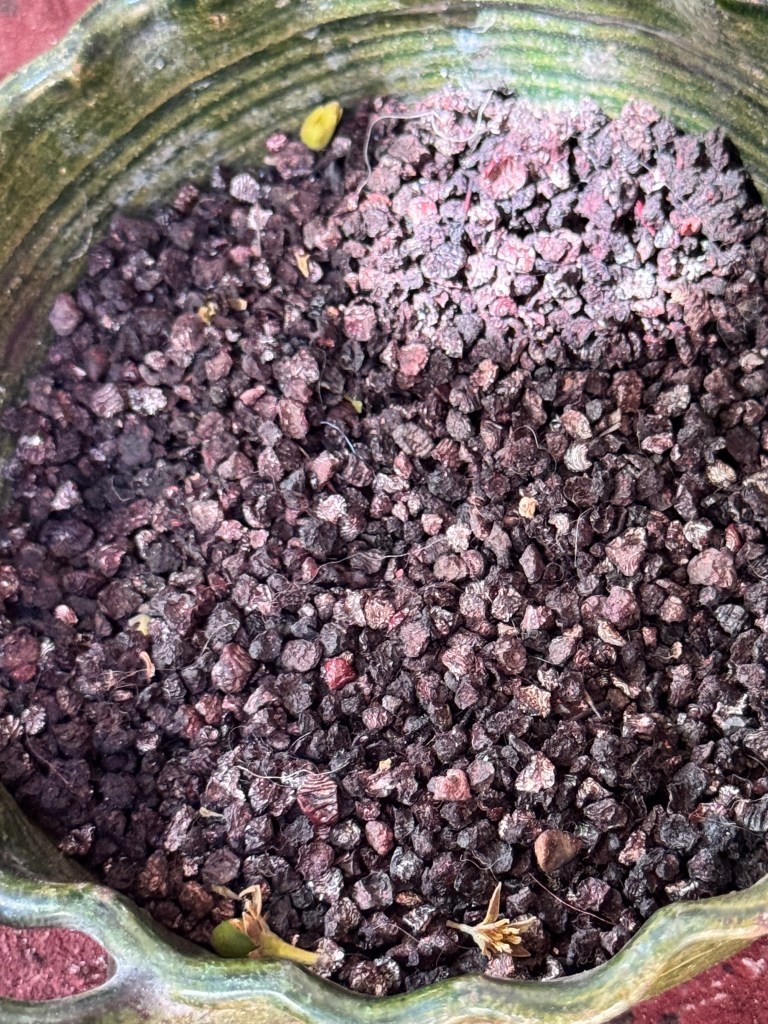
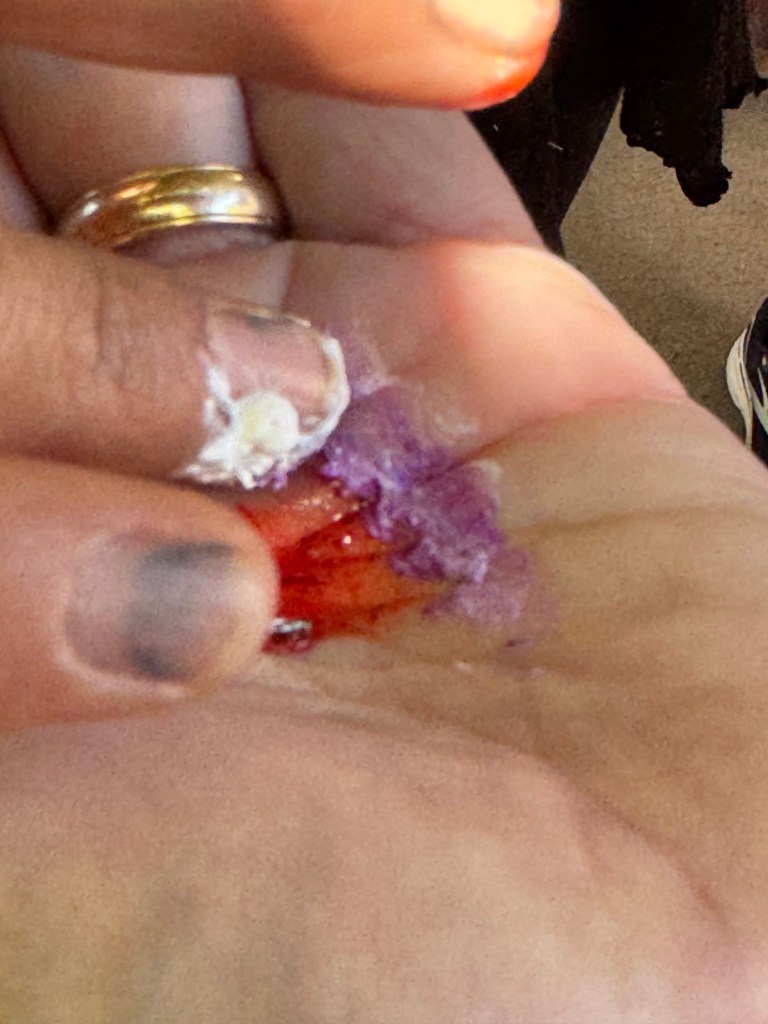
We were told that the red was the color of British redcoats, although other sources say the British dye was “Venetian” red and produced from inexpensive madder root. The red we saw today was beautiful, no matter who used it in Europe.
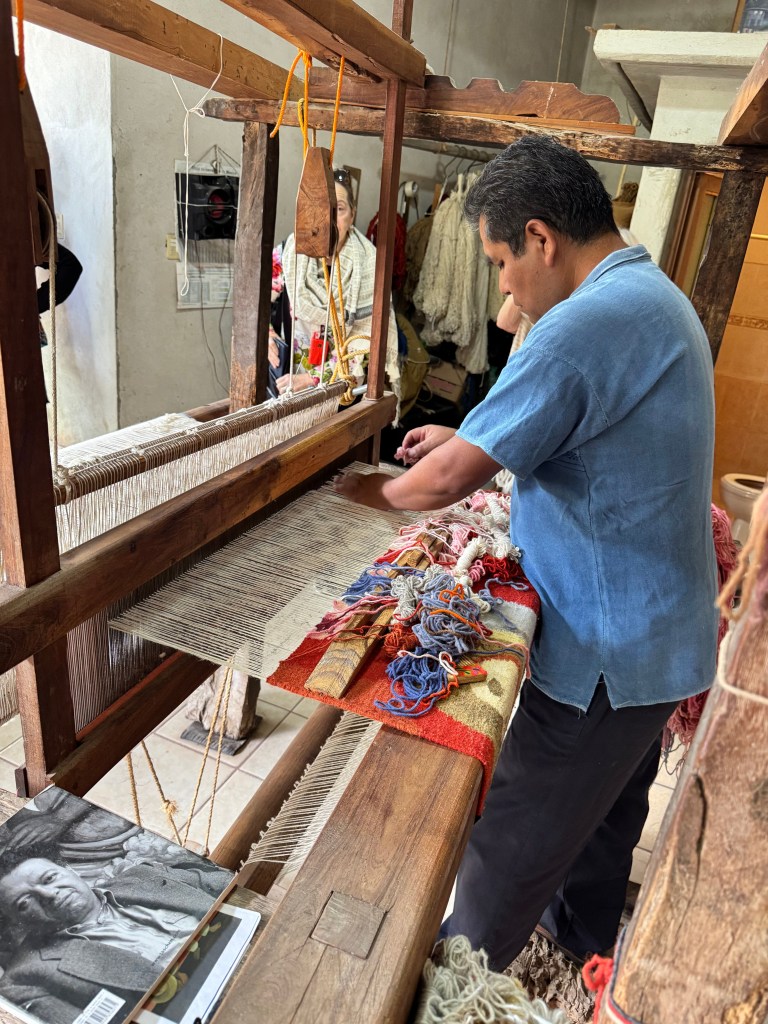
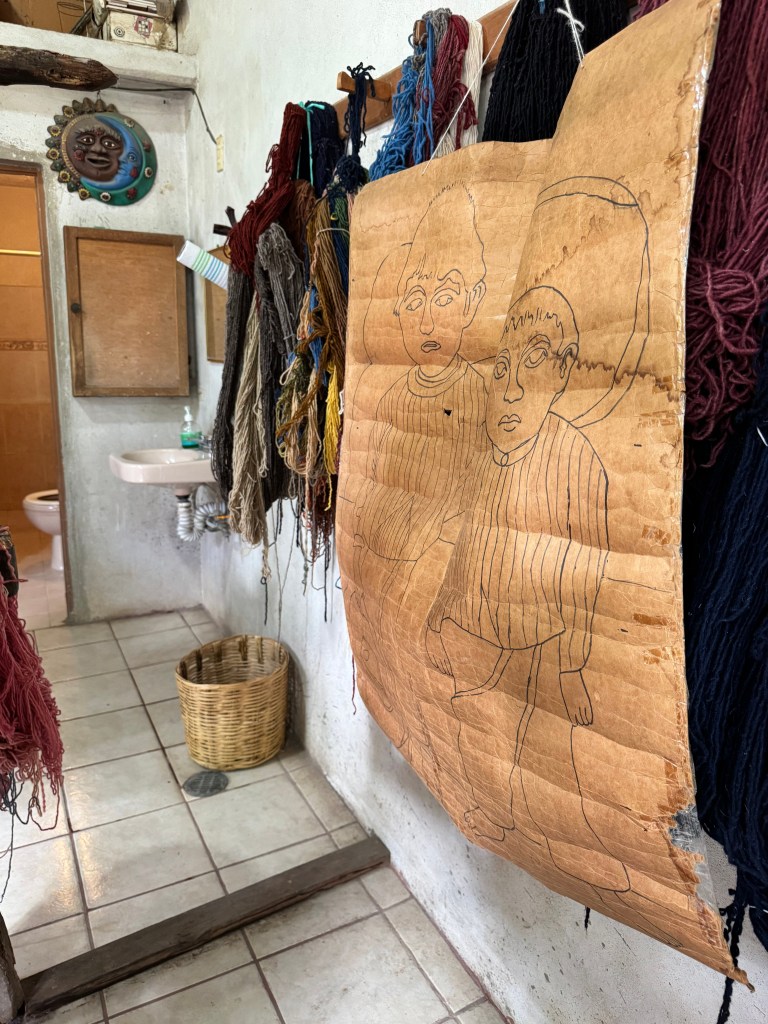

The loom demonstration was on a very old one that has been in this family for centuries. The master was working on a rug that will feature two little boys and is based on a painting. It will take months.
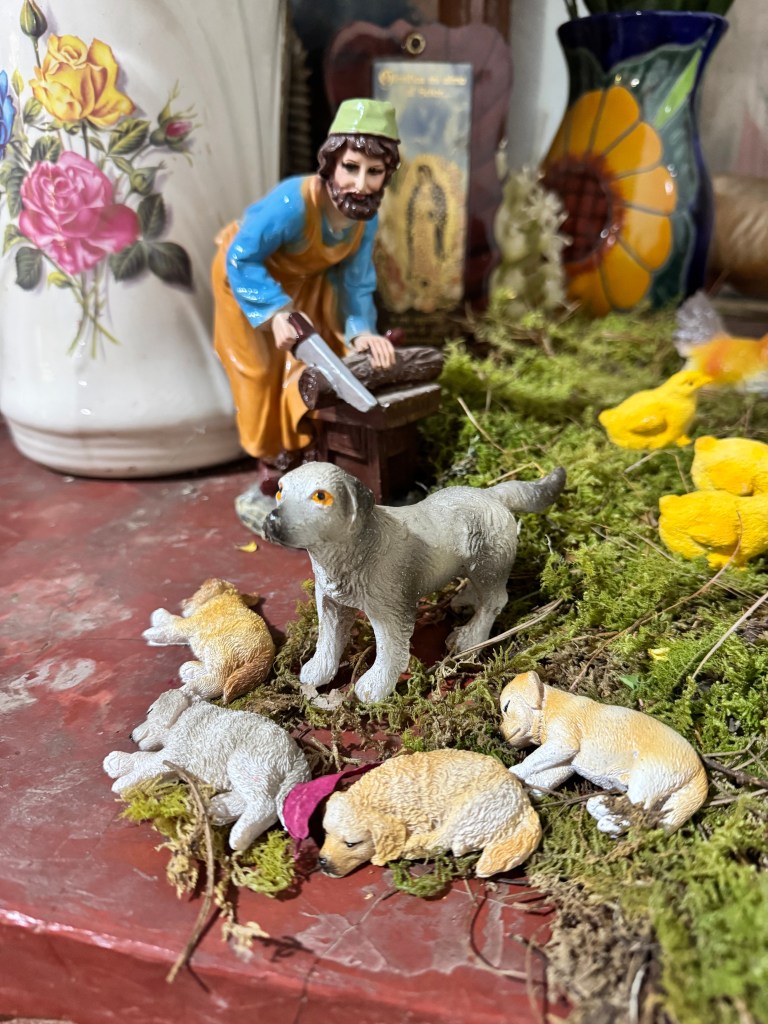
Back in the altar room we were served lunch: cheese and chapulines (which feel second nature to nibble now)* with guacamole, vegetable soup, and a special tamale cooked in green corn leaves. This tamale is made only two days a year and then today, for us, we were told.


After we said goodbye to our hosts, we reconnected with our bus.
The little Zapotec towns we visited have the cleanest streets we’ve seen in Mexico. All men in the town do community service starting as teenagers, and picking up garbage and litter is one job. The service is life long, including administrative duties as well as general repairs. The community gets an “allowance” from the federal government and has agency over how to spend the funds, at least since the Zapatista uprising in 1994.
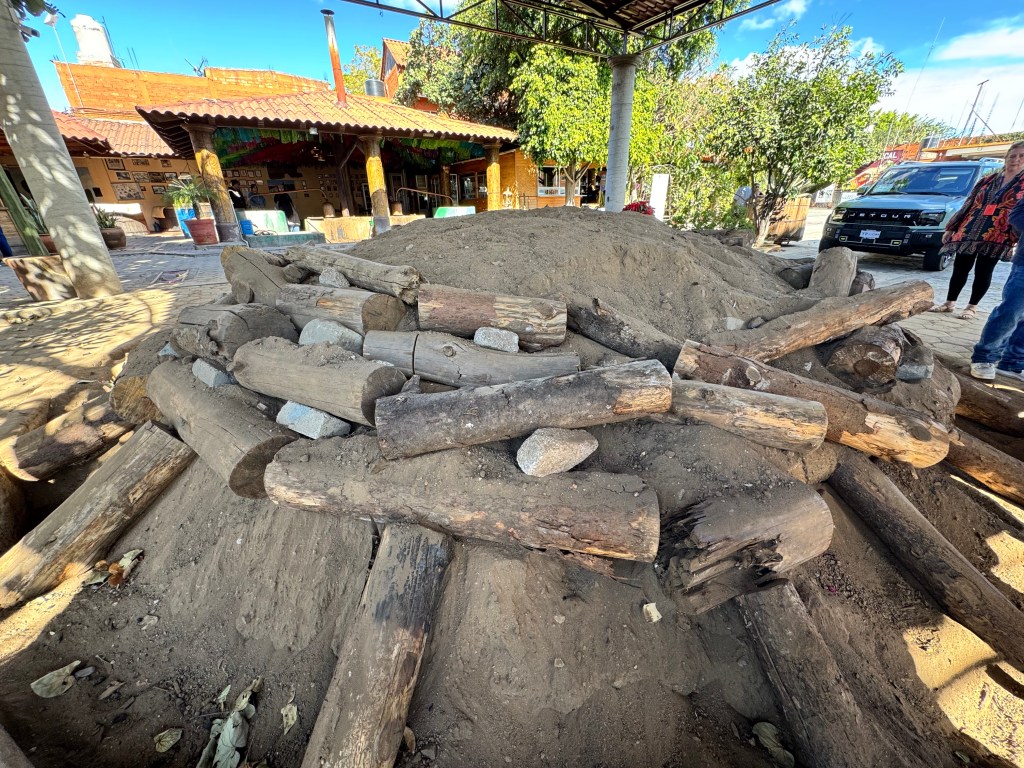
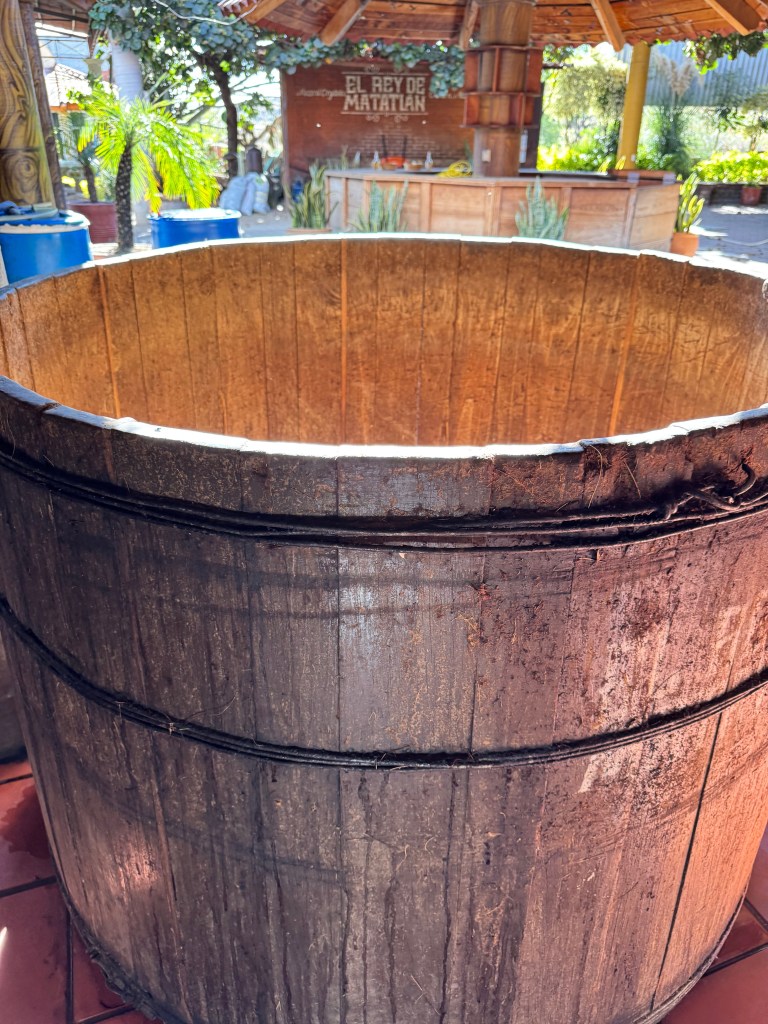
Our last stop for the day was the El Rey de Matatlan mescal factory, where we learned the process of making mescal and had a tasting.




We were pretty mellow and quiet heading back to Oaxaca. It was a quiet evening for Mark and me and we just got back from dinner in the restaurant of our hotel, which was tasty, of course.

- Wishful thinking, but maybe some day.


Leave a Reply