


We drove out of Oaxaca early this morning to arrive at Monte Albán before any other groups. While it is not that crowded when compared to ancient sites we’ve seen in Europe, it was awesome to see the temples and plaza with no one else in it.


The site was probably first occupied around 500 BCE. It may have had more than 5,000 inhabitants two hundred years later. Between 500 and 750 CE, the site was abandoned; but that’s an very long stretch of history for an empire. At its height, our guide thought the entire city state may have had 30,000 inhabitants (with about 2% of those actually living at the Monte Alban site), my reading shows estimates a little below 20,000.

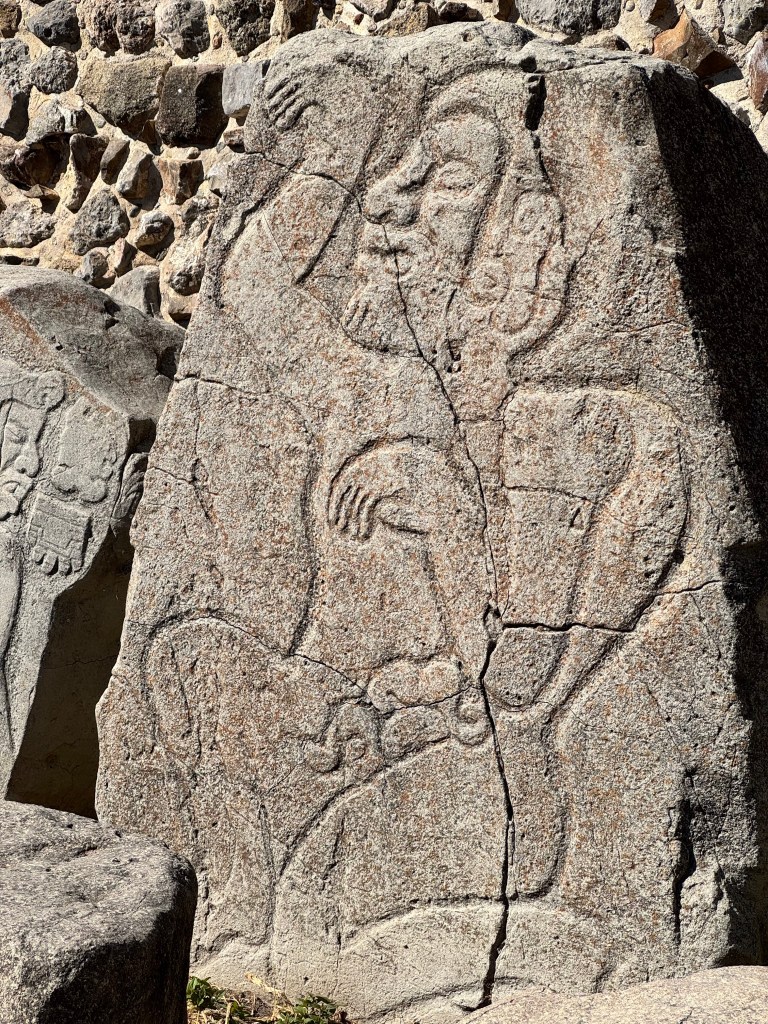
We learned that these ancestors of the Zapotec had a counting system based on twenty, not ten, because they included toes as well. So, multiples of twenty would be significant. Every 400 years, the ruler would have to enter a “capital campaign” to rebuild the temples. Human capital in this case. These kings went to war against neighboring groups to acquire captives who became enslaved construction workers. The highest ranking captives suffered public executions that included torture and ritualistic cannibalism. They then made graphic drawingss of how the prisoners were executed, and displayed them on carved stones, sometimes with the date of execution:
Other buildings were palaces, and as the complex aged, it appears that the elite were more and more hidden from view from the public in the plaza.
Part of the reason the construction is still present is because these people invented a type of mortar, perhaps because they were familiar with the effects of limestone on corn. The site became interesting to archaeologist only in the 1930s, and only a fraction has been excavated. In fact, there is not necessarily a big push to uncover the whole area, since it is better protected underground.


The civilization also had a long tradition of astronomy and there were night watchers who sketched the sky every night. Their creation story involved Orion, from whose belt light was released. There is one building, thought to be an observation center, that sits at an odd angle because it is able to site an annual celestial alignment that way. The thinking is that the civilization needed to mark time in order to have the best control over agricultural practices.

Our next stop was to visit an artisan family that has been carving fantastic wood creations called alebrijes. These began in the 1930s as paper mache creatures. Soon Oaxacan carvers began using soft copal wood to make them, and by the 1980s they became really quite popular.
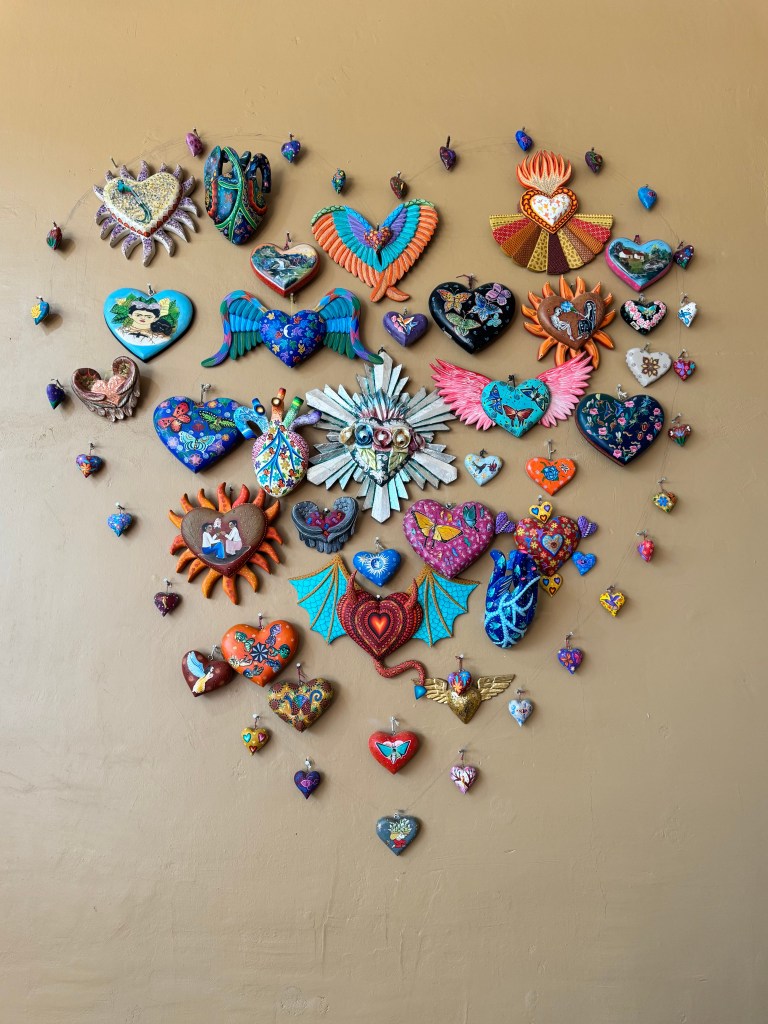

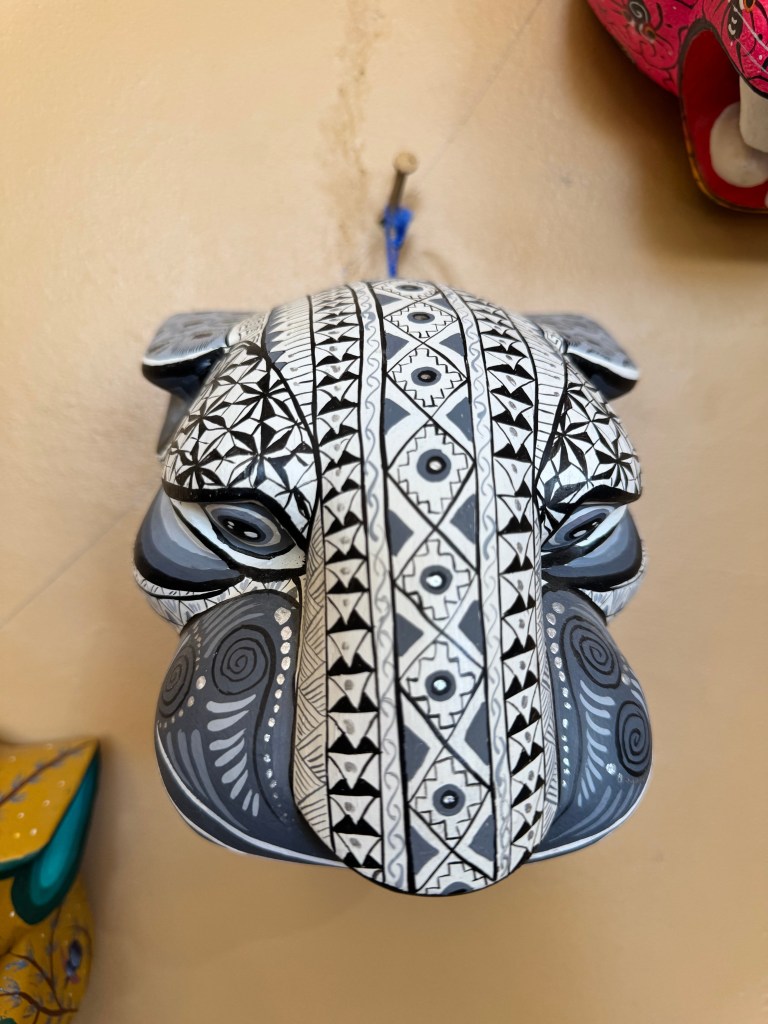
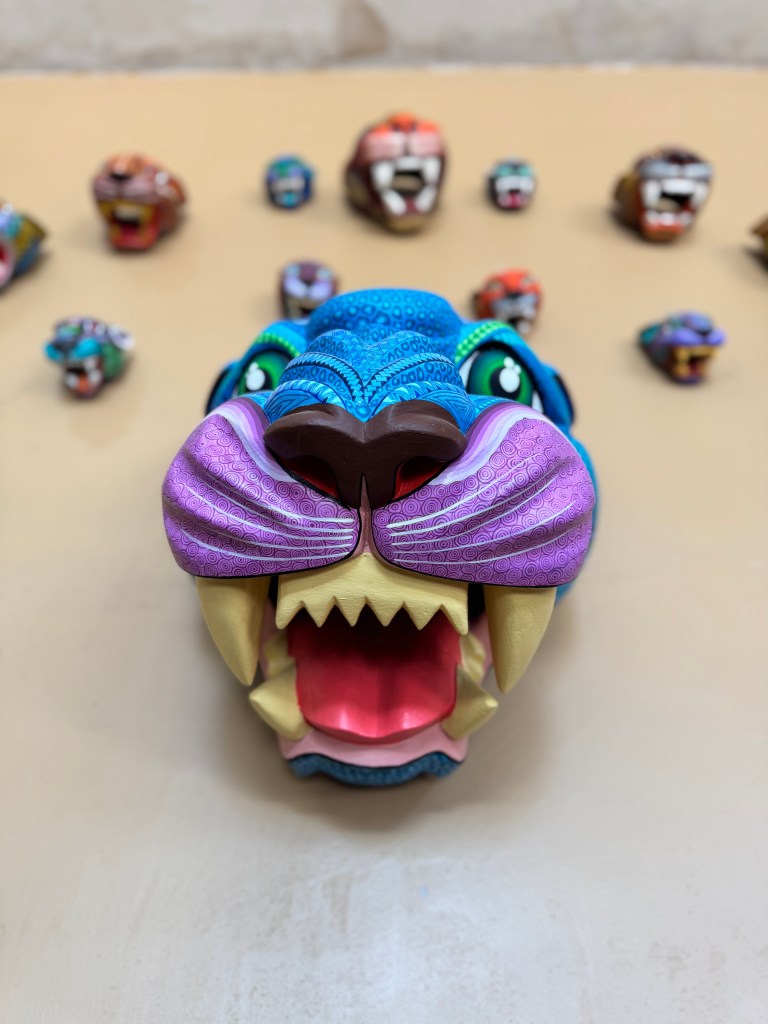
The carving is amazing, but the painting really makes the piece. The father of the family is the carver and the mother and daughters are painters.

We were also served a home style lunch of soup and vegetable empandas (that were more like quesadillas). My favorite was stuffed with cheese and squash blossom.


Our artist visits were not done, as after lunch we made a brief stop at a woman’s cooperative where they crafted items produced on traditional backstrap looms:


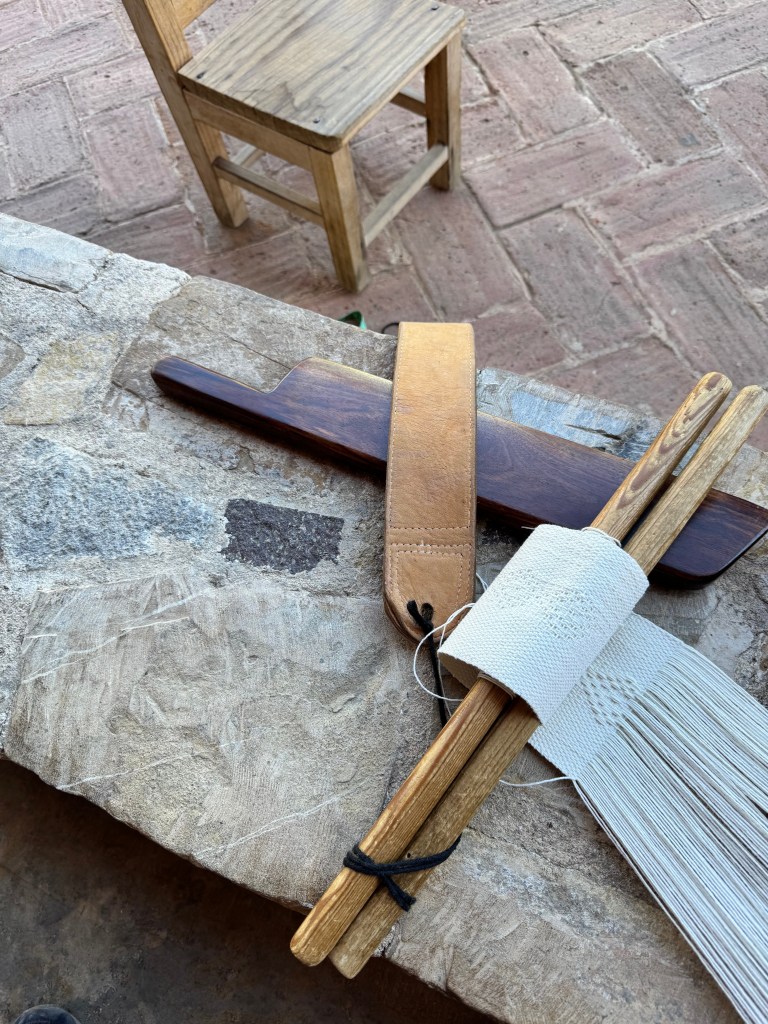

It was a little quiet, since we arrived at lunch and siesta time, and many women had to return to their homes to feed their families. Their work is beautiful, strong and very even.
One more traditional art for the day, as we made our way to San Bartolo Coyotepec to see a grandmother whose family has been making the famous black pottery for at least a few generations. Her eight year old grandson sat beside her and, with remarkable intention, worked on his own piece beside his grandmother.


The black clay is found in this valley, and to protect the Zapotec, only they are permitted to collect and own it. While it looks like light brown clay at first, when it is burnished and pit fired, it becomes shiny black. When made purely for art, this is the procedure. If it is fired for longer, the color changes to a metalic gray and becomes impermeable.

I’ll end with this image, of a little one climbing up some temple steps at Monte Alban. I felt a little like her when I was clambering up the knee high (on me) risers, myself!


Leave a Reply